

These EVs Have The Best Shots At Being Future Classics
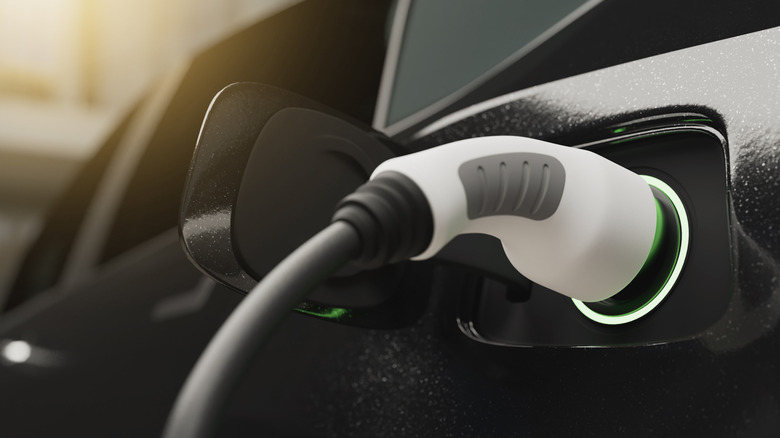
In the Automotive Hall of Fame, the most coveted machines are almost exclusively powered by internal combustion. However, as the industry pivots toward electrification, the question arises: Will any EVs eventually earn a place among the greats? Last year, we asked you which vintage cars you'd EV-swap, and many of you embraced the idea — proof that even enthusiasts are warming to electrification. That suggests something important: There may well be room in the collector world for electric cars.
Predicting future classics is never easy. Sure, limited-run Ferraris and end-of-the-line manual Porsche 911s are obvious candidates because they celebrate what made those brands legendary in the first place. On the other hand, EVs haven't quite defined that blueprint yet — but there are a few cars that seem on the right track to do so. If we had to place our bets, these EVs have the best shots at being future classics.
OG Tesla Roadster
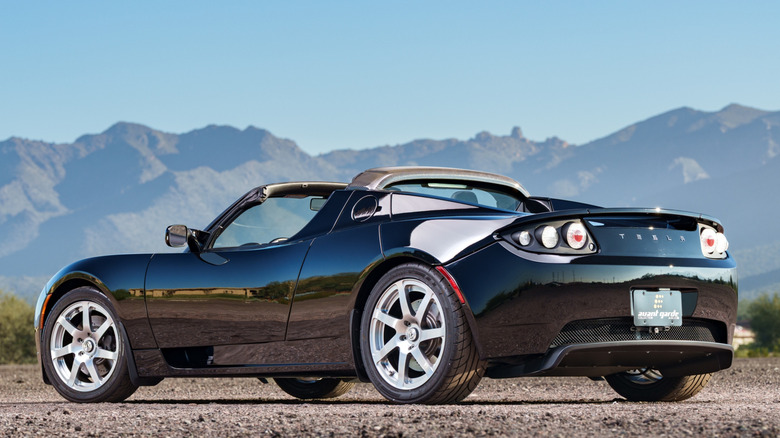
Tesla is quite possibly the most impactful EV car company of all time. The brand has not only commercialized EVs, it has also set the standards many legacy automotive brands now follow. Out of all Tesla models, the OG Tesla Roadster has many of the ingredients of a future classic.
For starters, only 2,450 were ever built, which makes the Roadster rarer than the collector-grade Ferrari 550 Maranello. Secondly, it's the very first Tesla, the one that started it all. A very limited number of cars (let alone EVs) carry such a strong novelty factor. Last year, even an incredibly trashed Tesla Roadster that did not run, was painted in four colors, had no hood, and had a salvage title was listed for $40,000.
Sure, this is nowhere near what the Roadster cost new (about $100,000 or more), but it does help underline that even botched examples carry decent value. If we take a look at the very top end of the market, some pristine first-gen Roadsters have sold for more than $250,000. All in all, the Tesla Roadster is not likely to become a classic because it was the best electric car ever built, but rather because it helped kickstart the performance EV era.
Rimac Nevera
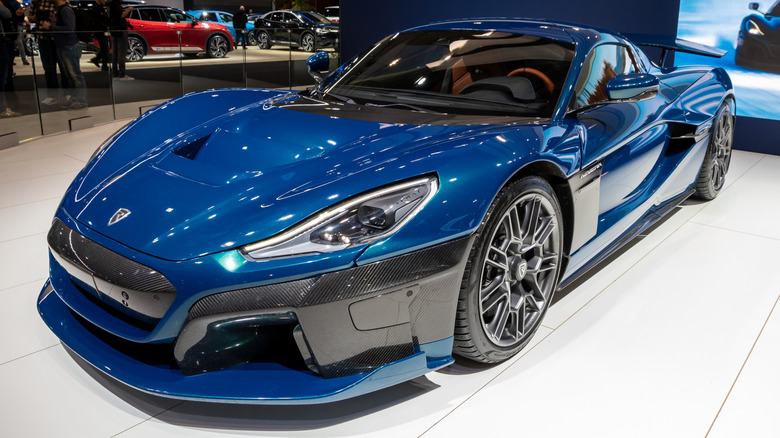
Remember when the Bugatti Veyron completely rewrote what it means to go fast in a car? With over 1,000 horsepower, a 250-plus mph top speed, and a massive 16-cylinder engine, the Veyron is widely considered the first modern hypercar. In the electric era, a similar role could belong to Rimac Nevera, since it represents what the Veyron did for combustion performance — but for electrification. The Nevera came out in 2021, and it broke more than 20 records in a single day.
Thanks to more than 2,100 horsepower, the Nevera is still one of the quickest production cars with an absolutely ridiculous 0-60 mph time of 1.74 seconds. With only 150 production cars total, the Nevera is exactly three times as rare as the Bugatti Veyron. The Nevera was also the company's first truly complete vehicle.
We have to be frank: the Nevera costs over $2 million, and its sales have lagged, but as time moves on, fast EVs will become more common. When that happens, the Nevera is likely going to be the benchmark for what it means to go fast in an EV, and the market might notice.
Mercedes-Benz SLS AMG Electric Drive
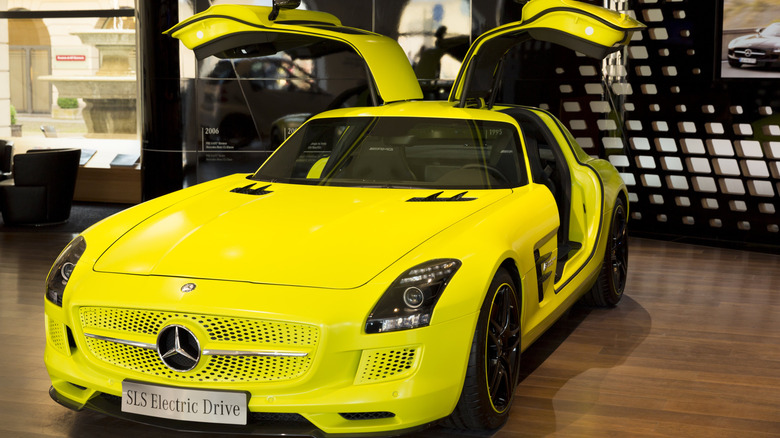
In 2012, EVs such as the Tesla Roadster and the Rimac Nevera were nowhere to be found. Back then, mainstream electric cars still seemed like a distant dream. However, Mercedes was on to something, and the ultra-limited Mercedes SLS AMG Electric Drive (ED) was unveiled at the 2012 Paris Motor Show. With only nine examples made, it is as rare as it gets. The original suggested price for the SLS ED was more than $500,000, but recent examples are trading for well over $1 million.
In 2021, we couldn't get over how much this car cost. This is especially since new EVs were proving difficult to sell without government incentives, tax benefits, or other forms of subsidies. Nowadays, the Mercedes-Benz SLS AMG ED occupies a unique position as a potential true classic. It is built on the SLS AMG chassis, a model already widely regarded as a modern classic regardless of the variant. It's a Mercedes that bridges the gap between the old we miss and the new we are yet to embrace.
Cadillac Celestiq
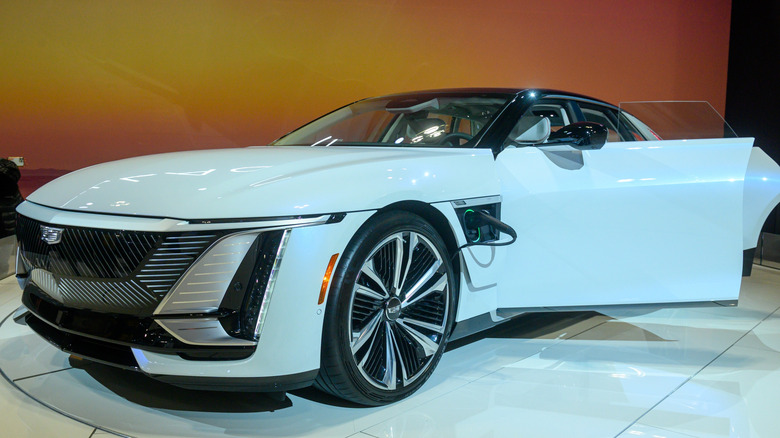
When talking about the finer things in life, there's a common expression that something is "the Cadillac of" its category — a reference to ultimate quality and prestige. In recent years, however, Cadillac has not always carried the same symbolic meaning of superiority it once did. This isn't necessarily a reflection of the brand, but rather of how much the overall industry has improved, narrowing the gap between good and great products.
Still, if any modern Cadillac is to bring back that image, it is the electric Cadillac Celestiq. With a suggested price that started around $340,000 and now is in the low $400,000s, the Celestiq is much more expensive than any other Cadillac. But we went over all of the engineering techniques that make the Celestiq unlike any other Cadillac, and a number of things make it truly stand out. The Celestiq is also going to have a limited production run, meaning that it isn't likely there will ever be more than a few hundred of them.
When reviewing the Celestiq, old friend Doug DeMuro described it as an "American Rolls-Royce," but added, "I foresee major depreciation and slow sales until the Cadillac brand name is elevated to the level of this amazing car." This leaves the Celestiq in a special position to one day be recognized as a true classic.
GMC Hummer EV
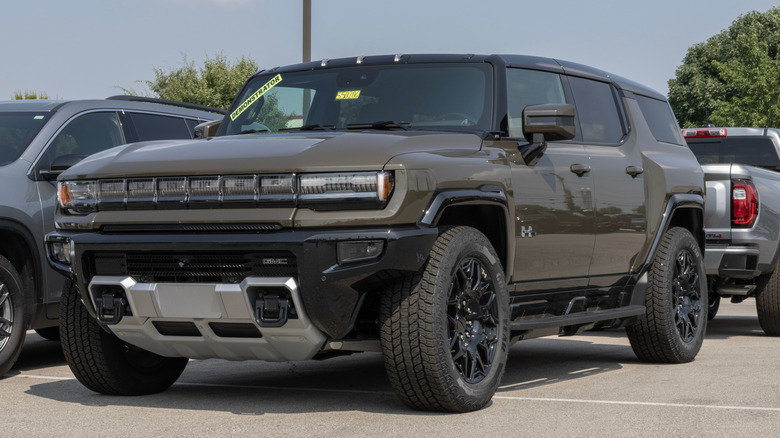
Before you start bashing us in the comment section, hear me out. The Hummer EV is not on this list because it shattered records. It also isn't exceptionally well-built, limited, or even logical. It's similar to how some 1970s performance cars became classics not because they were superior, but because they represented a cultural attitude from a bygone era. The GMC Hummer comes from a time when EVs still hadn't attained a solid footing, an era when experimentation, personality, presence and imagination were more important than range estimates, weight, or even common sense.
With a curb weight of 9,640 pounds, this behemoth is almost three times as heavy as a 992 Porsche 911 — not exactly the level of efficiency you might expect from an EV. The Hummer also starts just shy of $100,000. In fact, in 2025, GM Authority reported that GM had temporarily halted production of the Hummer EV because of waning demand, and GMC dealers are selling brand-new Hummer EVs with $40,000-plus discounts.
This does indicate that the market is not too fond of it, but back in the late '60s and early '70s, no one wanted the 1969 Charger Daytona, a car that now commands absurd prices. As car enthusiasts know better than anyone, buying cars is not always a rational process, and the vehicles that appreciate to several times their original price are often valued for reasons beyond pure financial logic. This is the unique angle through which the GMC Hummer EV might one day become a classic.