

House Republicans Strike Down Ted Cruz's Aviation Safety Bill To Prevent The Next Potomac Crash
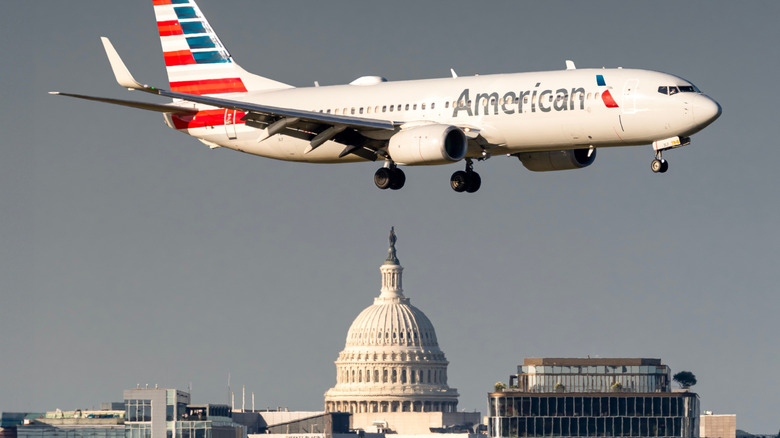
On Tuesday, the U.S. House of Representatives voted to approve a bill 264 to 133. Naturally, this means that it somehow failed. The bill was the Rotorcraft Operations Transparency and Oversight Reform (ROTOR, get it?) Act, a set of flight regulations changes proposed in response to the horrific crash of an Army Black Hawk helicopter into American Airlines Flight 5342 over the Potomac River in January 2025. Championed by Senate Commerce Committee Chairman Sen. Ted Cruz (R-TX) and Ranking Member Sen. Maria Cantwell (D-WA), the ROTOR Act was past unanimously by the Senate in December. It seemed to be fast-tracked to be approved by the House, to then be signed by President Donald Trump. Ironically enough, now it's crashed.
You may be thinking to yourself that you possess the ability to count and can confirm that 264 is in fact a higher number than 133, so the bill should have succeeded, shouldn't it? If only democracy were so simple! Due to the strange, arcane ways of Congress, the ROTOR Act was brought to the House with an expedited procedure, the downside of which is that this method requires a two-thirds majority for approval. If you do the math here, you'll realize that had one single representative voted the other way, this would have passed. Such is the line between doing something about the crash and doing nothing at all.
What happened? Not to put too fine a point on it, but the Pentagon shot it down. On Monday, it released a statement claiming that the ROTOR Act (passed by the Senate all the way back in December, remember) had flaws. That seems to have pulled a lot of support away, including no less than House Speaker Mike Johnson (R-LA); specifically, it pulled literally exactly enough away. If that sounds coordinated, that is certainly your judgement to make.
But why shoot down flight safety?

You may be wondering why anyone would want to kill this bill. Politico reports that Johnson read a letter from Secretary of Defense Pete Hegseth during a conference of Republicans, "saying the ROTOR Act 'does not incorporate [DoD] input,' has '$10 billion in unfunded technical requirements' and has an 'unrealistic reporting structure.'" In addition, two Republicans in the House have written up a competing flight safety bill, called the ALERT Act. Some members of the party seem to prefer ALERT over ROTOR, despite the fact that ROTOR comes from Ted Cruz.
Underlying all this is the plain fact that the Pentagon does not now and never has wanted to go along with these reforms. Cruz got into a heated political confrontation with the military after the crash in 2025, during which the former demanded information that the latter outright refused to hand over (before finally relenting). Then in December, somebody slipped a provision into the National Defense Authorization Act (NDAA), the bill that funds the military, that specifically gives it an exception to some of the reforms. Cruz was furious, but ended up allowing it on the condition that the ROTOR Act would be passed swiftly, which would supersede the provision. Now, ROTOR is stalled. Coincidence?
The flight safety reforms we won't be getting
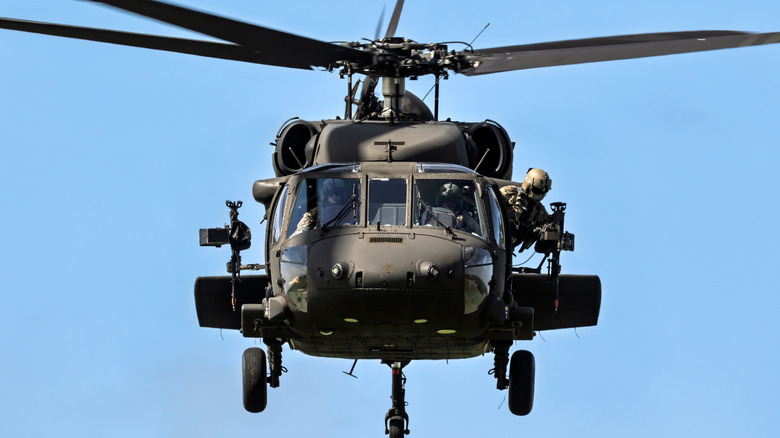
According to the New York Times, ROTOR would have mandated that all flight routes near large and mid-size airports be reviewed. Additionally, it would have finally mandated a step that the National Transportation Safety Board (NTSB) has been pushing for years: installing ADS-B Out and In systems in most aircraft and requiring them to stay switched on. This is essentially an upgraded location transponder and receiver, respectively. Where older technology only signals every ten seconds, ADS-B does every second. If more aircraft both sent and received these signals, they would have a better idea of where everyone else was. This almost certainly would have prevented the Potomac crash. Or as NTSB Chairwoman Jennifer Homendy put it, "How many more people need to die for us to decide that action needs to be taken?"
Well, apparently that number isn't zero. By contrast, the competing ALERT Act doesn't make such mandates and in fact seems to be a very superficial reform. Homendy flat-out said that it does not implement the NTSB's recommendations. One might argue that it is a token bill meant to look like Congress is doing something while allowing the military to keep doing what it wants. Again, your judgement to make.
In the meantime, NPR quotes Cruz as insisting that this is all a "temporary delay" and the ROTOR Act will eventually "become the law of the land." Even if it does, the whole ordeal is a showcase of how hard it is to pass meaningful legislation even in the face of catastrophe. If a passenger airliner hitting an Army helicopter doesn't move the needle, what will?