

If You Need To Buy Gas, It Could Pay To Wait Until These Days
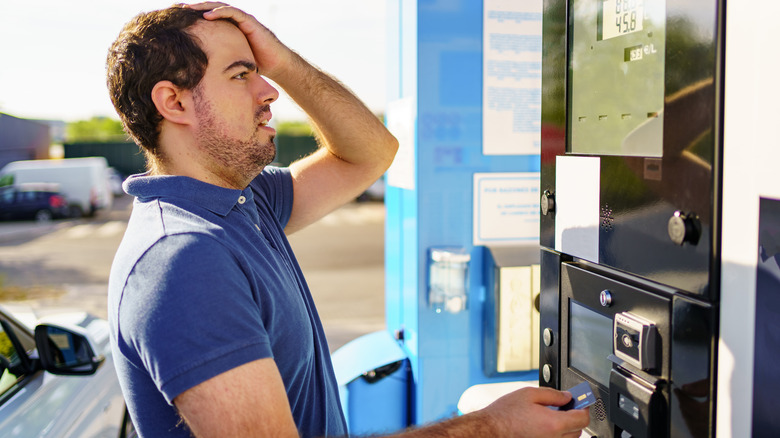
Unless you live in a city with a serviceable mass transit system, owning a car is a necessity. And according to U.S. Bureau of Labor statistics, consumers spent an average of $2,411 on fuel in 2024. The national average is currently around $2.95 a gallon, per AAA, but prices can vary considerably depending on where in the U.S. you reside. (From low-cost Mississippi to high-priced California, these are the cheapest and most expensive states to buy gas in America.)
But location isn't the only variable affecting your wallet at the pump. Apparently, it also matters which day during the week you decide to fill up. GasBuddy crunched the data for all states, and found that Sunday is often the least expensive day to fuel your car, which holds true across the country. Monday also is good, while Tuesday and Saturday require caution.
However, try to avoid Wednesday, Thursday, and Friday, as fuel on these days tends to cost you the most. Fridays in particular may see higher prices in the anticipation that people will be preparing for weekend plans that require travel, particularly road trips during the warmer months.
But why do gas prices fluctuate so frequently throughout the week?
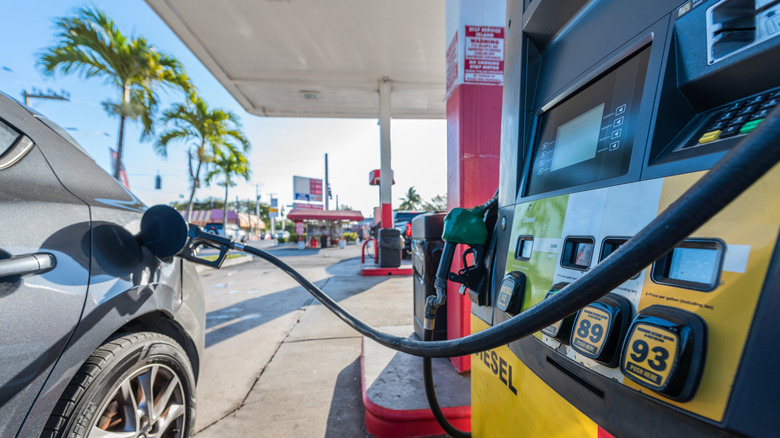
Some states also have their own patterns that reveal when prices will peak and when they'll drop. In Michigan, for instance, gas stations employ something called price cycling. Essentially, it involves several neighboring stations dropping prices, battling to undercut one another for more business. However, once prices dip to a level where stations are barely making a profit or even just breaking even, they'll spike the price back up, essentially restarting the cycle over again.
And this isn't necessarily a lengthy pattern, but one that can come full circle in the span of just a week. For eagle-eyed bargain shoppers, it can become a waiting game, watching those prices slink further down and then capitalizing on the moment just before the price climbs. Patrick De Haan, a GasBuddy analyst, told Grand Rapids' FOX17, "Once prices have gone down 30 to 35 cents a gallon, that's when you kind of are in the danger zone of seeing gas prices make that sudden jump up again."
Beyond price cycling, influences on the cost of gas include supply and demand. For example, prices can fall if production is running high and current demand is low. And it gets even more complex, as there are several additional factors causing gas prices to be so different around the country, such as state taxes and distances to refineries.
How to spend less on gasoline
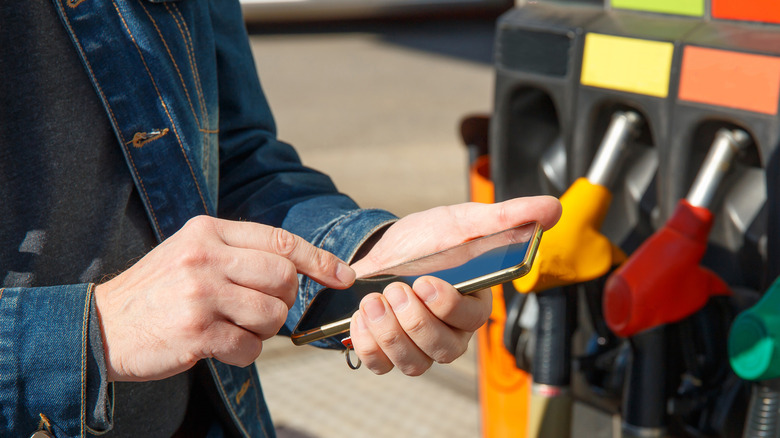
Picking and choosing certain days to fill up your car with gas can help you save money, but it's not the only way. Because each gas station in your area can offer fuel at different rates, there are naturally going to be places that are cheaper than others. Apps like GasBuddy and Gas Guru let you compare prices between stations and find the least expensive option without burning fuel in the process.
Meanhile, other apps like Upside and Earnify can give you money back on each fill-up with participating locations. According to MoneySavingMom, with Upside you can average around 25 cents a gallon, which may not sound like much, but can add up over time.
In addition, your driving habits can positively influence how much you're spending at the pump. Speeds above 65 mph use up more fuel, so slowing your car a bit can make a noticeable difference. For instance, AAA reported a study by the Automobile Club of Southern California's Automotive Research Center that found driving a mere 5 mph over 65 reduced fuel economy by around 9%. (Here's why your car is more efficient when you drive slower.)