

Tesla Must Pay $243 Million Judgement Over Fatal 2019 Autopilot Crash
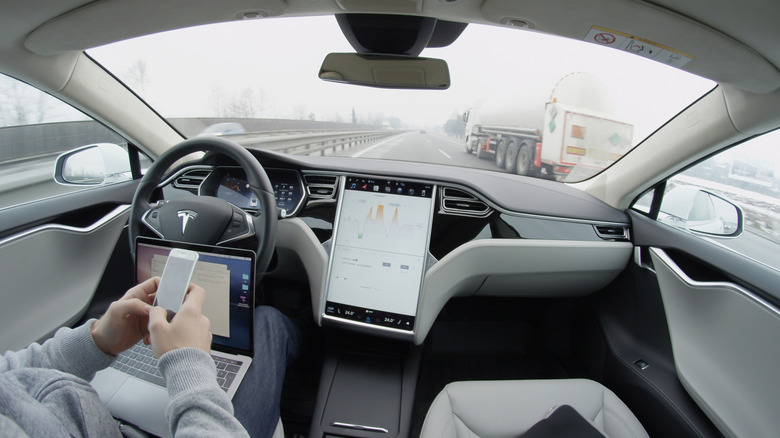
Tesla must pay the $243 million penalty a jury handed down over a 2019 crash involving an Autopilot-equipped Model S that left a 22-year-old woman dead and her 26-year-old boyfriend severely injured. A U.S. District judge in Miami rejected Tesla's request to overturn the verdict, saying that the evidence put forth "more than supported" the August 2025 verdict. Tesla is, of course, expected to appeal the decision, but it has yet to raise any new arguments to set the verdict aside.
Back on April 25, 2019, George McGee was driving his 2019 Model S through an intersection in Key Largo, Florida, at 62 mph when he bent over to look for his phone that he had dropped. He crashed into Naibel Benavides Leon and Dillon Angulo's Chevy Tahoe, which had been parked on a shoulder as they stood beside, according to Reuters. Jurors found Tesla 33% responsible for the crash and awarded compensatory damages of $19.5 million to Benavides' estate and $23.1 million to Angulo. An additional $200 million was split between them, and McGee previously settled with the plaintiffs. It marked the first verdict from a federal jury concerning a fatal Autopilot-involved accident. Tesla, in an effort to skirt blame for misleading customers about the capabilities of Autopilot, said 100% of the blame was on McGee, and the jurors' verdict went against common sense.
[L]ies and gross misconduct
In a statement to Jalopnik, Brett Schreiber, lead trial counsel for the plaintiffs, said they looked forward to continuing to hold Tesla accountable for its "lies and gross misconduct in courts across America."
"We are of course pleased, but also completely unsurprised that the honorable Judge Bloom upheld the jury's verdict finding Tesla liable for the integral role Autopilot and the company's misrepresentations of its capabilities played in the crash that killed Naibel and permanently injured Dillon," Schreiber told Jalopnik in a statement. "Tesla's arguments were simply an attempt to relitigate the court's pre-trial rulings."
On the other hand, Tesla told Reuters that automakers don't "insure the world against harm" caused by reckless drivers, and because of that, punitive damages should be zero. In an August 2025 motion, Tesla said the verdict "flies in the face of basic Florida tort law, the Due Process Clause, and common sense," according to Electrek.
Since the 2025 ruling, Tesla has settled at least four additional Autopilot crash lawsuits rather than run the risk of going to trial, Electrek reports. Just last month, the automaker was sued over a Model X crash that killed a family of four after the vehicle allegedly veered into oncoming traffic. There are also lawsuits for other Tesla issues, like door handles not working properly, false robotaxi claims, odometer overestimation and alleged racism in the workplace.