

How Your Car's A/C Does More Than Just Cool The Air
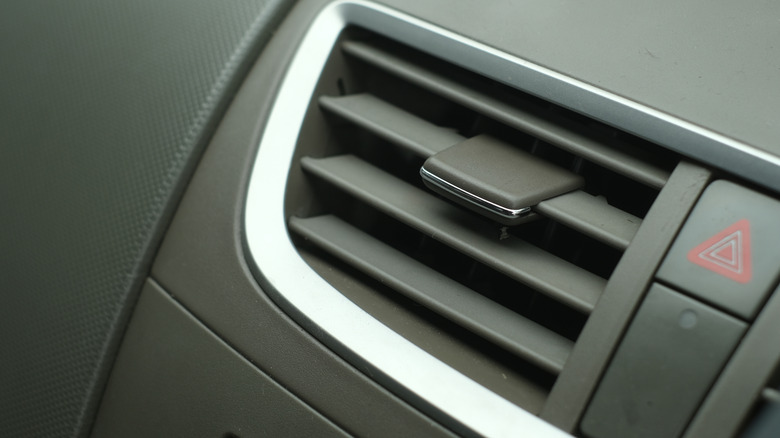
The words "air conditioning" are intrinsically linked with summer. That may be why many people think all it does is cool down the car's cabin by pushing cold air inside, but removing heat is just one part of its job. In fact, the air conditioning system is designed to manage heat in a broader sense. No "cold" is being created out of thin air here. Rather, an air conditioning system (A/C) just moves heat from one place to another in a refrigerant cycle. The refrigerant (which was once R12 Freon, then R134a, and is now R1234yf) absorbs heat from the cabin and whisks it through the system before dumping it outside the vehicle.
The refrigerant begins its journey by being compressed and passed through a condenser. This is where the absorbed heat is released outside the car. Then, the pressure and temperature are lowered rapidly in an expansion valve. The cooled refrigerant then goes to the evaporator, which is normally found inside the dashboard, and as cabin air passes over the evaporator, heat is pulled from that air and absorbed by the refrigerant before the air is circulated back inside.
Some might not have realised, however, that the same system is also behind the climate control in modern cars. It does this by mixing the warm air from the heater core with the cool, dry air from the A/C system. Whether you cool or warm the air, the A/C system is always in play.
Why the A/C is essential for defrosting
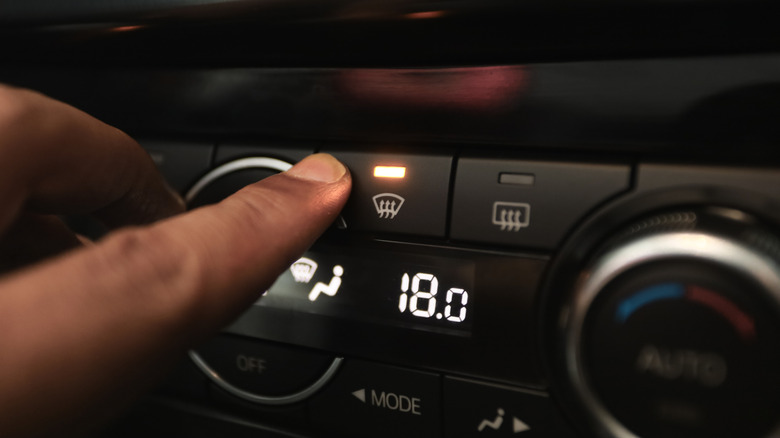
Cold glass is not the only culprit behind fogged or iced windows. The actual reason is moisture in the air, which is why the air conditioning also helps with visibility. When defrost mode is activated, the vehicle automatically engages the A/C system, even if warm air is being delivered to the windshield, to dehumidify the air.
Before the air makes it into the cabin, it passes over the evaporator, and the moisture inside condenses on the cold surface. This drying effect makes a lot of difference. Air that still contains moisture will continue to fog glass, even if it is warm. By stripping moisture from the air first, the system ensures that the air directed at the windshield can actually clear condensation rather than add to it.
The dehumidified air is warmed by the engine heat inside the heater core, after which it is blown across the glass, removing fog or frost as it goes. The heater can warm the air, yes, but without the A/C, it cannot remove the humidity from it. If the air is not dry, the haze will take a lot longer to clear, and as soon as the airflow changes, the windows will fog again. Even in winter, the A/C system is key to keeping your car windows fog-free, which is why defrost performance often suffers when the air conditioner is not working properly.