

More Automakers Are Making New Inline-Sixes, And These Ones Are The Best
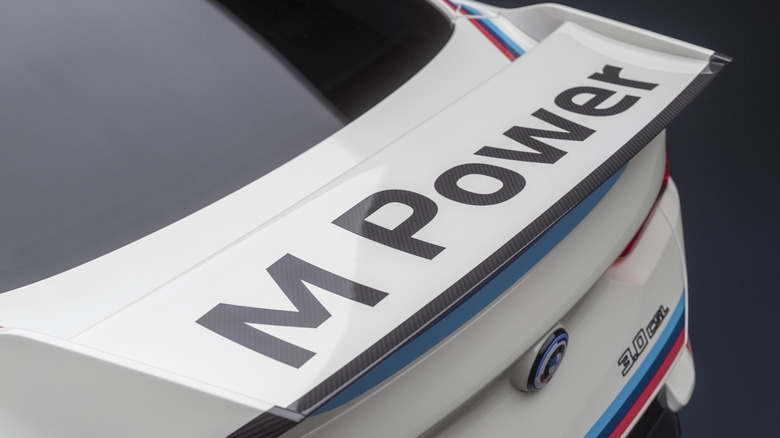
The inline-six is enjoying a massive second act, and it's time we started paying attention. After all, inline-6 engines are much smoother than V6 and inline-4 engines and are even more balanced than V8s. Yes, that makes them a bit too perfect — we all love the irregular V8 burble. But come on, some of the greatest automotive ear candy was produced by inline-6s: BMW M1 and M3 E46, Jaguar E-Type, Nissan Skyline GT-R R32-R34 ... the list goes on.
Inline-6s were out of favor for quite some time. The more compact footprint of the V6 layout made it more desirable in front-wheel-drive cars, which are more common today. Straight-sixes also take up more space longitudinally and eat into interior space. As a result, many automakers that traditionally produced RWD cars replaced them with V6s. Mercedes-Benz did that in 1998. Even Jaguar – synonymous with the inline-6 — used V6s between 1999 and 2017.
Still, things changed recently. Modern inline-6s are more compact thanks to ISGs (integrated starter generators), which eliminate the need for accessory belts. More importantly, automakers can take a modular approach and produce inline-4s and inline-6s from the same parts. Have an inline-4? Just add two cylinders. Not to mention, straight-six engines are far simpler than V6s.
As a result, many automakers are again going the inline-6 route, some for the first time in their history. In this piece, we'll look at the best examples and tell you what makes them special and unique. Let's dive into the cylinder banks!
BMW B58 3.0 Turbocharged
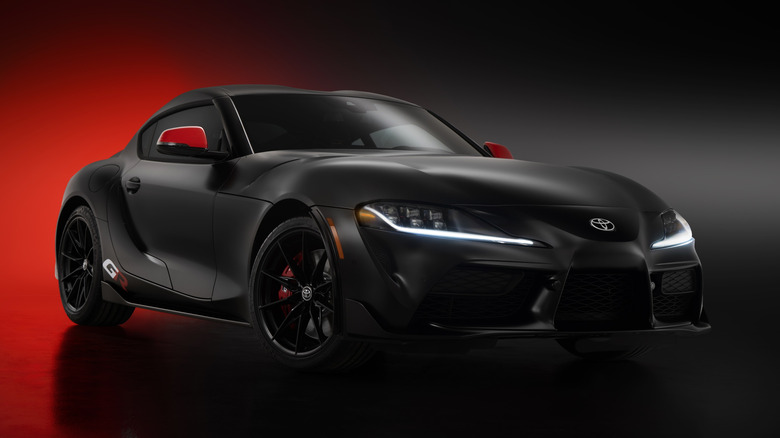
The B58 engine is already part of automotive folklore and might be BMW's most enthusiast-oriented engine ever made. We'll go as far as to say that it's the modern alternative to Toyota's 2JZ-GTE. Heck, it even motivates the fifth-gen GR Supra, Ineos Grenadier off-roader, and Morgan Plus Six retro roadster, alongside dozens of BMW models.
Why is everyone obsessed with it? Mainly thanks to its sturdy, closed-deck aluminum block, which allows crazy boost pressures and 1,000+ hp figures. The forged crankshaft and connecting rods further bolster its durability. The B58 is also equipped with direct injection and a twin-scroll turbocharger, both allowing easy gains via ECU tuning. It's no shock that the B58 is a darling of the tuning community.
Interestingly, the B58 is an undersquare engine with an 82.0 mm bore and a 94.6 mm stroke. Despite that, some versions can rev up to 7,000 rpm. The B58 also has a relatively high 11.0:1 compression ratio for a turbocharged engine, which boosts efficiency.
Ever since BMW launched the B58 in 2015, the 3.0-liter inline-6 turbo has seen numerous modifications that have increased its power output. Curiously, the most potent variant was implemented in the Toyota GR Supra A90 Final Edition, producing 435 hp and 421 lb-ft (571 Nm) of torque.
Meanwhile, the B58B30O1 produced 382 horsepower in the M340i and the Supra's sibling, the Z4 M40i. In 2025, BMW introduced the B58B30M2 in the M240i, M340i, and M440i, where it produces 386 horsepower and 398 lb-ft (540 Nm) of torque. Finally, the X3 M50's B58 makes 393 hp and 428 lb-ft (580 Nm) of torque.
BMW S58 3.0 Twin Turbo
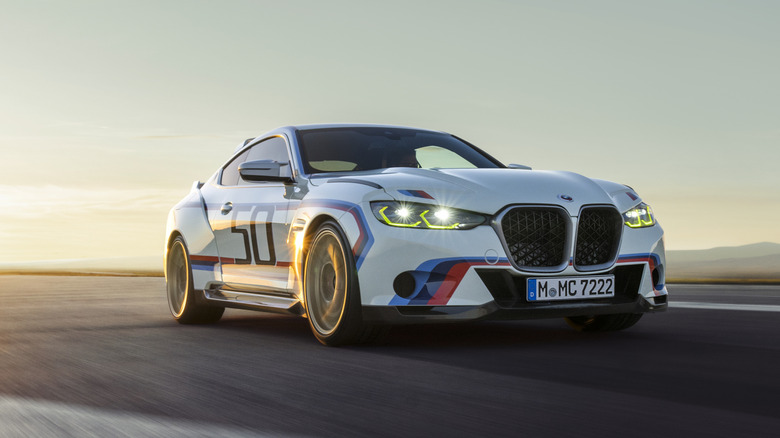
Despite being so potent, the B58 has never been used in a full-fledged M car. Enter the S58 — B58's more sinister, motorsport-ready sibling designed specifically for M cars. Some of the BMWs that carry the S58 under the hood include the M3, M4, and X3 M, but it also motivates the Alpina B3.
Yes, the S58 is the hotter version of the B58 engine. Both share the closed-deck design, Vanos, and Valvetronic, but that's pretty much where the similarities end. Perhaps the biggest difference is the new 3D-printed cylinder head, which allows cooling passages that simply aren't possible with traditional manufacturing techniques. The S58 has both direct and port injection for an optimized air-fuel mixture throughout its rpm range. Furthermore, it has forged pistons and two mono-scroll turbochargers that spool up faster than the single unit in the B58. The S58 also has a larger 84.0 mm bore and a shorter 90.0 mm stroke. This makes the engine a bit more rev-happy, with the redline arriving at 7,500 rpm. Finally, the M engine has a lower compression ratio of 9.3:1.
Naturally, the S58 is significantly more powerful than the B58. The latest variant produces 473 hp in the 2026 M2, 523 hp in the 2026 M4 Competition xDrive Coupe, and up to 553 hp in the highly limited 2024 3.0 CSL. Unlike its sibling, the S58 isn't used in non-BMW vehicles, as it's only designed for M applications. As for its future, the S58 will most likely receive a mild-hybrid system that will make it compliant with Europe's stringent Euro 7 emission regulations.
Mercedes-Benz M256 3.0 E-Supercharged & Turbocharged
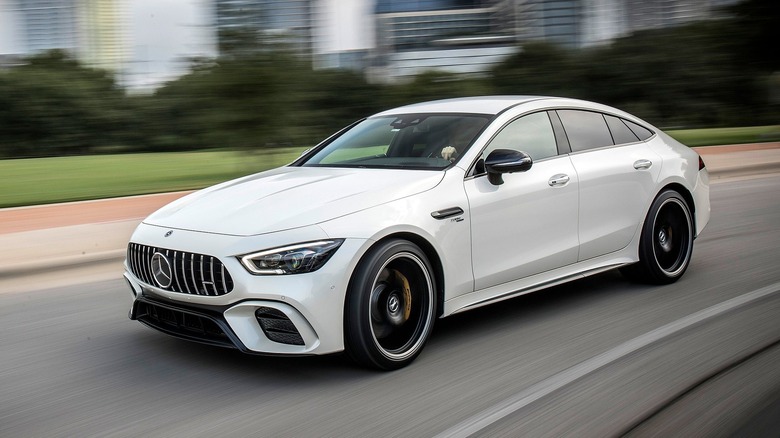
Mercedes-Benz launched its brand-new M256 family of inline-6 engines almost nine years ago. Today, the 3.0-liter twin-turbo engine powers everything from the rugged G550 to the AMG GT 53 4-Door Coupe. In the high-performance four-door coupe, it produces 429 hp and 384 lb-ft (520 Nm) of torque and pairs exclusively with a nine-speed automatic. It brings the GT 53 to 60 mph in just 4.4 seconds.
Recently, Mercedes-Benz introduced the refreshed M256 Evo engine, which first appeared in the facelifted 2026 S-Class. The new engine has a higher torque output of 442 lb-ft (600 Nm) in the S 500 4Matic. However, it also has an overboost function that boosts the torque to 472 lb-ft (640 Nm) for short durations. Mercedes-AMG also confirmed that the M256 Evo will motivate a brand-new C53 that will replace the much-maligned C63.
Those are some excellent bits of news, and not just because the C63 was powered by a four-cylinder. Without sugarcoating it, the all-aluminum M256 is the pinnacle of internal combustion development. It features a 48-volt mild-hybrid system powered by regenerative braking and an integrated starter generator, which produces 22 hp, or 23 hp in the Evo variant. The electric motor is attached to the crankshaft and fills in torque to minimize turbo lag.
But it gets more interesting. The M256 also has an additional electric supercharger that helps at low revs with around 7 psi. The result: almost no perceivable turbo lag. Finally, a 29-psi, twin-scroll turbocharger allows excellent power and torque figures at the top end. Of course, the M256 utilizes direct fuel injection and has four valves per cylinder.
Stellantis Hurricane 3.0 Twin Turbo
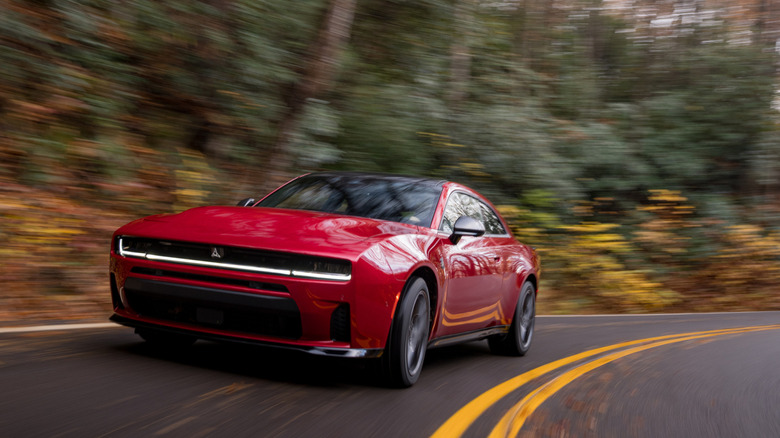
Stellantis' new Hurricane family of twin-turbo inline-6 engines is one of the biggest automotive stories, as it replaced the HEMI V8 in Jeeps, Dodges, and Rams. At least that's what we thought initially. Ram brought the HEMI back from the dead, and Dodge is walking the same path. And it's not because the Hurricane is a bad engine. Quite the contrary, in fact. American buyers love their V8s, and the Trump administration's lax emission regulations helped them get what they want.
Forget about your emotional connection to V8s, though, and the Hurricane 3.0-liter twin-turbo inline-6 comes out as the superior engine. In the Ram 1500, both the S.O. (Standard Output) and H.O. (High Output) options are more fuel-efficient and more potent than the 5.7-liter HEMI V8. We're talking 420-540 hp (Hurricane) vs. 395 hp (HEMI); 469-521 lb-ft vs. 410 lb-ft of torque; and 20-21 mpg vs. 18 mpg. You get the gist.
Meanwhile, in the Charger Scat Pack, the "SIXPACK" Hurricane engine produces an even higher 550 hp and 531 lb-ft of torque, with 0-60 mph arriving in 3.9 seconds, and the quarter mile in 12.2 seconds. In comparison, the old Scat Pack's 6.4-liter HEMI V8 produced 485 hp and 475 lb-ft of torque, with 0-60 mph in 4.3 seconds and the quarter mile in 12.4 seconds.
The Hurricane inline-6 is also a technological tour de force. It features an advanced direct fuel injection system that operates at 5,075 psi, independent valve timing, low-friction Plasma Transfer Wire Arc-coated cylinders, a high-flow ball-valve thermostat, and two high-flow turbos. The H.O. unit even comes with forged aluminum pistons, anodized top rings, and diamond-like-coated pins.
Mazda SKYACTIV-G 3.3 Turbocharged
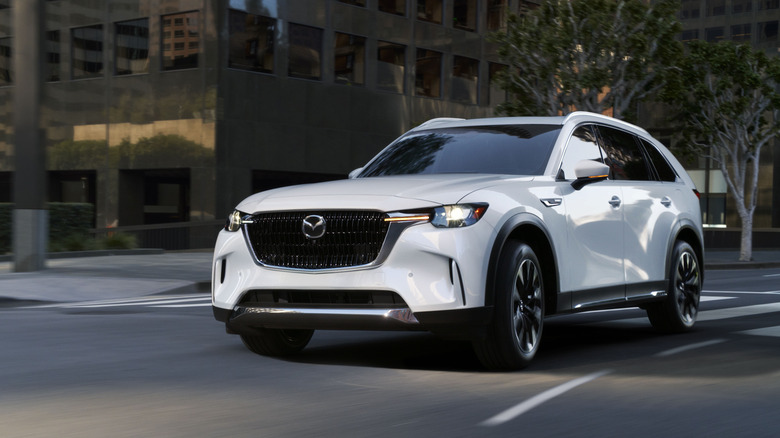
Mazda certainly surprised us when it announced it was working on a rear-wheel-drive platform that will accommodate inline-6 engines. It's not something you'd expect from a nonpremium automaker. Then again, Mazda wants to go upmarket and compete with BMW.
Of course, it's not like we are mad about it. Mazda's SKYACTIV-G 3.3-liter turbocharged inline-6s turned the CX-90 into a bona fide luxury SUV, with refinement and performance that simply aren't possible in engines with fewer cylinders. With 280 hp and 332 lb-ft in the low-output variant and 340 hp and 369 lb-ft in the more potent one, Mazda's inline-6 is reasonably powerful, too. In other markets, the SKYACTIV-D diesel variant produces 254 hp and a meaty 406 lb-ft (550 Nm) of torque.
What sets it apart, though, is the unusually high 12.0:1 compression ratio for a turbocharged engine. The real engineering flex is that both versions run on regular fuel. Sure, the more powerful variant is capped at 319 hp on regular, but that doesn't make this feat any less impressive. Both engines utilize a 48-volt mild-hybrid system with a 16.6-hp electric motor, direct injection, and a twin-scroll turbocharger. Thanks to variable valve timing, the engines can also run on the more powerful Otto or the more efficient Miller cycle.
What we really want to know is how Mazda evolves the inline-6 in the future. Rumors swirl that Toyota might use a version of this engine in the next-generation Supra, which should share a platform with a high-end Mazda sports car. If that happens, expect to see much higher horsepower outputs from Mazda's advanced inline-6.
Jaguar Land Rover Ingenium 3.0 E-Supercharged & Turbocharged
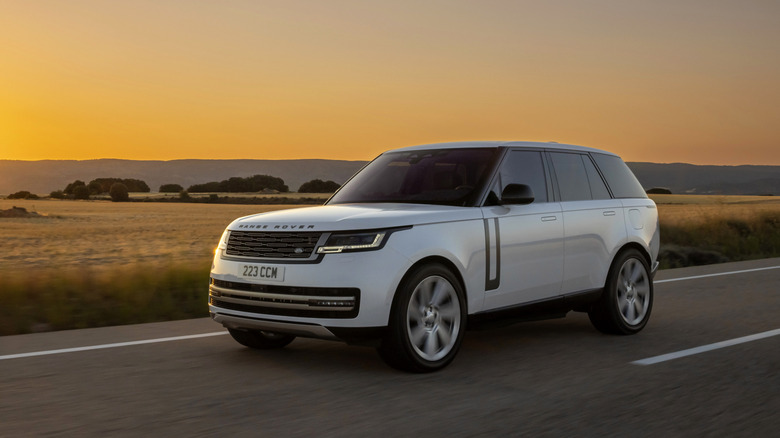
After flirting with V6s for two decades, in 2019, Jaguar Land Rover announced a brand-new family of inline-6 engines. These are part of the modular Ingenium family, which includes gas and diesel engines with three, four, and six cylinders, each with a 500cc capacity per cylinder.
The 3.0-liter Ingenium inline-6 has an 83.0 mm bore and 92.0 mm stroke. One of its main advantages is the lightweight construction — it weighs 44 pounds (20 kg) less than the V6 it replaced. This allowed JLR to implement a 48-volt mild-hybrid system without any weight penalty, while improving drivability. See, like Mercedes-Benz's M256 engine, JLR's Ingenium inline-6 has an electric supercharger driven by the 48-volt system. The e-supercharger can spin to 65,000 rpm in just 0.5 seconds, providing instantaneous response. As a result, JLR pretty much eliminated turbo lag from these engines.
The e-supercharger is aided by a twin-scroll turbocharger designed to take over at higher revolutions. The Ingenium also features continuous valve timing for better breathing throughout its rpm range, alongside variable cam timing. The result? Up to 395 hp and 406 lb-ft (550 Nm). In the Range Rover P400, this translates to a brisk 0-60-mph time of 5.3 seconds.
Unlike some of its rivals, the Ingenium inline-6 is also offered in plug-in-hybrid applications. Aided by a potent 218-hp electric motor and a 38.2-kWh battery pack in the Range Rover P550e, the powertrain produces 550 hp and a tire-shredding 590 lb-ft (800 Nm) of torque, with the ability to hit 60 mph in 4.8 seconds.