

NASA Finds Building Blocks Of Life On Frozen Asteroid
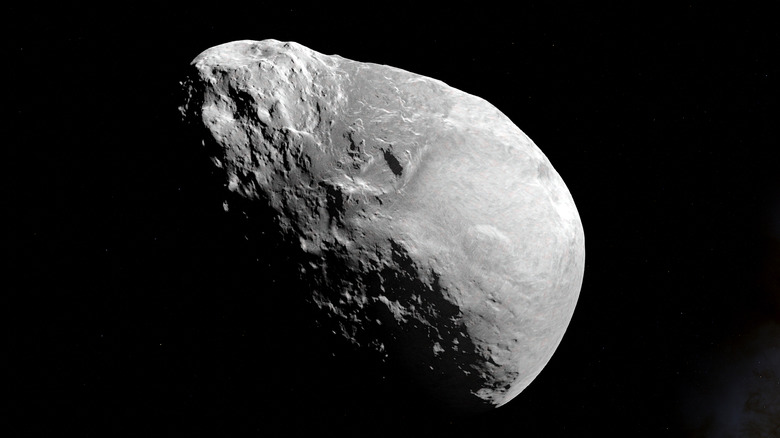
Scientists have found evidence that amino acids, the chemical building blocks of life (specifically proteins), formed on the asteroid Bennu when it was so far from the Sun as to be frozen. This directly contradicts the previous belief that amino acids required liquid water to form, through a process called Strecker synthesis. In other words, some of the essential ingredients for life are able to form in radically different environments than, say, the planet Earth. That in turn means that there are far more places where life could conceivably form than previously believed.
The scientists studied samples from Bennu retrieved by NASA's OSIRIS-REx, publishing their findings last week. They found 14 of the 20 amino acids that exist in life on Earth (alongside a further 19 that life doesn't care about), per Space.com. Could life down here have come from out there? That's actually an older question than you might think, as scientists have found amino acids on fallen meteorites for decades. What makes Bennu special is that some of its amino acids formed when it was traveling beyond the so-called "snow line," past which there isn't enough heat and radiation from the Sun to keep water liquid.
The consequence is that the universe might have far more amino acids lying around than we realized, which gives life itself far more chances to begin. Who needs water? After all, if sci-fi movies have taught us anything, it's that the most frozen planets have the scariest beasties. That's a significant enough discovery on its own, but then scientists discovered that Bennu's amino acids held a secret even more surprising.
The molecule in the mirror is not the same
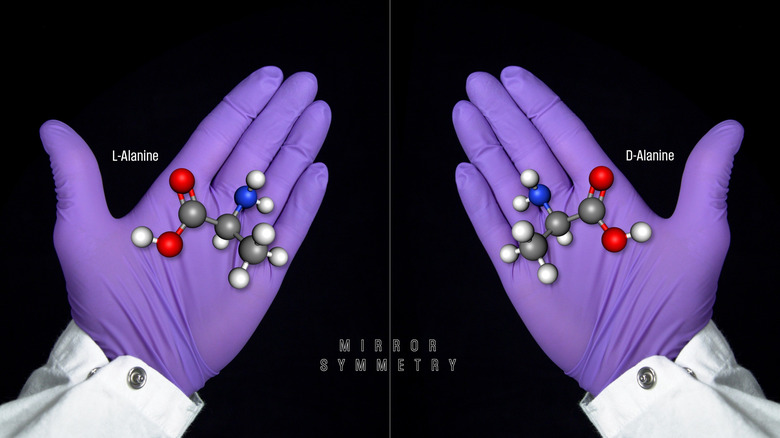
A given amino acid can structurally form in either a "left-handed" or a "right-handed" way, which are otherwise chemically identical. Uh... right? That is how it works, right? As in, that's what scientists have believed all this time? Well, the amino acids on Bennu have asked you to hold their frozen beers. To their great surprise, the scientists studying asteroid samples discovered that the left- and right-handed acids contained different nitrogen isotopes; in other words, these mirror images weren't exactly the same. That has never been observed before, and for the moment, they're not sure what to make of it.
It's early days, but this might go a long way towards explaining why, even if you're right-handed, you're actually a leftie. Nearly all life on Earth uses left-handed amino acids, for reasons that remain unclear, though theories abound. But our dear friend Bennu may be telling us that there are deeper differences between these mirrored pairs, and maybe something about those differences makes left-handed acids better for proteins.
That's a lot to learn from a frozen rock that's been around since the dawn of the solar system! It just goes to show that the science being done in space has lots to teach us about ourselves. Sounds like something we should be funding fully, so it's a good thing NASA finally got a budget after the Trump administration threatened to cut it to the bone.