

Why Aluminum Heads Are More Likely To Warp Than Cast Iron
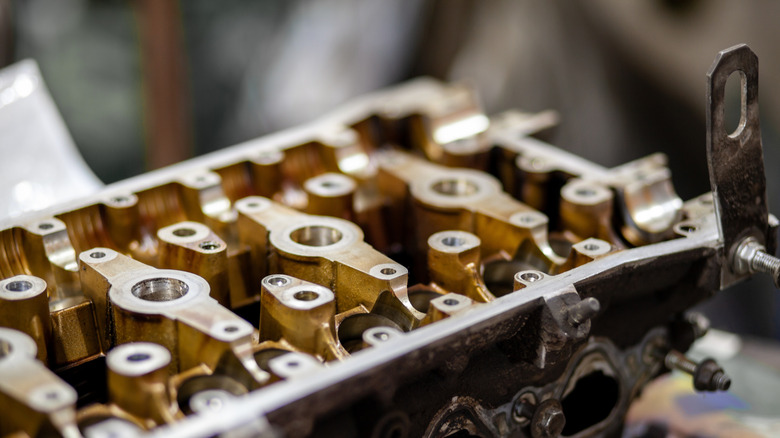
Even if you're not entirely sure what a cylinder head is, or what your car's heads are made of, you can probably guess that when your mechanic combines the words "head" and "failure" in the diagnosis, it's not so good. "Warped" and "head" also don't pair well. The time and precision labor necessary to remove and reinstall heads can be costly — even if the problem is just a gasket that costs under $100. Undetected, cracked or warped heads mean expensive repairs are closer than they appear.
Cylinder heads shape how an engine delivers power. They bolt to the engine block, forming a seal and allowing the engine to breathe through intake and exhaust ports. They also house the valves and springs, enabling them to actuate, while fuel and air mix to make the pistons fire in the combustion chambers at ignition. Finally, heads also separate and channel coolant to keep temperatures in the correct operating range.
Aluminum and cast iron are commonly used to fabricate cylinder heads, which are subject to all that chemical contact and intense thermal expansion and contraction. Each material handles these conditions differently. Aluminum is lighter and dissipates heat faster than cast iron but also expands twice as much when heated. Cast iron isn't as soft as aluminum but can be more durable, despite being more brittle at lower temperatures. All of this contributes to aluminum heads being more likely to warp than cast iron.
Common causes of warping
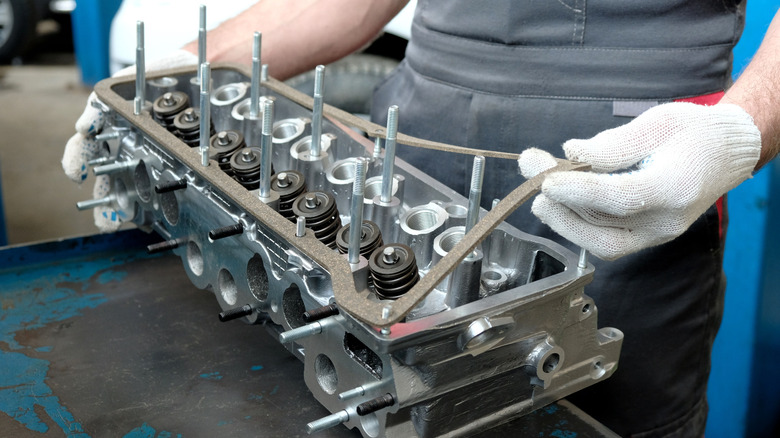
When either material heats up and expands beyond its intended threshold and doesn't return to original form, it warps. Warping can be subtle, but given the precision tolerances at play, even barely measurable deformations of the cylinder head can lead to big problems. When heads warp at the mating surface of the block, that seal can be compromised, causing misfires, coolant intermixing, power loss, and potential engine failure. Warping can be triggered by a number of things, from excessive heat, to improper torquing of the head bolts.
Overheating is a prime contributor to warping, and it's a sign your cylinder heads could be failing or in danger of failing. A leaky coolant hose, a failing gasket, or a bad water pump can be the excessive heat catalyst that sets off a chain reaction.
That extra heat has to go somewhere — it wants to go up and out in opposition to the bolts holding the heads down. Depending on proximity to the combustion chambers, dissipation can be uneven, creating hot pockets as other sections cool. This thermal discrepancy bows the material and warps the head. And because heat creates twice the expansion in aluminum as it does in cast iron, this effect can be exaggerated in aluminum heads.
Heads can be warped before the engine is even turned on. Bolts that are unevenly torqued down around the cylinder head can lead to failure regardless of material, but over torquing can compress aluminum due to its softness, warping the component at installation. Cast iron is comparatively more likely to crack under stress in this case, due to its lack of flexibility when cold.
What to watch out for
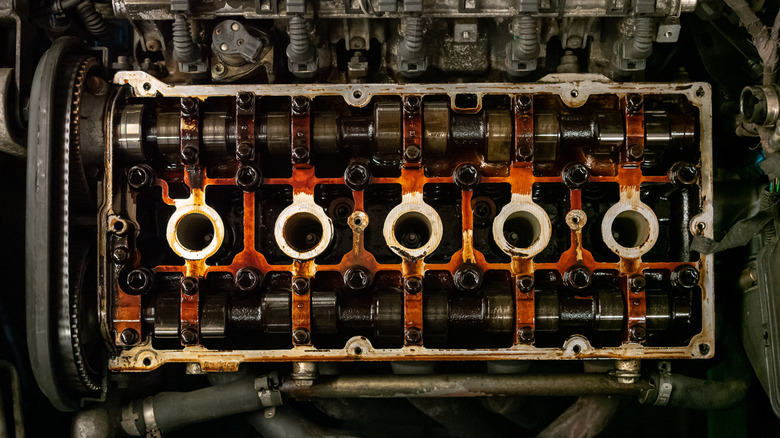
Misfires are a sign that there could be a cylinder head seal problem in your car, including a warped head. If your car isn't accelerating normally, have it checked out. Misfires aside, unlike warped brake rotors, which can cause vibrations while braking, you may not immediately feel the effects of a warped cylinder head while driving. However, you're likely able to see them in cases like a head gasket leak.
Your temperature gauge should indicate whether your car is overheating. Coolant mixing with fuel or oil can show up as white exhaust smoke or milky gunk on your oil dipstick. Any coolant leaks around hoses, the radiator, or the water pump require immediate attention to help prevent a warp or crack. Some warped heads can be fixed by using heat, pressure, or a machining process. Cracks depend on the severity and material – aluminum is easier to machine and weld if cracked.
With all of this science in mind, having an aluminum cylinder head doesn't mean it will warp — it also doesn't mean that cast iron won't. If the machining isn't right in the first place, neither will hold up, regardless of whether you're driving a lightweight sports car with aluminum heads on the track, or a big rig diesel with cast iron for the interstate long haul.