

These Are The 10 Least Expensive New Cars In America Right Now
To young adults, folks raising a family, or people who are simply on a tight budget, buying a new car in their lifetime feels about as likely as winning the lottery — and hitting the Powerball seems like the only way to possibly afford one. After all, they have to deal with groceries, housing, insurance, and child care, just as a few examples. So many things cost an absurd amount of cash in the U.S., and it makes a new car (which costs about $50,000 on average nowadays) seem thoroughly unattainable.
If used cars aren't in your purview and a new car is the only way, it's worth taking a look at the 10 cars listed below. They aren't ultra-luxurious, super sporty, or high-class, but they get the job done (and they're the cheapest the U.S. market has to offer right now). Of course, some of them make sacrifices in the name of affordability, but you'll find that this group of automobiles provides some diversity in terms of segment and size. For this particular list, we're counting down the 10 cheapest 2026 model year cars by their base MSRP (not including taxes and fees).
10. Volkswagen Jetta: $23,995
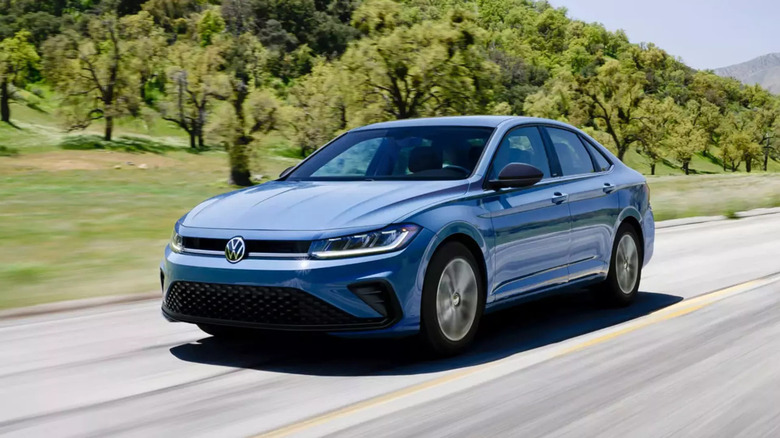
A "cheap German car" sounds like an oxymoron — unless you're talking about the Volkswagen Jetta. With a starting price just a tick under $24,000, this compact sedan undercuts other affordable sedans like the Mazda 3 and even the Honda Civic. Of course, it isn't quite as highly rated as those two , but saving a thousand bucks might be worth the Jetta's poorer fun-factor.
Under the hood of the cheapest Jetta is VW's 158 horsepower turbocharged 1.5-liter inline-four connected to an eight-speed automatic transmission. That's good for a 0-60 mph run of 7.1 seconds, which will keep up with traffic no problem. If you can tolerate the base Jetta's somewhat frustrating eight-inch touchscreen controls, which unfortunately replaced physical HVAC knobs recently, you'll be rewarded with a passenger area that is comfortable and fairly spacious for its size.
To us, one of the major pulls of the Jetta (aside from its price) is that it's the last surviving Volkswagen sedan. The larger Passat was officially dead in the U.S. by 2022, and the only other small four-door VW is the Golf, which costs about $10,000 more than the Jetta in its cheapest form. The next cheapest VW is the compact Taos SUV, which costs almost $3,000 more, and after that, every other model is more than $30,000 in base MSRP. It's also worth mentioning that the high-performance GLI version of the Jetta, with its 228 horsepower 2.0-liter turbo-four, still costs less than a Golf GTI. It even gets a six-speed manual, which is no longer available in new Golf models.
9. Kia Seltos: $23,790
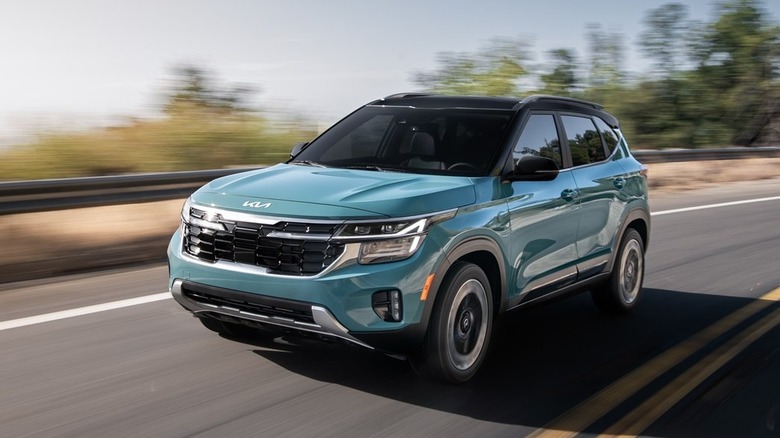
Subcompact SUVs aren't normally exciting, and while the Kia Seltos isn't necessarily a standout exception to that rule, it makes a case for itself that's hard to ignore. According to Car and Driver, the Seltos ranks third in a segment of 15 or more subcompact SUVs that were tested for the 2026 model year. This puts the Seltos ahead of the offerings from big-hitters like Toyota, Honda, and Subaru.
The price, of course, is a big help. Its $23,790 base MSRP is a direct target for families looking for affordable transportation, but unlike many others, that low cost isn't compensation for a lack of features and driving dynamics. All-wheel drive is standard on the base and top trim models, and it's an option on the S and EX trims that occupy the middle of its range. Additionally, the Seltos' combined fuel economy of 29 MPG (with base engine) is perfectly normal for this segment, which usually ranges from the high 20s to low 30s.
Power is delivered by your choice of two engines: a 146 horsepower 2.0-liter inline-four, or a turbocharged 1.6-liter four-pot that's good for 195 horsepower. Like most base models on this list, power and torque won't be sporty by nature, but the Seltos makes up for its okay engine with exceptional ride quality and a better-than-expected interior. To top it off, the Seltos is backed by Kia's 100,000-mile/10-year power train warranty, which is a perk that isn't matched anywhere else in the market.
8. Chevrolet Trailblazer: $23,300
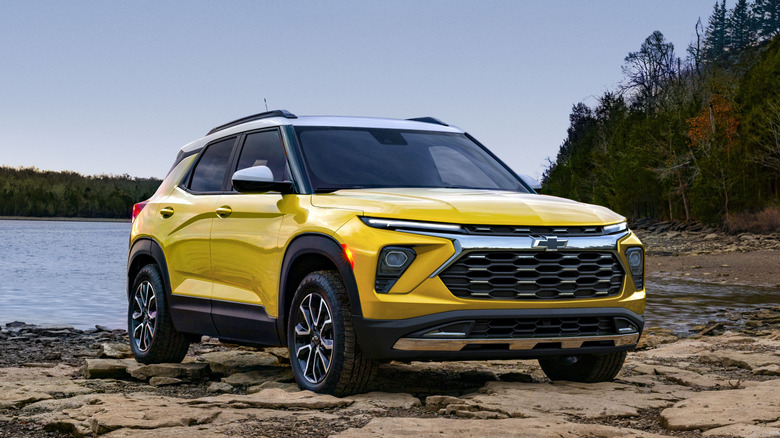
The Trailblazer's name goes back over two decades, and its kinfolk — the Blazer — is more than 50 years old. But the bigger Blazer is now electric, and the Trailblazer is handling the internal combustion department all on its own. As far as reliable, practical, and affordable transportation goes, the compact SUV certainly lives up to its legacy, offering decent space and a low base MSRP of $23,300. Unfortunately, the Trailblazer falls a bit short in other aspects.
Despite having a tiny turbocharged 1.2-liter three-cylinder in base form, the Trailblazer's fuel economy rating (30 city/31 highway) is still just average in this segment. And because of its lack of displacement, the Trailblazer ends up suffering in output, boasting just 137 horsepower and 162 pound-feet of torque. The upgraded turbocharged 1.3-liter three-cylinder engine isn't much better, providing 155 horsepower and 174 pound-feet. You can get all-wheel drive in the Chevy, but unlike the Kia Seltos, you can't get it with the base engine.
Its driving dynamics also don't inspire confidence like some of its rivals. Braking performance is decent, though when it comes to overall handling and ride quality, the Chevy is outshone by most of the others in its segment. The Trailblazer experience isn't all gloom, though. Its cargo room of 54 cubic feet (with rear seats down) is great for its small size, the interior is well-thought-out and tastefully designed, and the infotainment system is user-friendly. In the end, you do get what you pay for, but you don't get much more.
7. Toyota Corolla: $22,925
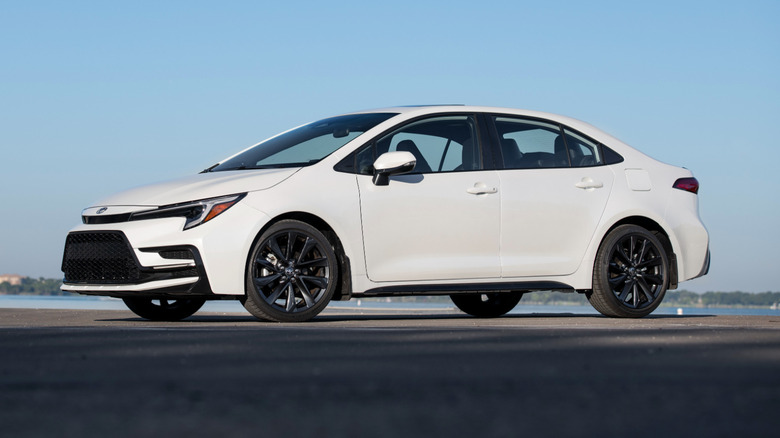
Most cars and SUVs fluctuate in popularity year by year, but the Toyota Corolla is an exception, having remained as one of the most dependable cars on the road. Even amongst such quality company as those Camry and Acura, there really isn't a more popular vehicle than the Corolla. It even managed to sell more than 50 million units, and part of that success is thanks to its price.
For 2026, the Corolla's commitment to cheap transportation continues with a base MSRP of $22,925, making it the seventh-cheapest new car available in the U.S. One of the standout concepts behind this Corolla is its number of trims, as well as their cost. The Corolla lineup features 10 different trims across both gas and hybrid power train options, but all are situated within just $6,000 of each other (not including the GR variant). This gives customers the agency to decide on spending more money for the features they'll want without draining their bank account.
The base 168 horsepower 2.0-liter inline-four is actually the more powerful of the two options, as the hybrid power train delivers just 134 horsepower (albeit with better fuel economy). A continuously variable transmission (CVT) is the only gearbox you can have, but if you want upgrades, higher trims come with fun stuff like sportier suspension, some added leather bits, bigger wheels, ambient interior lighting, a 10.5-inch infotainment screen (as opposed to the eight-inch base option), and other small changes.
6. Hyundai Elantra: $22,625
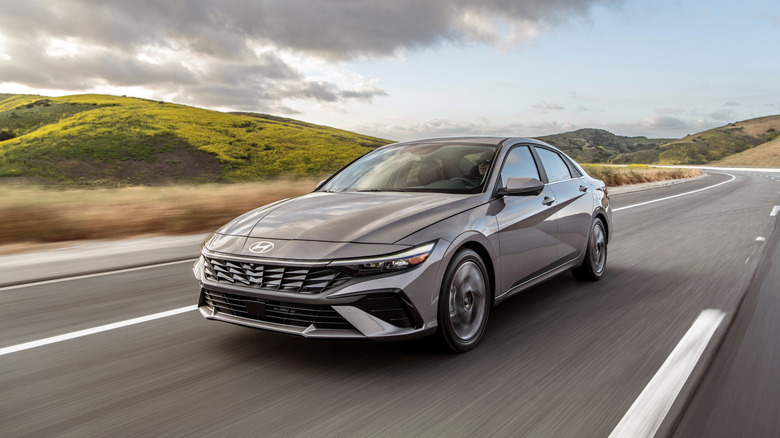
The Elantra covers many bases throughout its range. It comes with nine trims and four different power trains, and five different transmissions. At the bare minimum, you can have it for an incredibly competitive price of $22,625. The entry-level engine is a simple 2.0-liter inline-four producing 147 horsepower, and it's paired exclusively with a CVT. Inside, a standard eight-inch infotainment screen is present along with wireless Apple CarPlay and Android Auto. Also, because Hyundai and Kia share a parent, the 100,000-mile/10-year power train warranty is available for the Elantra.
Moving down the trim levels, buyers also have the option for a hybrid 1.6-liter four-cylinder power train (136 horsepower), a turbocharged 1.6-liter four-pot in the N-Line trim (201 horsepower), and the high-performance variant, the Elantra N, with a turbocharged 2.0-liter inline-four capable of 286 horsepower. In that same order, the standard transmissions are a six-speed dual-clutch, a seven-speed dual-clutch, and either a six-speed manual or eight-speed dual-clutch for the N (in addition to the CVT for the base car).
On the road, most accounts show that the lower-trimmed Elantras aren't as capable as one might hope, while the turbocharged models more than make up for it with great all-around dynamics. Unfortunately, to get to those fun models like the N-Line or Elantra N, you'd have to spend anywhere from $7,000 to $13,000 more, respectively.
5. Nissan Sentra: $22,600
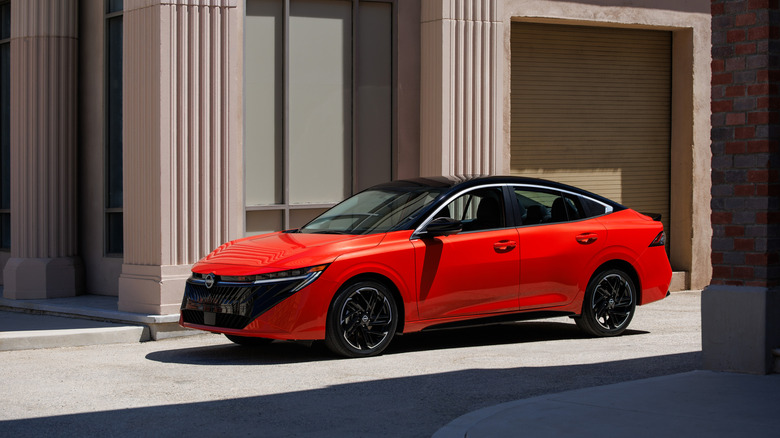
The 2026 Nissan Sentra has lost much of the nameplate's soul. It's now in its ninth generation, surviving in a world that doesn't care much for compact sedans in general. Even so, the newest Sentra does its best to emit small glimmers of its former glory.
Meaningful differentiating factors between trims are gone. Of course, you can get upgraded tech and additional features if you spring for the SR instead of the base S trim, but nothing changes the car's fundamental character. In previous generations, customers got at least two different engine options with varying levels of power, suspension tuning, and their choice of a manual or automatic transmission. In 2026, the Sentra loses all of that, sticking to just one engine and transmission – a 149 horsepower 2.0-liter inline-four driven through a CVT.
But it all makes perfect sense; the market for the Sentra is slowly dying anyway. Small SUVs and EVs are poised to continue growing in popularity, and if Nissan wants to stay in business (which hasn't been easy recently), then it needs to focus more on other models. Granted, despite its unenthusiastic demeanor, the Sentra's ride quality is good enough, and the new tech (like the huge standard 12.3-inch infotainment screen) is seriously competitive in this segment. At the end of the day, the Sentra is transportation, and when the entry fee is just $22,600, you can't expect much more.
4. Nissan Kicks: $22,430
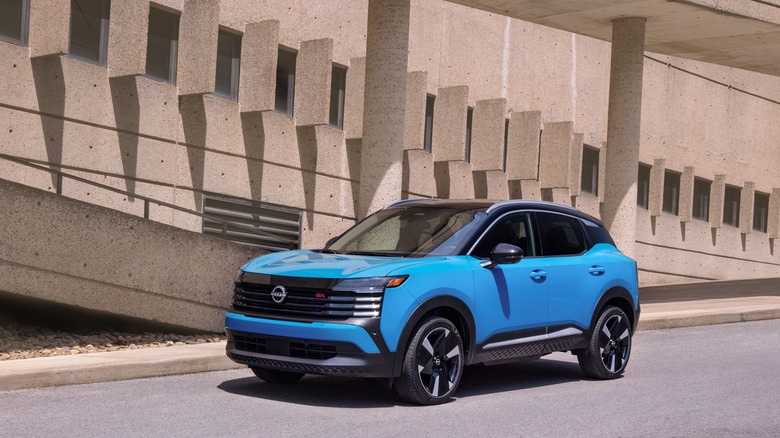
The Nissan Kicks is a relatively recent addition to the brand's lineup. Debuting for North America in 2018, it filled the hole that the oddball Nissan Juke left after its U.S. discontinuation the same year. The Juke was actually quite successful for most of its life, but in the second half of the 2010s, poor sales finally caught up with it.
The Kicks is now in the second year of its second generation, which brought a wide array of changes. It was made bigger, received all-wheel drive options, restyled the interior and exterior, and most importantly, replaced the old 1.6-liter engine in favor of a new 2.0-liter, 141 horsepower inline-four. Handling was also improved, as was cargo space, which now offers 59 cubic feet of storage with the rear seats folded down (or 50 cubic feet with AWD option).
For 2026, not much is different from the inaugural second-gen specs we've just listed — and its demerits remain mostly the same, too. The Kicks' base infotainment touchscreen is a tiny seven inches, requiring a trim upgrade to get the larger 12.3-inch unit. Additionally, while the 2.0-liter engine is better than the first-gen car, it doesn't inspire much confidence in acceleration. Plus, its limited warranty of three years/36,000 miles and power train warranty of five years/60,000 miles are just average in the current industry. But the price is the factor that makes this package feel worth it. While it used to cost less than $20,000, the current $22,430 base MSRP still makes the Kicks a top contender for affordability in its segment.
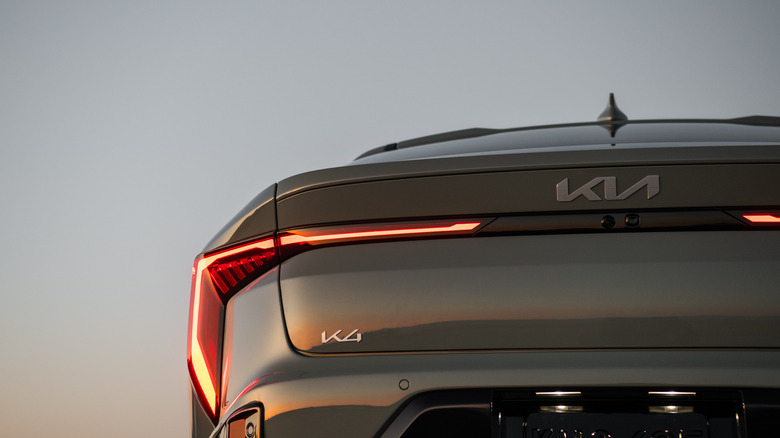
3. Kia K4: $22,290
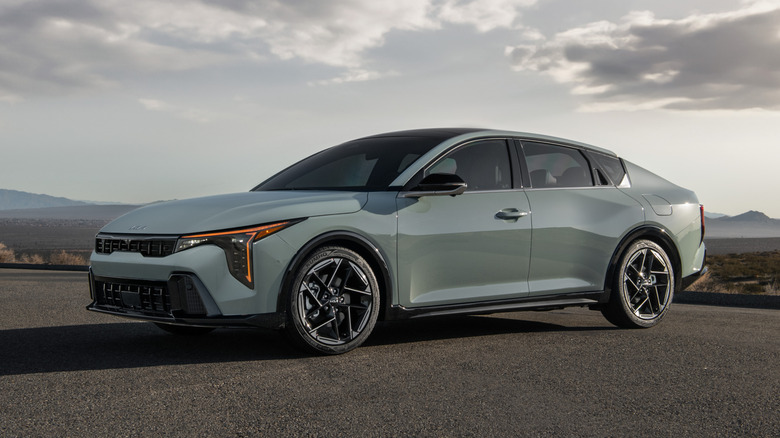
Akin to the Corolla, the compact Kia K4 spreads out its large number of trim levels (eight in total) across a span of just around $6,000. Aside from that attractive trim spread, there are other things to like at first glance — such as the exterior. The K4 has undeniably sleek lines and a sporty silhouette that shines in both hatchback and sedan body styles. Inside, Apple CarPlay and Android Auto are standard, as well as a 12.3-inch digital infotainment screen, which is usually reserved for higher trims at this price point. The flip side, however, is that the base engine doesn't back up its good looks and great standard features. It's a 2.0-liter inline-four that's good for only 147 horsepower, all connected to a CVT.
Models with the 2.0-liter are subjected to an average torsion bar rear suspension setup that limits driving engagement, but once again, better trims aren't too far away. The GT-Line and GT-Line Turbo receive a multi-link suspension, and the Turbo in particular gets a more powerful 190 horsepower turbocharged 1.6-liter inline-four, which is mated to an eight-speed automatic transmission. And if nothing else, the 100,000-mile/10-year warranty, five-star National Highway Traffic Safety Administration safety rating, and $22,290 base price should warrant some consideration for the K4.
2. Chevrolet Trax: $21,700
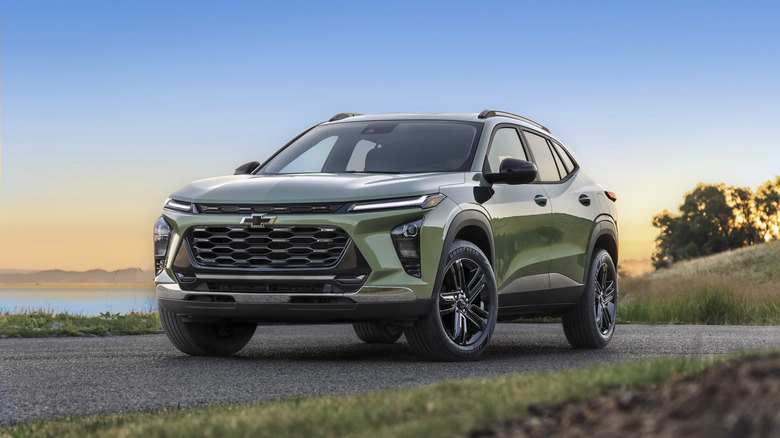
We liked the 2024 Chevrolet Trax a lot, and that positivity hasn't died down for 2026. Car and Driver has the subcompact SUV ranked first in its segment and features it on its 10Best list, and MotorTrend quipped that it "rewrites the book on affordable motoring," which is high praise for a nameplate that most folks probably wouldn't immediately recognize. Regardless, the Trax provides a package that checks more boxes while costing less than virtually its entire competition.
The SUV costs $21,700 in its base trim, making it the second-most affordable vehicle you can buy in America. From there, the Trax does well to balance practicality and driving feel, sporting a nimble and tactile suspension while housing 54 cubic feet of storage with the rear seats folded. Then we get to the cockpit, which is spacious and features digital displays that are tilted towards the driver. The screen in question is a standard eight-inch infotainment display, which is decent for this price range and segment, though customers can upgrade to an 11-inch setup in higher trims.
The biggest issue with the Trax is its puny 137 horsepower turbocharged 1.2-liter three-cylinder and the lack of any all-wheel drive availability. But even then, the lack of variety is slightly made up for by the use of a traditional six-speed automatic transmission instead of the typical-for-this-segment CVT.
1. Hyundai Venue: $20,550
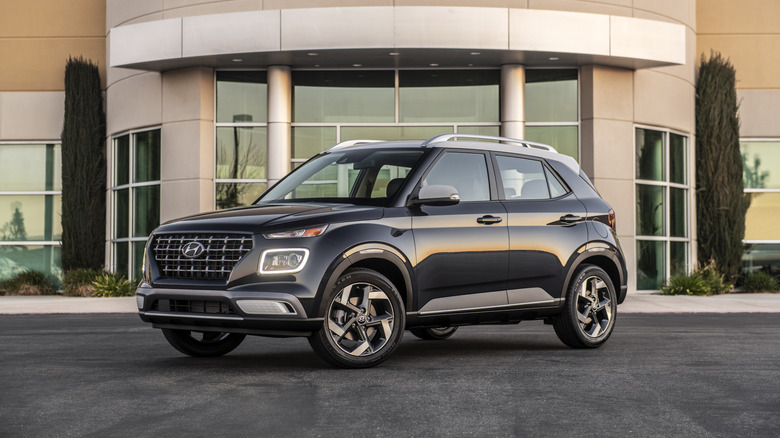
The Chevy Trax might be a petite SUV, only weighing around 3,000 pounds, but the Hyundai Venue is an order of magnitude smaller. Coming in at just about 2,600 pounds, it's a modern SUV that weighs less than a 2026 Toyota GR86. As you might guess, it's not going to fit a ton of stuff, and this is a bare-bones model through and through. But before you judge it, you should hear what the cheapest car in the entire U.S. market has to offer.
Hyundai chose to prioritize passenger room over cargo space, and as a result, seating comfort is respectable — although buyers can only fit 32 cubic feet of stuff in the back (around 20 cubic feet fewer than something like the Trax). Also inside is the infotainment setup, which includes an eight-inch screen with Apple CarPlay and Android Auto as standard.
The sole available power train is a 1.6-liter inline-four that pumps out a furious 121 horsepower and is mated exclusively to a CVT. In other words, you aren't going to be swimming through freeway traffic in this thing, but in-town commutes won't be an issue. The philosophy behind the Venue is one of necessity. If you're someone with the ability to finance $20,000 and you need basic transportation, this model is a fine choice. It's a consumer-forward product that is affordable (in this expensive economy) and doesn't pretend to be anything other than an econobox.