

Why Are Automatic Transmissions Called Slushboxes?
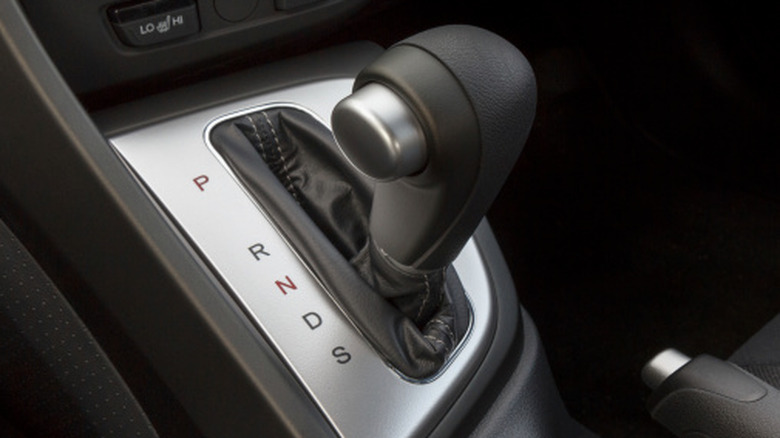
Not quite solid, not quite liquid, slush is — generally speaking — a mixture of partially-melted snow and water that can make winter driving tricky and messy. So what does it have to do with an automatic transmission? Well, some folks used to think that driving with an automatic had the same kind of loose, imprecise feel as you'd get trying to travel on winter slush. And the reason for this may come as a surprise. In most automatic transmissions with torque converters, which happens to be the typical setup today, there is no solid physical connection between the engine and the transmission. Torque converters rely on a fluid coupling, and the "slushiness" is a combination of just having the fluid in the converter and a reference to the driving feel it can produce.
In other words, it's really the presence of the torque converter that makes the difference. Technically, cars with dual-clutch automatic transmissions and eCVTs with planetary gear sets don't feature torque converters and may not qualify as so-called "slushboxes." Remember, though, that an eCVT is different from a CVT of the traditional belt-and-pulley variety, and the latter do often have torque converters — which likely contributes to their reputation for poor driving dynamics. Just keep in mind that such a reputation may not be deserved, as some experts might say your CVT hate is way overblown.
What actually makes slushboxes feel so slushy?
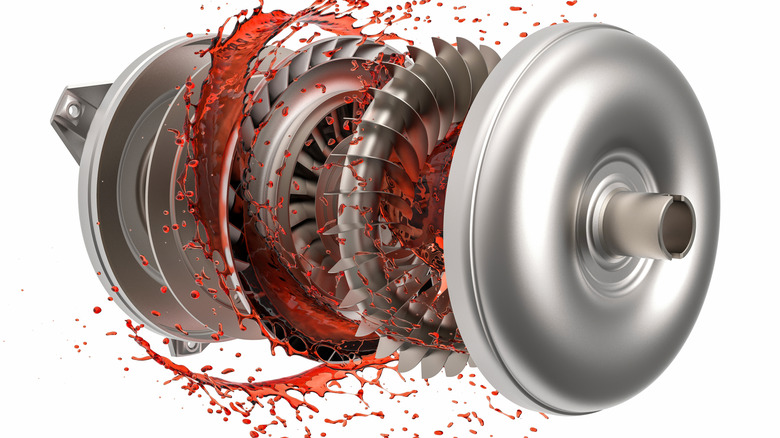
The slushiness takes place inside the torque converter's metal housing where the impeller and turbine (almost) meet in the middle. The impeller is attached to the engine crankshaft via the flex plate on the outside of the torque converter housing. Meanwhile, the turbine connects to the transmission input shaft which turns the driveshaft and the wheels.
But as mentioned, the impeller and turbine don't quite touch; between them is the automatic transmission fluid. Once the impeller begins spinning, it causes the fluid flow in much the same direction, and when the flowing liquid hits the turbine, the turbine reacts by turning as well. Of course, the reaction doesn't happen immediately, but that was originally a feature. The flexible fluid coupling makes for smoother shifts specifically because of its slight give, for a more comfortable ride.
But if traditional automatic transmissions put comfort over speed, why have automakers like BMW switched back to them from double-clutch units? For that, credit goes to the lockup torque converter that includes a locking clutch for a physical connection under certain driving conditions. Packard introduced the first one in 1949, but it's taken a few decades for them to equal the performance of DCTs. Today, experts are predicting that the use of traditional automatic will continue to slowly expand, too. The compound annual growth rate of the global torque converter market — worth nearly $4 billion in 2025 — is expected to increase 2.8% by 2032.