

RVers Are Ditching Generators For Portable Power Stations, But Are They Worth It?
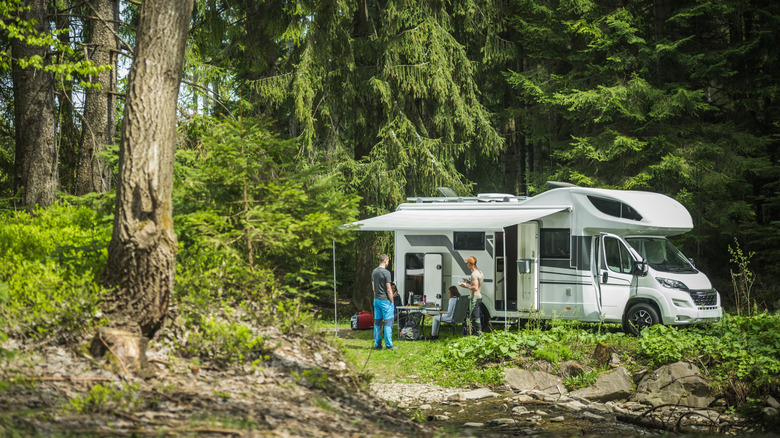
If you are a seasoned camper, you've probably noticed a silent revolution in campgrounds across the U.S.. The stench of gasoline and the constant mechanical thrum of a gas generator have gone, replaced by the silence of a portable power station (PPS). The PPS had issues with early adoption, with concerns about battery life and ability to take heavy loads, but today, it is a staple piece of equipment in modern RV living. So what changed?
The obvious answer is silence. A gas generator is no different than a gas-powered lawn mower. Both need constant engine speeds and emit a loud noise that's mostly capped at a mildly irritating 50 to 90 decibels. A portable power station, in comparison, is a large lithium (or lithium-iron-phosphate) battery attached to an inverter. It is eerily silent, except for a faint whir and hum when under load. That's a game-changer for someone who loves to go off-grid to get away from the noise.
That said, the absence of noise can't be the only reason to ditch the reliable gas generator for a portable power station. Let's check out if there are other notable factors to consider the switch if you are an avid RVer looking for the best charging solution.
Why move away from gas generators?'

Gas generators are reliable lumps used to power up your RV when shore power outlets aren't available. A generator will run your air conditioner, your microwave, and any other energy-intensive appliance you can fit into your mobile home. But the truth is, there are lots of reasons to move away from traditional generators.
Noise aside, generators emit exhaust fumes that not only smell unpleasant but can be detrimental to your health. A byproduct of the generator's exhaust can be carbon monoxide, a noxious gas, and that means you can't place a generator inside a closed space. There is also a risk of fire, not least because you are handling flammable gasoline. You need to figure out placement and ventilation for a generator every time you settle into a new park or campground.
Then there's the matter of fuel storage. Gas generators consume gasoline, so you need to factor in the amount of gas needed for the trip and carry that extra fuel with you in your RV. Like any other mechanical device running on fossil fuel, a generator also needs routine maintenance and has consumable components, which you need to budget for. And if it breaks down, you either need to be mechanically proficient or go looking for someone who is, often in the middle of nowhere.
Portable Power Station, the quiet revolution

Although it does much the same job at your campground, a portable power station feels quite the opposite of a gas generator. These large battery systems with inverters are enclosed inside a portable box with different household sockets on its panel. These are capable of delivering electricity in different forms, like AC and DC power.
The big difference between a gas generator and a PPS is that the former is a factory where electricity is produced by converting chemical energy (gasoline) into electrical energy, while the latter is a warehouse where electricity is stored to be used later. Most portable power stations use lithium-ion or lithium-iron-phosphate chemistry to store power, which makes them relatively lightweight and easy to move around. A PPS can be charged multiple times via an external power source (or using solar energy) and has no moving parts, so it requires little maintenance.
Compared to a gas generator, a portable power station has many advantages. For one, it is eerily silent and vibration-free, making it quite inconspicuous. So no more noise complaints from your RV neighbours. The same goes for smelly fumes. A PPS will produce no emissions at the point of use, which makes it perfect for use in ecologically sensitive zones such as national parks. Their lightweight portability also makes them easy to move around. You can use them inside your RV or take them outside to your picnic table or fire pit. That's almost as smart as having a wind-tunnel tested RV that used its exhaust system to incinerate your poop.
But it has limitations as well.
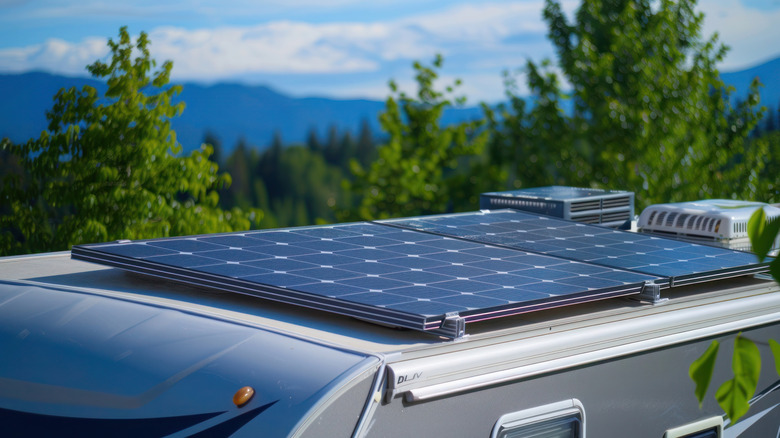
While portable power stations have many advantages, they have a few significant limitations as well. For one, they have a high upfront cost and are priced significantly higher than gas generators. A 2,000-watt PPS will cost you around $1,700, whereas a similar output gas generator can be had for around $1,100. While they are portable, the large units can be heavy and unwieldy, and if your power requirement is more, you could need more than one PPS. Another issue is the slow recharge times. Fully charging your battery pack will take around four to eight hours with a regular power source, or eight to 12 hours with the help of solar panels. In case you're thinking of adding solar panels to your RV, here's what you should know first.
Another big challenge is the limited capacity. Even the largest power stations will have a finite amount of stored energy. For example, if you are drawing 1,000 watts of electricity per hour from a 2,000-watt power station, you're only going to get enough juice for two hours. If you use heavy appliances like an air conditioner or microwave, the power station may run out of juice a lot sooner. The biggest challenge will be when you go off-grid for an extended period of time. Even a portable power station coupled with solar panels won't be able to fulfill your heavy power needs the way a gas generator can.
The power game
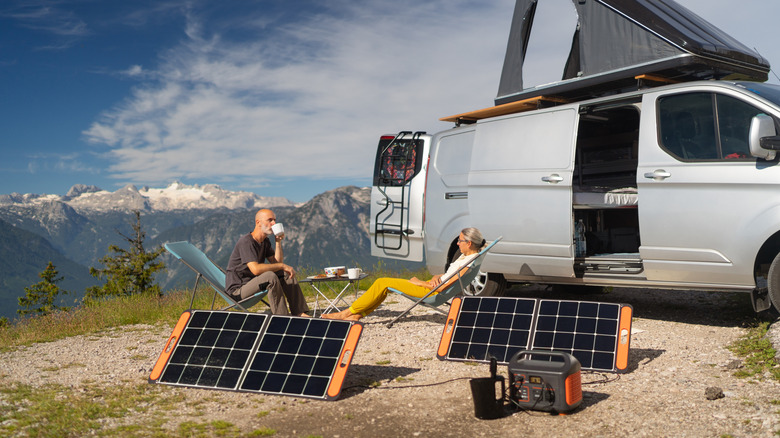
Just as there are different tires available for RVs, motorhomes and campers, there are different charging solutions to suit your needs. The biggest difference between a gas generator and a portable power station is the way they deliver power, or wattage vs watt-hours. A gas generator with a large canister of gasoline can deliver 2,000 watts for an entire day, but a portable power station rated for 2,000 watt-hours will deliver that output over a far shorter period. If you are just charging your laptop, running LED lights, or running a 12-volt fridge, the power station can last for a few hours. However, if you run a load nearing 2,000 watts, the power might run out within an hour. With a gasoline generator, you simply have to top up its fuel tank to get it running again. With a portable power station, you will have to go around searching for an external power outlet, or hook it up to solar panels.
Solar panels are often marketed as a limitless power source. But while they offer the benefit of free energy from the sun, the solar panels take a long time to charge batteries. To fully charge your 2,000-watt-hour battery, you will theorotically need solar panels producing around 500 watts, placed perfectly angled towards the sun for four hours. However, on most RVs, you'll find one or two folding solar panels offering a total 100-watt combined power output. Also, for a solar panel to work well, you need untethered access to bright sunlight. If it is cloudy or if your RV is parked under a shade, the charging speed will drop significantly. In reality, a solar panel is merely a supplementary charging solution rather than a primary power source.
Upfront cost vs long-term gain
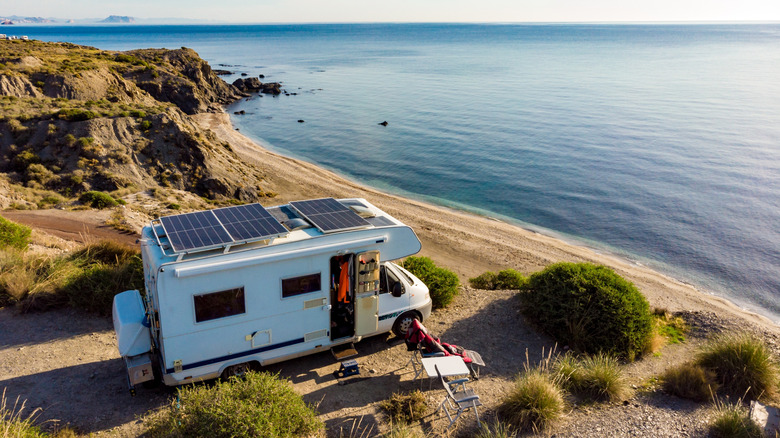
A 2,000-watt-hour high-output portable power station from a reputed brand like Segway will cost you around $1,700. In comparison, a 2,200-watt top-tier gas generator from Honda can cost around $1,100. So, on paper, a gas generator offers better value. However, a gas generator comes with quite a few associated hidden costs. You need to buy, transport, and store gasoline for the generator. It needs an oil change every 50 to 100 hours, besides routine maintenance. All these costs add up in the long run.
In comparison, a portable power station has almost zero maintenance. If you are using the more modern ones with lithium-iron-phosphate batteries, these can handle over 5,000 charge cycles. That's almost eight to 12 years of daily use. As for charging, you can get it charged at home before you leave on your trip, use solar panels, or utilize a clever trick of setting up your RV's alternator to charge your PPS while on the move. The sheer convenience of a PPS makes it a worthy investment.
Which one is better? The answer depends mainly on your usage. If you are looking at short stays at campgrounds with easy access to power outlets, and your charging needs are limited to charging phones and laptops, running LED lights and fans, running a 12-volt mini-fridge, and powering small appliances, a portable power station should work well for you. If you love off-grid living for days, in inclement weather, but need to run the air conditioner (or heater), microwave, and induction stove in your RV, you'll need a gas generator to fulfill your energy needs.