

Is Upgrading To Silicone Hoses Worth It? Here's What The Experts Say
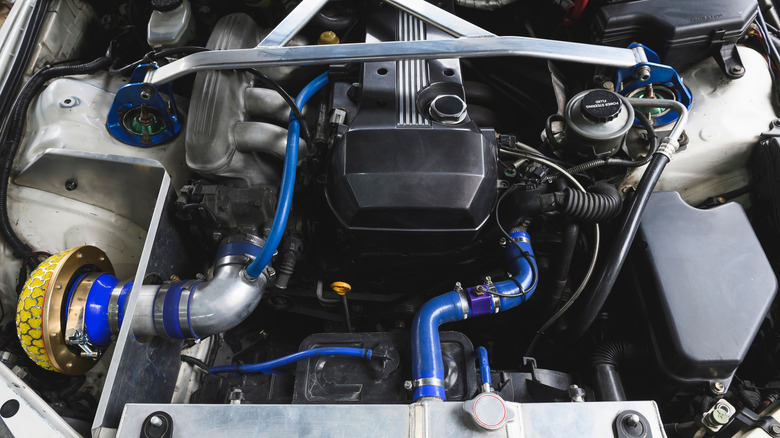
Your car's engine generates a lot of heat, whether it's a three-cylinder Mitsubishi Mirage or a burly V8 muscle car. Of course, too much heat is bad for any engine, and coolant temperatures of anything above 195-220 degrees Fahrenheit (about 90-104 degrees Celsius) should be a cause for concern. It could mean anything from a stuck thermostat (which can also cause heater problems), a clogged radiator (flushing could solve the issue unless it's extremely rusted), broken radiator fans, or leaking hoses.
In short, an overheating engine is bad news, and the hoses that carry coolant are crucial to any cooling system's efficiency. Rubber hoses are typically standard from the factory, and they tend to last four years or longer (90,000 miles or so) before signs of leaking, swelling, or degradation make themselves evident. Leaky or bursting hoses are among the primary causes of most cooling system problems, so is the chatter about silicone hoses worth considering?
As it turns out, there are significant benefits to silicone hoses besides looking cooler than traditional rubber, and they could be the superior option for modified or upgraded performance cars. "One significant advantage is their ability to resist high temperatures ... making silicone hoses suitable for a wide range of automotive applications," said the folks at Exo Racing. It all sounds great from a performance standpoint, but they might not be very worthwhile for everyday cars.
Silicone versus rubber: Which is the better hose?
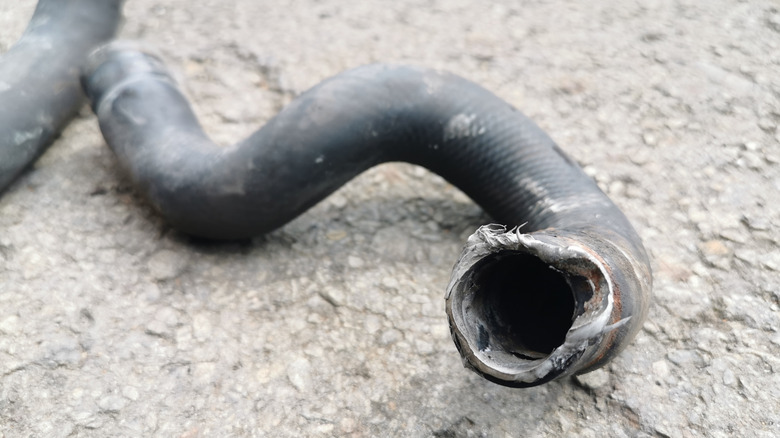
Rubber hoses have been the standard for many decades. They are cheaper to manufacture and are widely available, making them an economical option for your daily driver. Rubber hoses are also more flexible and are easier to install within the tight confines of the engine bay. "Rubber hoses are the traditional choice, being more affordable and flexible, but may not last as long under stress," said Car Mods Australia. Meanwhile, silicon hoses have gained traction over the years as being the stellar option for both stock and performance applications. Car Mods Australia mentions that "Silicone offers impressive durability and heat resistance, but comes at a premium."
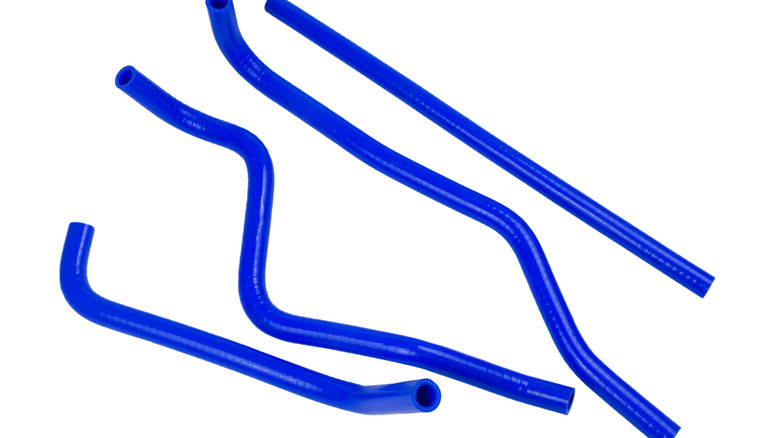
Generally, you can get upper and lower rubber radiator hoses for no more than $70, but upgrading to a silicone hose kit could cost around $115. For the price, silicone hoses offer better temperature resistance (for both hot and cold weather), superior durability, and as much flexibility as rubber hoses, making them a worthwhile investment for track cars, tuned street cars, heavy-duty trucks, and off-road machines. Plus, theiradvanced chemical resistance makes them ideal for engine vacuum pressure systems, intake pipes, cooling systems, and turbocharger piping. But for an everyday Civic, they could prove to be a bit overkill — especially for their increased cost.
It depends on the application
For an everyday Civic mostly driven in moderate weather, silicone hoses may not be worth the higher price. It's more important to keep up with routine inspections, maintenance, and periodic coolant changes to prevent leaks, overheating, and cooling system breakdowns. By doing so, the rubber radiator hoses of your car's engine have better chances of going the extra mile.
But for stock or tuned Civics being taken to the track, or off-road vehicles that regularly forge challenging terrain in severe weather conditions, silicone hoses are absolutely worth the upgrade. Their durability, flexibility, and extreme performance capabilities help to boost engine cooling even under the greatest duress. Besides, we have to admit, silicone hoses look better than rubber and can instantly spruce up your car's underhood styling. It's tempting to try them for the racing vibes alone, but their exceptional strength makes them a worthy upgrade for the right car and driver.