

What's The Difference Between Even Firing And Odd Firing Engines?
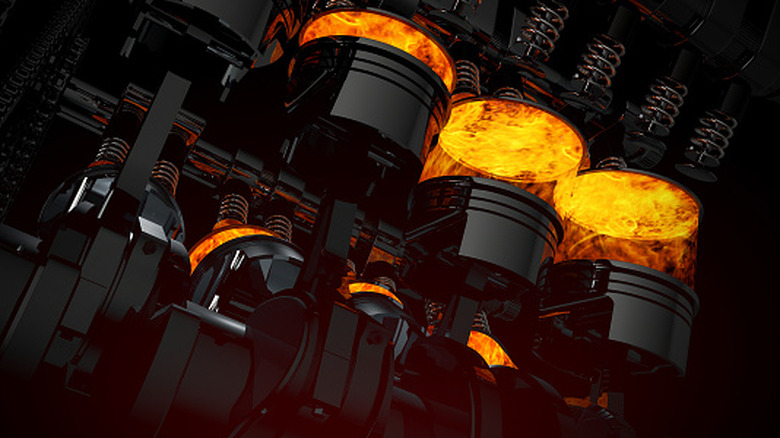
The most obvious difference between even-firing and odd-firing engines is their sound. But before we dive into that, let's understand what odd- and even-firing means. In a four-stroke engine, one combustion cycle — that's the suck, squeeze, bang, and blow sequence — is completed after two full crankshaft rotations, i.e., 720 degrees. An even-firing four-cylinder will have its firing intervals spaced 180-degrees apart (180x4=720), which is not the case with an odd-firing four-cylinder engine.
Take the Yamaha CP4 as an example. Although the engine follows the same 1-3-2-4 firing order as many other four-pots, the odd-firing CP4 fires at 270, 180, 90, and 180-degree intervals. But it's worth pointing out that the Yamaha engine uses a cross-plane crank, which is different from the flat-plane design common in four-cylinder engines.
While crank design influences engine balance and redline (among other things), its effect on sound is more intricate than you might think. A lot of factors are at play, right from the firing interval to how evenly those pulses reach your ears. Although both flat- and cross-plane V8s share the same 90-degree firing interval (90x8=720), they sound entirely different because of the way the cylinders fire and how each of the exhaust pulses are routed.
Unlike flat-plane V8s, cross-plane V8s have two cylinders on the same bank that fire in quick succession. Admittedly, that means the flat-plane V8 has a much freer exhaust, but cross-plane engines offer a signature burbly sound, as opposed to the smoother, high-pitched whine of a flat-plane V8.
Firing interval and its impact on sound
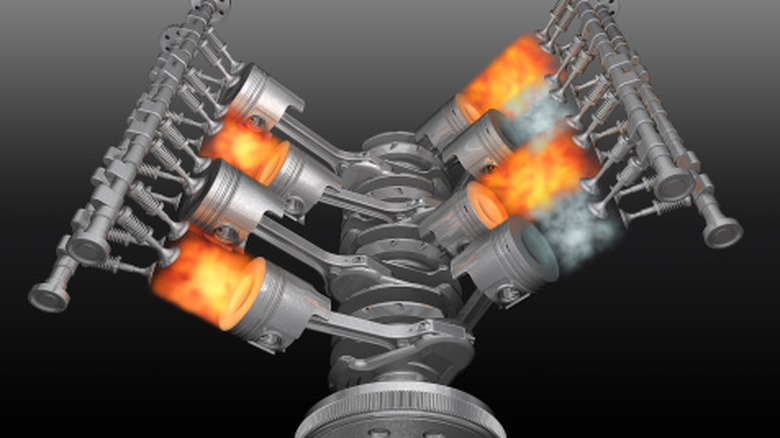
The original, 5.0-liter Lamborghini Gallardo, which is already old enough for a restomod, sounds quite different from the later 5.2-liter V10 versions. While there were lots of technical changes, you could argue the primary reason is that the engineers switched from the 5.0's 72-degree even firing interval to an odd-firing 54 or 90-degree setup in the 5.2. This is also partly why the odd-firing BMW S85 V10 sounds very different from the Lexus LFA's even-firing naturally aspirated V10 and its glorious exhaust note.
The second part of the sound equation has more to do with header lengths, manifold, and muffler design. Technically, installing equal-length headers on an STI's EJ25 will make it lose its signature boxer rumble and bring its sound a lot closer to an inline-four Civic. Choosing the right sort of firing interval can impact how easily you can design/tune the intake and exhaust system. Not only that, but the firing sequence can also affect engine stability and smoothness, more specifically, the torsional vibration experienced by the crankshaft and bearings.
Honda's motorcycle division found that spacing the firing between 67-68 degrees on its V4 GP bikes (from the '90s) gave them a traction advantage mid-corner. This kind of firing was called the "Big Bang" firing order. The concept was so good that others within the GP racing scene started using it. Since power pulses interfere with tire grip, the close firing order meant that a long 269-degree window was available for the tire to establish grip before putting the power down when the cylinders fired up again. Mind you, this was the pre-traction control era.