

Why Some Wheels Have 4 Lugs While Others Have More
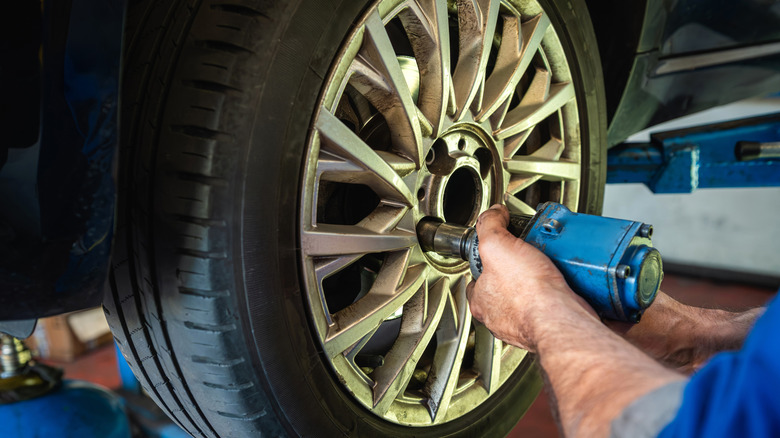
The reason why some cars have wheels with four lugs while others have more boils down to the size, weight, and performance intent of the vehicle. For instance, subcompact hatchbacks and compact sedans will most likely have four lug nuts. That's because small cars have small engines that don't generate as much force on the wheels as something like a sporty midsize sedan.
On the other hand, heavier cars could have five, six, or eight lug nuts mainly due to their size, weight, engine capacities, performance capabilities, towing prowess, and more. In other words, the number of lug nuts depends on the required clamping forces for the vehicle to accelerate, turn, brake, and corner at speed without the wheel detaching from the hub.
We're not saying that vehicles with four lugs are inferior to those with five or more, since there are a few advantages to having four-lug hubs. The differences might be minuscule, but less hardware means less unsprung weight, and four-lug hubs are the winners in this regard. Next comes the cost, since hubs and rotor assemblies with four lugs are cheaper to make and require less machining.
Not all lug nuts are the same
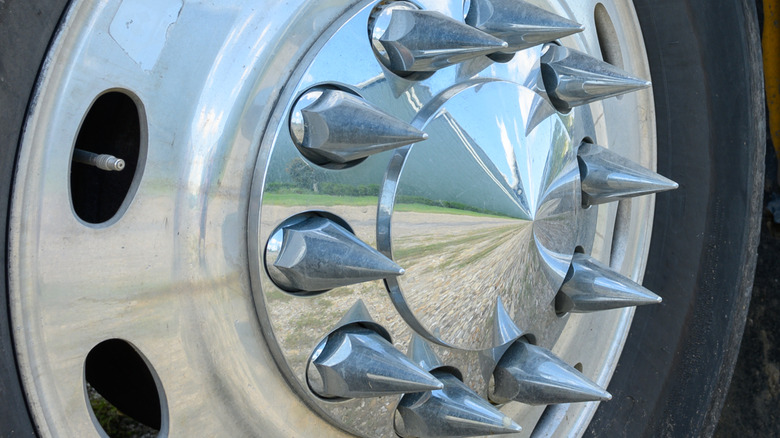
Regardless of the number, your vehicle could have lug nuts or lug bolts. Lug nuts fasten to wheel studs in the hub, while lug bolts screw into threaded holes in the hub. The latter is most commonly found in cars from European brands. There are also many different types of lug nuts, and some are even notorious for swelling and breaking due to moisture contamination.
Whether your wheel has four or five lugs, the critical part is knowing the right size. Lug nuts not only differ by type or color, but also by the stud diameter and thread pitch, which are typically expressed as numbers like 10 mm x 1.25 or 12 mm x 1.50. The first number is the stud diameter in millimeters, while the second refers to the thread pitch, which could either refer to the distance between each thread or the number of threads per inch.
You should refer to your owner's manual to know which types and sizes of lug nuts are compatible with your car. You should also know the Pitch Circle Diameter (PCD) or bolt pattern of the hub, especially when upgrading to aftermarket wheels. Matching the PCD will ensure the wheel's ability to fit into the hub, but the offset and center bore are of equal importance. The former is a measurement of the mounting surface relative to the centerline of the wheel, while the latter ensures the wheel is centered on the hub.
When to replace lug nuts or lug bolts
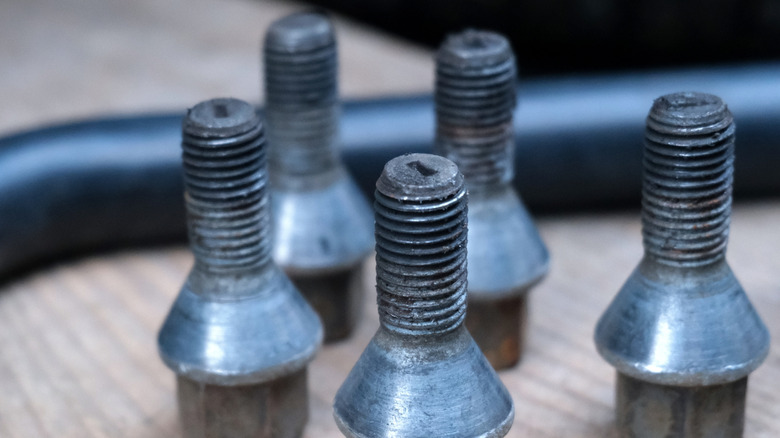
The stock lug nuts and lug bolts of your ride are fairly durable and can last many years without issues. However, they're not impervious to rust, corrosion, and damage caused by overtightening. While there's no specific required time or duration to replace the lug nuts of your ride, it's time to consider a new set if your existing ones have stripped threads, extreme rust, cracks, or visible signs of deformity. It's also a good idea to get a new set when upgrading to aftermarket or custom wheels, since the old nuts might not fit flush with your new rims.
If you're replacing them yourself, steer clear of putting in lug bolts with visible signs of rust, corrosion, or deformation on the threads. On some vehicles, the lug bolts are wear items that might need replacing every so often, so check the owner's manual — especially if you have a high-performance vehicle. Finally, make certain to torque the nuts or lug bolts to spec if you're DIY-ing the entire thing, since overtightening is a small mistake that causes big-time damage.