

These Are The Brands That Are Still Selling Manuals In 2026
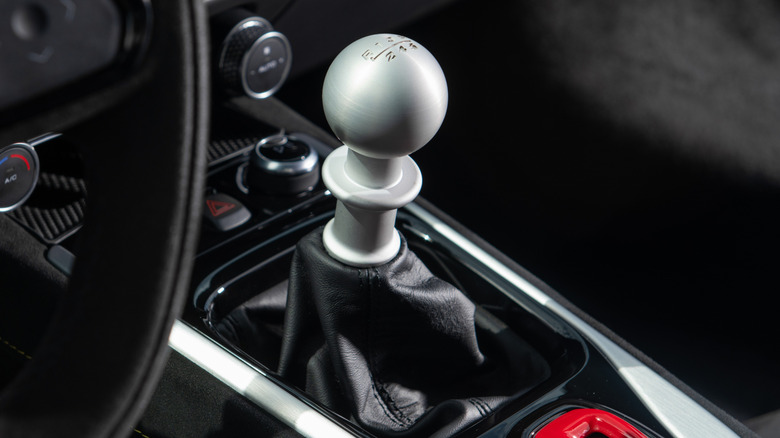
Being a "save the manuals" person is akin to being an Arby's enthusiast. Nobody else really cares to indulge, and they're slowly being pulled from public consumption. And just like Arby's, slowly dwindling manual transmission sales make them a generally poor business proposition for car companies that want to make a profit (i.e., all of them). So why then are manual transmissions — and Arby's Beef N' Cheddar — still being offered to the public?
Well, because even if there were just one location left in an Arby's lover's state, you know damn well they'd make the trip a dozen times before they ever stepped foot in a Panera Bread. The same rings true for the driving enthusiast. Sales data indicates that when a model is offered with a manual, enthusiasts will order it, even if a "healthier" automatic option is available — just look at how well manual transmissions sold in 2024.
There aren't many automotive brands still committed to the H-pattern days of old, but if you happen to be the kind of enthusiast we've been describing (who also has new-car money), these companies should be on your radar.
Volkswagen
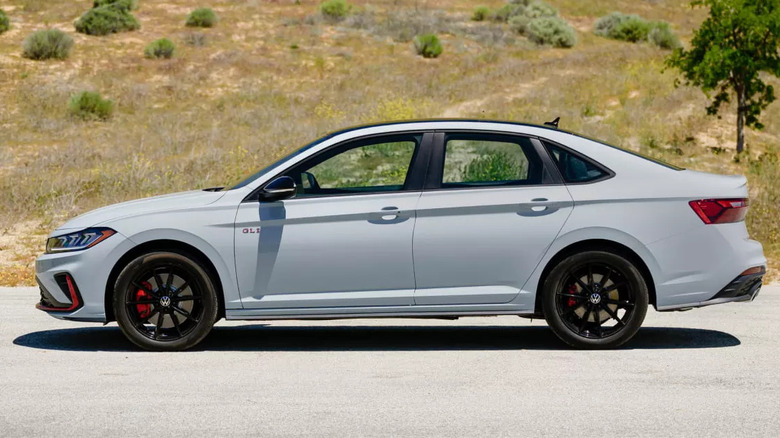
This Volkswagen section should feel a bit heavier than it does, because now there's only one VW-branded product that offers a manual transmission, and it isn't a Golf. Much to the chagrin of VW people everywhere, neither the GTI nor Golf R come with a stick anymore, meaning that currently, the lone thread connecting this brand to the driving community is the Jetta, VW's long-standing compact sedan.
Buying just any 2026 Jetta isn't enough, though. The elusive manual transmission option is buried at the very bottom of the spec sheet, reserved for only the most expensive GLI trim. Starting at $34,970, the GLI is almost $10,000 more expensive than the base Jetta, but what you get for the money is nothing to shrug off.
The front-wheel-drive GLI is powered by VW's 2.0-liter turbocharged inline-four, which packs a 228 horsepower, 258 pound-foot punch. Our crown jewel is that standard six-speed manual, though buyers can also opt for a seven-speed dual-clutch automatic (it's more expensive than the manual). Every GLI also comes with the Autobahn package, which includes additional tech, leather seats, and adaptive dampers. It's a sweet little set of wheels, but Volkswagen, pretty please, put that six-speed back in the Golf.
Toyota
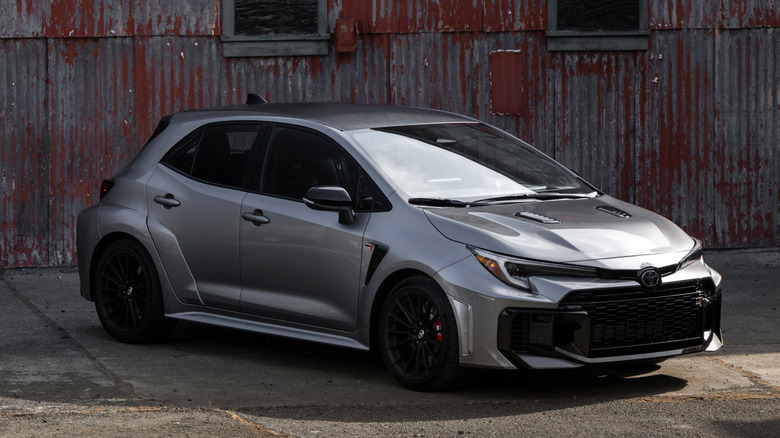
Toyota is a member of a distinct club on this list, currently offering a manual gearbox on four different models. To older folks, that may feel like the bare minimum, but as we continue down the list, you'll begin to see why four is impressive in the modern automotive industry. Though honestly, this section should be titled "Gazoo Racing" because Toyota's performance division is doing most of the heavy lifting with respect to the brand's inventory of stick shifts.
The GR Supra, GR Corolla, and GR86 make up Toyota's entire performance/enthusiast lineup, and they all come with the option for a six-speed manual. The Supra is in its final year of production, and now that the turbocharged four-cylinder option is no longer available, the BMW-sourced turbocharged 3.0-liter straight-six (382 hp) is the only option left. Under the hood of the GR Corolla is the 300 hp turbocharged 1.6-liter inline-three, and the GR86 retains its 228 hp 2.4-liter boxer-four.
This GR lineup isn't just special for its manual availability (though that is important), but also due to its variety. We get the choice between three wildly different body styles, with three distinct engines, all with different numbers of cylinders. Pretty cool. But hey, there's one we can't forget about, and that's the 2026 Tacoma pickup, which also comes with a six-speed manual option for non-hybrid trims.
Subaru
Subaru doesn't even mass-produce a traditional torque-converter automatic anymore. By the mid-2010s, those had been nearly eradicated from the brand's lineup and replaced by Subaru's continuously variable automatic transmission (CVT), which uses a set of cone-shaped input and output pulleys modulated and connected by a movable band, which changes the gear ratio without the need for gears. They're genius (and were actually banned from F1 for being too good), but trust us, you still don't want a CVT.
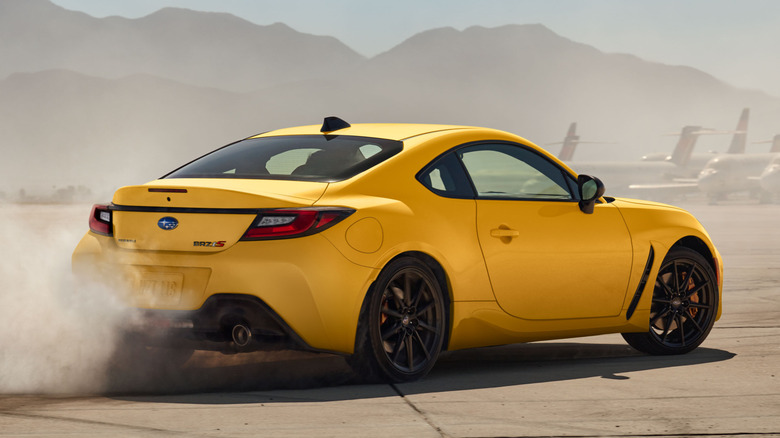
This leaves most of Subaru's modern vehicles with two options: CVT or manual. But it isn't that simple. While customers used to have manual offerings in models like the Forester, Outback, and even the Crosstrek, that pool has dramatically shrunk by the present day. Now, the only cars sold with manuals are the sporty ones — the BRZ and WRX.
Both use Subaru's 2.4-liter flat-four, but the WRX's engine is turbocharged to make 271 hp, versus the BRZ's 228 naturally aspirated ponies. The two Subies are also both offered with a six-speed manual, but while the WRX's other transmission choice is the universal CVT, the BRZ's alternative is special. Because of its shared platform with Toyota, it retains the only traditional six-speed automatic transmission option.
Porsche
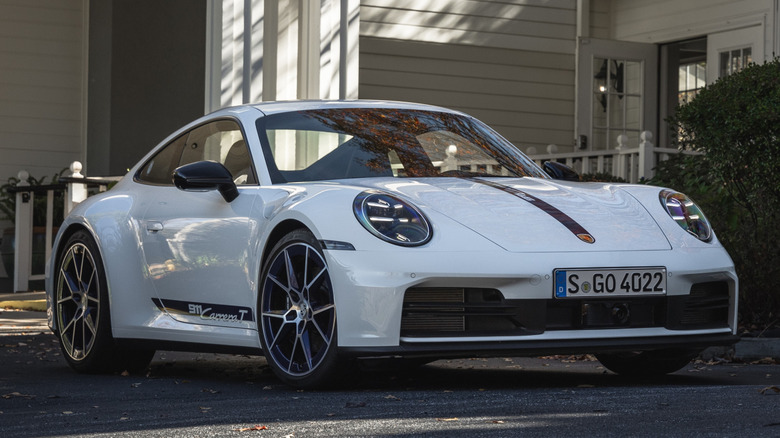
One major pillar of Porsche's sports car lineup is still in limbo for 2026, and that's the 718. Originally, it was settled that the new generation 718 Cayman and Boxster would transition to 100% electric power. However, in late 2025, it was revealed that Porsche is changing its mind, and now plans to keep a gas engine as an option for the entry-level sports car (and possibly even kill the EV 718 altogether). How does this relate? Well, the 2026 Porsche 718 (new-gen) hasn't been released just yet, and though we know an internal combustion engine will appear, we aren't sure whether it will be driven through a manual gearbox.
Not to mention, if the 718 had continued on its full electrification journey, we would certainly never see another manual version. So, as far as the 718 goes, the jury is still out. The other main pillar, the flagship 911, does, in fact, offer a manual, but not quite to the degree it used to.
The cheapest way to get into a stick-shift 911 is the $146,000 Carrera T trim, which is thankfully towards the bottom of the 911 range (just one notch up from the base Carrera). After that, however, the 911 enters a dry spell. The Carrera S, 4S, and GTS variants (there are a lot of them) only come with the eight-speed dual-clutch automatic. The only other 911 you can shift yourself is the GT3, which comes with a six-speed stick in both regular and Touring forms. Both cost over $230,000 before options.
Nissan
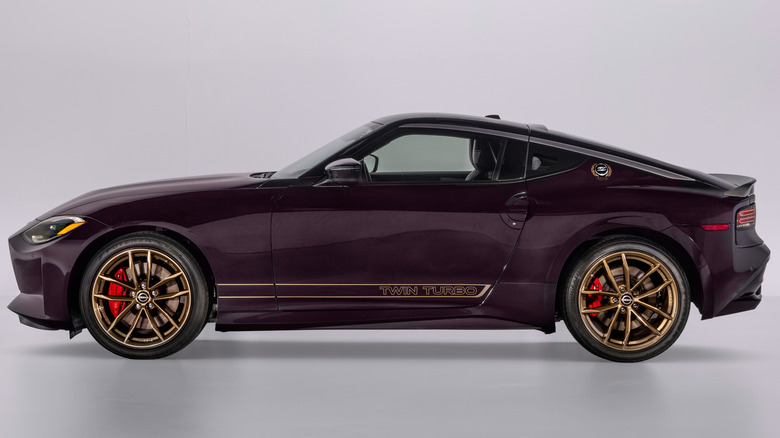
In the 2025 list of remaining manual transmissions, Nissan had two representatives to its name: the fairly expected Nissan Z and the compact Versa. The latter was among the final economy cars that came with a manual transmission in the name of affordability. Plus, it had the only five-speed manual on sale at the time. In 2026, not only is the Versa's manual gone, but the Versa as a whole went to a farm upstate, with Nissan pulling it from production.
Now, the Z is the final survivor, though still one is better than nothing. The 2026 Nissan Z doesn't change much from the previous year, retaining the same platform and mostly the same trim levels from 2025. The twin-turbocharged 3.0-liter V6 is also back, making 400 hp in Sport and Performance trim and 420 hp in the race-ready NISMO variant. The six-speed manual is available across every trim except the NISMO, which is now apparently getting one for 2027 (finally).
What is new for the 2026 Nissan Z is the Heritage Edition package, which offers special 19-inch bronze wheels, "twin-turbo" graphics, a new carbon rear spoiler, and the iconic Midnight Purple paint. Even cooler, the Heritage Edition was created as a tribute to the fourth-generation 300ZX, giving new Z buyers a bit of history for their extra cash.
Mazda
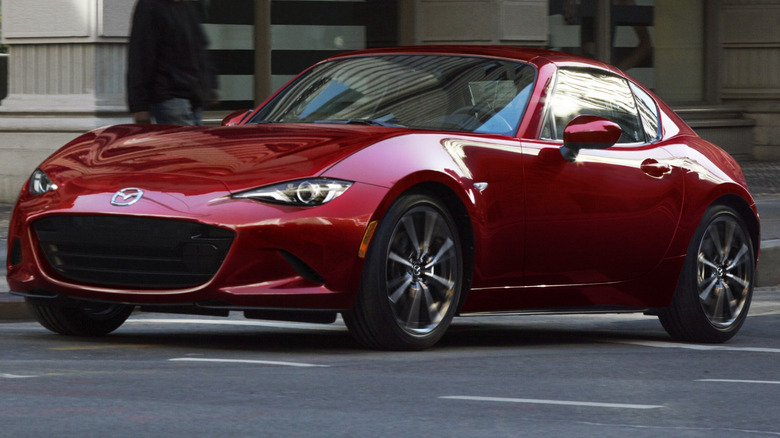
The day the Mazda 3 ditches the manual transmission will be a sad one, but if the Miata ever followed suit, we fear the gates of Mazda HQ would be breached and ransacked. Fortunately, that's only a hypothetical in 2026, because both of those cars retain their manuals for this current model year.
The Miata's six-speed manual transmission is connected to just one engine that powers all trims — a naturally-aspirated 2.0-liter inline-four that produces 181 hp. For those uncultured enough to opt against a manual Miata, there is a six-speed automatic option. The Mazda 3 also has a six-speed manual and automatic transmission, but its powerplant is different.
Instead of the Miata's 2.0-liter, the Mazda 3 receives a pair of 2.5-liter four-cylinder engines. The first is the 191 hp naturally-aspirated base motor. The latter is only available in the Turbo Premium Plus trim, which tops the price list at $37,975. The manual option is reserved for the naturally-aspirated 2.5 S Premium Hatchback.
Lotus
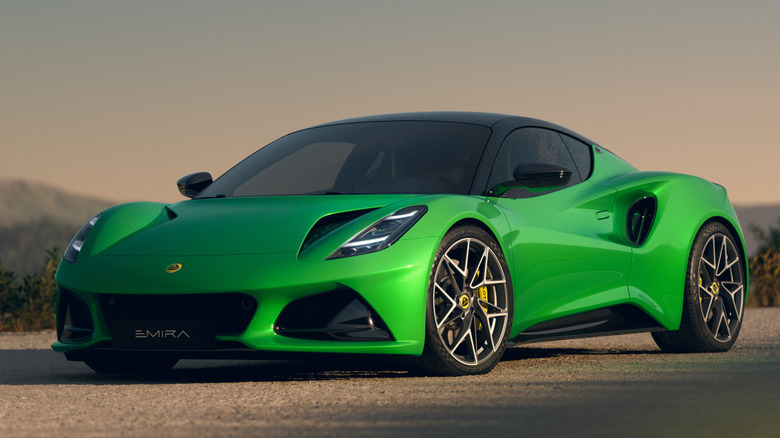
Lotus only makes four cars right now: the Eletre SUV, the four-door Emeya sedan, the Evija hypercar with over 2,000 hp, and what is confirmed to be the last purely gas-powered Lotus of all time — the mid-engined Emira. The question of when the Emira will go out of production still looms large, but there's reason to believe it could live on until the end of the decade. Regardless, the eventual loss of the internal combustion element of Lotus' sports cars will hurt deeply.
Thankfully, for the time being, the Emira stays gas-powered and manually-shifted. Underneath its slim and sleek body panels lie your choice of engine, between the traditional Toyota-sourced supercharged 3.5-liter V6 or the Mercedes-sourced turbocharged inline-four. Both powerplants produce an even 400 hp, but the turbo-four has the torque advantage, putting down 354 lb-ft versus the V6's 310 lb-ft.
Importantly, the six-speed manual transmission is only available with the V6 (a six-speed automatic is also offered), whereas the inline-four's only pairing is an eight-speed dual-clutch. Moving forward, we hope that Lotus' lightweight philosophy can still shine through the heavy EV batteries it plans to employ across its future lineup, though for now, we can at least enjoy the Emira.
Jeep
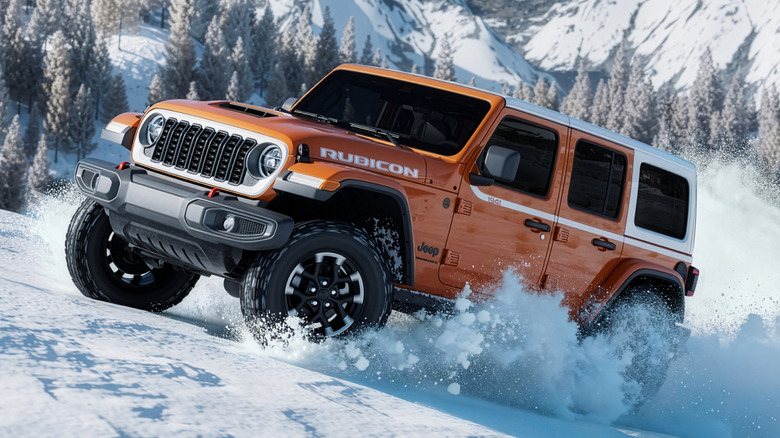
For the 2025 model year Wrangler, Jeep made an unprecedented move in the modern automotive industry and offered the V6-powered Wrangler with a manual transmission only. Then, a few months later, customer complaints flooded in, demanding that the base Wrangler offer the automatic. The manufacturer complied, but for a brief moment, the V6 Wrangler was stick-only. For 2026, despite the large public affinity for the automatic, Jeep has stuck by its roots and continued to offer a manual in the V6 Wrangler.
The V6 in question is a 285 hp naturally aspirated 3.6-liter unit. It sits at the bottom of the tower underneath the turbocharged 2.0-liter inline-four (270 hp) and the big boy 6.4-liter V8 (470 hp). Those two engines come exclusively with an eight-speed automatic, while the V6 pairs with both the auto and manual.
Aside from our delight regarding the survival of the six-speed V6 Wrangler, our favorite (and funniest) part about the 2026 Wrangler is what Jeep has planned for it over the remainder of the year. No joke, the brand intends to release a dozen (yes, 12) special editions of the Wrangler, launching one for each month. We don't yet know what each one will be, but the first two months are already out there, starting with the "MOAB 392" and the most recent "Whitecap."
Hyundai
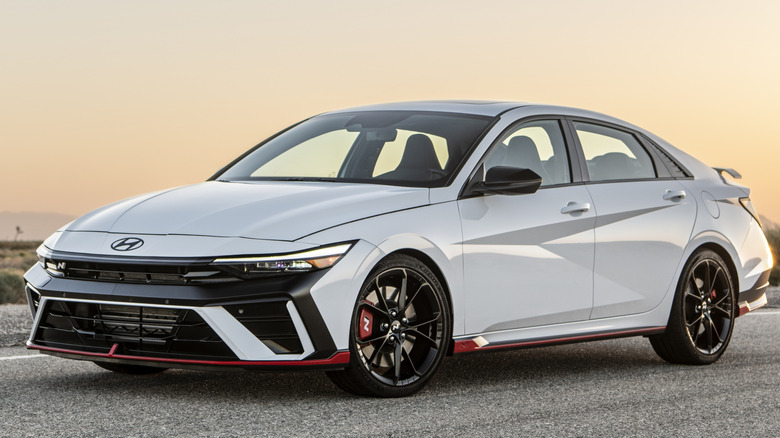
Like any good performance sub-brand, Hyundai's N division is the driving force behind the manufacturer's enthusiast outreach. We did lose the Veloster N (and the Veloster model altogether) after 2022, but the Hyundai Ioniq 6 N is on its way, and reports indicate that Hyundai wants to have at least seven N-branded models by the turn of the next decade.
Of the two remaining N products, the Ioniq 5 N and the Elantra N, it's the Elantra that sports Hyundai's one and only manual transmission (the Ioniq 5 is electric). Specifically, the Elantra N offers a six-speed gearbox (or an eight-speed automatic) that pairs with the model's sole engine, a turbocharged 2.0-liter inline-four.
Output is rated at 276 hp and 289 lb-ft of torque, though the Korean compact hides a little ace up its sleeve for extra oomph. A red "N Grin Shift" button temporarily increases horsepower from 276 to 286 (only available with the automatic), prompting enthusiasts everywhere to see if they can actually feel a 10 hp difference when they try to overtake a Prius on the freeway.
Honda
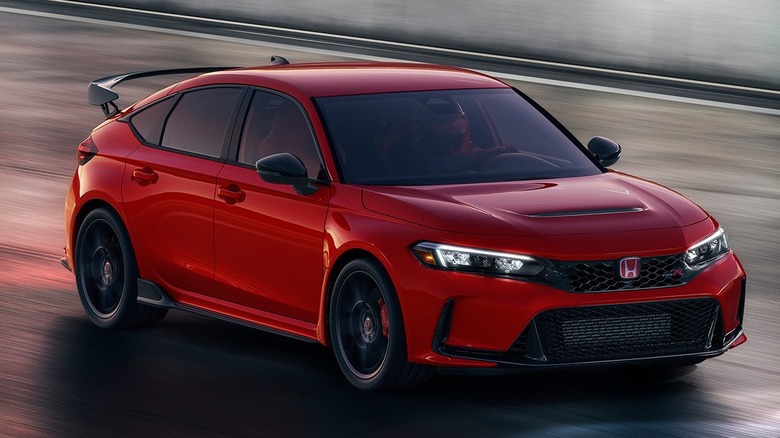
The S2000 is gone, the NSX is out of production (and was never offered with a manual in its latest iteration), and the Accord coupe is a thing of the past — thank god we still have the Civic. The compact sedan is the only Honda left that offers a manual transmission, and we enthusiasts are lucky enough to decide between two very distinct versions of it.
Both the spicy street Civic Si and track-ready Civic Type R are available with that sweet six-speed gearbox sent from the heavens, but other than that, these two are far from identical. Compared to a base Civic, the Si receives larger brakes, stiffer suspension, and a turbocharged 1.5-liter inline-four producing 200 hp and 192 lb-ft of torque.
The Type R, on the other hand, is a major step above the Si, sporting an even more aggressive suspension setup (with a special front-end geometry that limits torque steer), a bunch of extra aero bits, and a larger 2.0-liter turbo-four that puts down 115 more horses than the Si, for a final tally of 315.
Ford
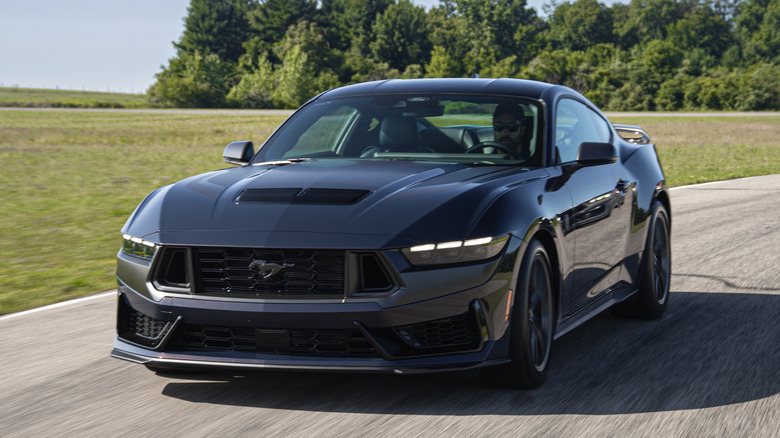
Manual transmissions used to be a bare-bones model type of thing. The car with no bells and whistles and the basic motor would come standard with a manual gearbox. The Mustang was that car, at least until 2024, when the base EcoBoost dropped its six-speed in favor of a 10-speed auto-only build sheet. Then the ultra-limited Mustang GTD arrived exclusively with a dual-clutch, only further squeezing the stick-shift Mustangs residing in the center of the lineup. Now, only the GT and Dark Horse variants receive the H-pattern treatment.
For those seeking out the manuals, you'll be pleased to learn that the base GT is more powerful than ever in 2026, housing a 5.0-liter V8 that now produces 480 hp and 415 lb-ft of torque, while the Dark Horse turns up the volume a bit, extracting an even 500 horses from the 5.0-liter.
We'd be remiss, however, if we glossed over the Ford Bronco, the only other non-Mustang with a manual. To specify, it's the regular, bigger Bronco (not the Bronco Sport) that, if equipped with the 300 hp EcoBoost, can be fitted with a unique seven-speed manual transmission.
Cadillac
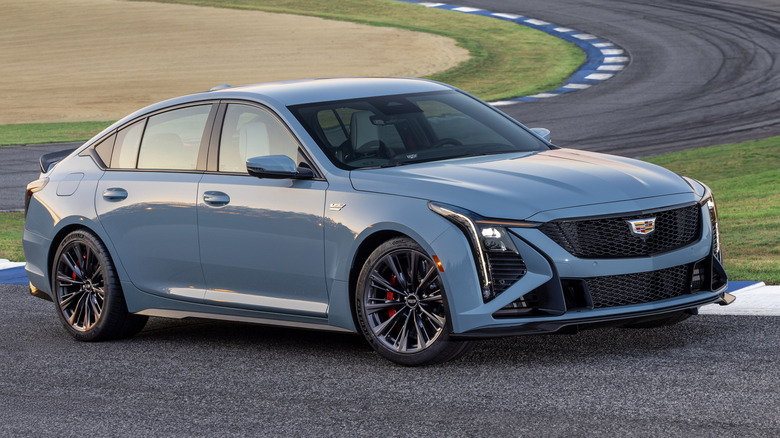
The Blackwing siblings (CT4-V, CT5-V) represent a dying breed in America, not just because they offer manual transmissions, but because they're the only American sedans left in existence that do so. They also just so happen to be fantastic to drive. Go figure.
A whole book could, and probably will, be written about the death of the sedan in favor of larger SUVs or smaller, more efficient electric commuters, but for those enthusiasts who still like a fun compact or mid-size car with four doors and a stick (not to mention rear-wheel drive and a V8 option), and don't like to sit 10 feet above the ground, the Cadillacs are the last survivors.
The CT4-V is the smaller of the two, and as such, is powered by a twin-turbocharged 3.6-liter V6, capable of 472 hp and 445 lb-ft of torque. It's rear-wheel drive only and comes with a six-speed stick or 10-speed automatic. The bigger brother CT5-V utilizes a 668 hp supercharged 6.2-liter V8 and the same transmission options as the CT4-V. This magical four-door combination isn't cheap, though, with the CT4 and CT5 Blackwings starting at around $65,000 and $102,000, respectively.
BMW
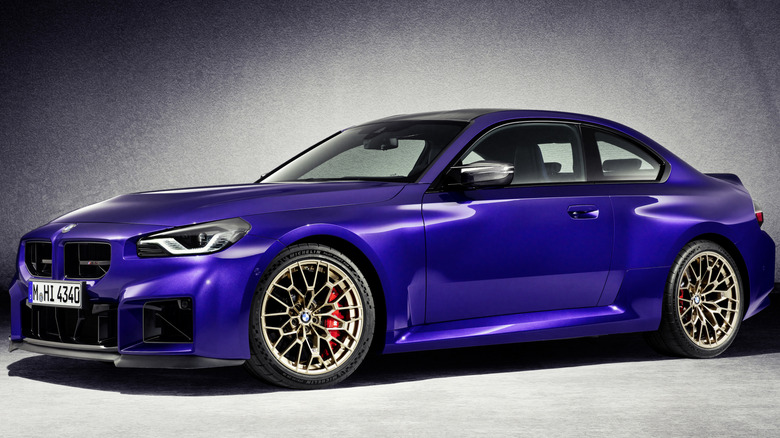
As much flak as BMW gets for losing its classic charm over the last decade or so, one can't deny this brand's contemporary commitment to the manual transmission. BMW joins Toyota as the second and final brand on our list to feature a total of four models with manual transmission options, those being the M2, M3, M4, and Z4.
We do wish that the M5 would join the club, especially considering the Z4 will be going out of production (along with the Toyota Supra that borrows its platform) later this year, but with the remainder of the M-division family (plus the Z4) still in the stick-shift game, enthusiasts ought to count their blessings.
The four cars we've listed all offer a six-speed manual or eight-speed automatic transmission, depending on trim. What we thought was even more fascinating is that all four of them rank in the top three or better in their respective segments, according to Car and Driver's ratings.
Acura
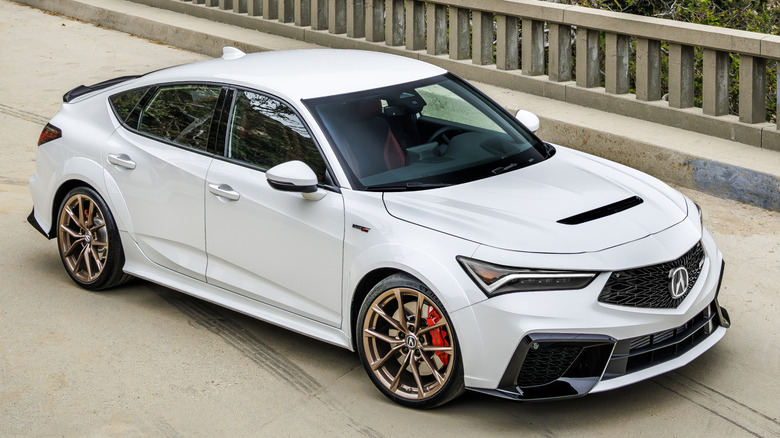
Similar to the Civic, Acura's Integra features two performance-oriented trims that come with a six-speed manual transmission. First is the A-Spec Technology, which carries a 200 hp turbocharged 1.5-liter inline-four, an adaptive suspension setup, a set of larger 18-inch wheels, and a more eclectic exterior design when compared to the base model.
Second is the Type S, of course, featuring higher-quality materials and a more elevated luxury feel than its Honda cousin (Civic Type R). Plus, though it's not by much, the Integra Type S makes more power — 320 hp versus the Civic Type R's 315 hp (they both use the same turbocharged 2.0-liter four-cylinder).
We weren't initially convinced that a gussied-up Civic like the new-gen Integra could deliver a driving experience on par with both the delightful Civic and its very own legacy that dates back decades. But our own Amber DaSilva found out that the Integra, especially the Type S, was much greater than the sum of its parts on paper. And the ever-amazing Honda gear lever between the seats was no insignificant player in that account.