

This Ferrari Has Earned Its Patina So You Jabronis Better Not Restore It
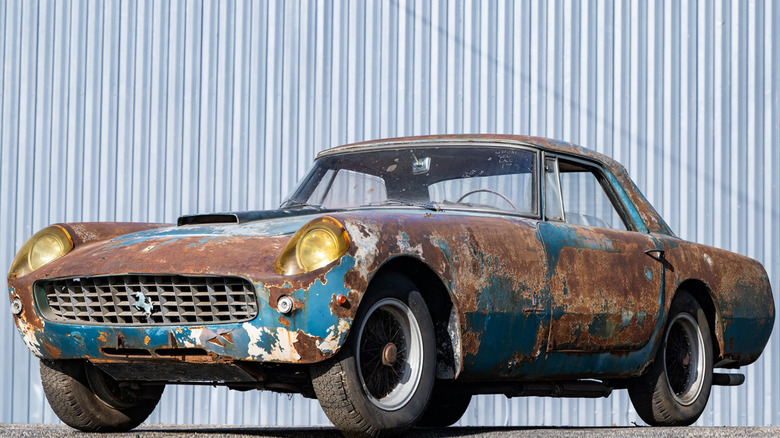
I'm nearly positive that a statistically insignificant portion of the Ferrari community agrees with me, but this 1959 Ferrari 250 GT Coupe coming up for auction in March is aesthetically perfect as it sits. Any effort to restore this car back to like-new condition would be not only a waste of money, but a near-criminal automotive sin.
There's an old saying in the vintage car community that a car is only original once. As soon as you commit to restoring a vehicle, trying to get it looking like new again, its originality has been compromised. An original vehicle, and especially one with heavy patina, is a vehicle that has lived a life, has stories to tell, and brings a little of its history along for the ride every time you drive it. A restored vehicle, however, is a liability that owners are often reticent to drive, fearing that adding miles to the odometer will make it less than perfect again.
 Gooding Christie's
While perusing the Gooding Christie's auction catalog for the upcoming Amelia Island Auctions next month, I noticed a vehicle with so much presence it stopped me in my tracks. Any old joker with money can have a perfect Ferrari 250 GT Coupe, but only one person (also with money) will be able to have this incredible patina machine. Over the last 57 years, it has aged like a fine wine, and much like grapes that sit on a shelf for decades, it has the kind of flavor a true connoisseur could enjoy.
According to the auction listing, this car has been in static storage, untouched by the light of day since man first set foot on the moon. And that delicate Pinninfarina bodywork looks all the better for it. When it isn't nasty and structural, rust can absolutely create an aesthetically miraculous vision.
Don't you dare repaint this car
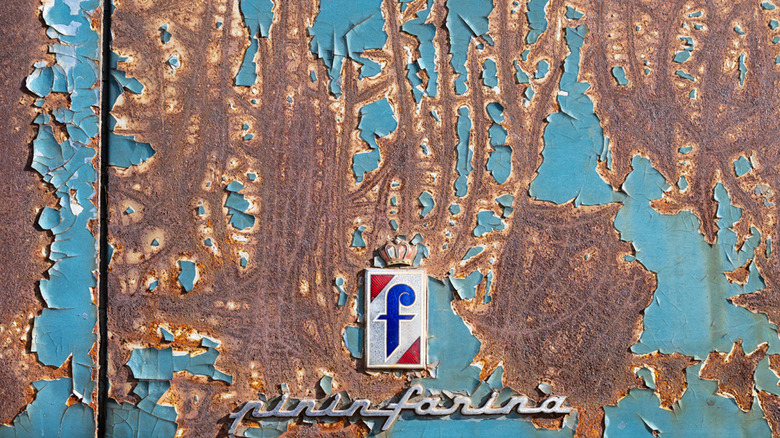
This 250 GT is the 158th of just 353 examples built between 1958 and 1960. Even without the decades of life lived reflected in its skin, this particular example had some unique qualities that originally set it apart from the 352 built in 1959. In-period modifications included the shaved bumpers and Carello headlamp covers, dual ignition switches, earless knock-off wheel nuts, and a relocated battery and fuse panel, suggesting it spent some of its early years in the throes of on-track competition.
 Gooding Christie's
By the time this car celebrated its tenth birthday, it had already been owned by seven different people. The first two in Rome, then four in Brescia, before heading to Switzerland. In late 1969, the car was sold to a U.S. serviceman in Germany who shipped it back home to Newark, New Jersey. Once at home in the Garden State, the serviceman drove it a few times before putting the Ferrari in storage and letting it cure.
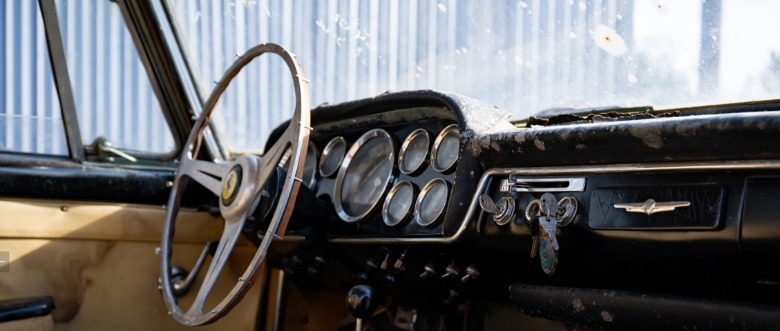
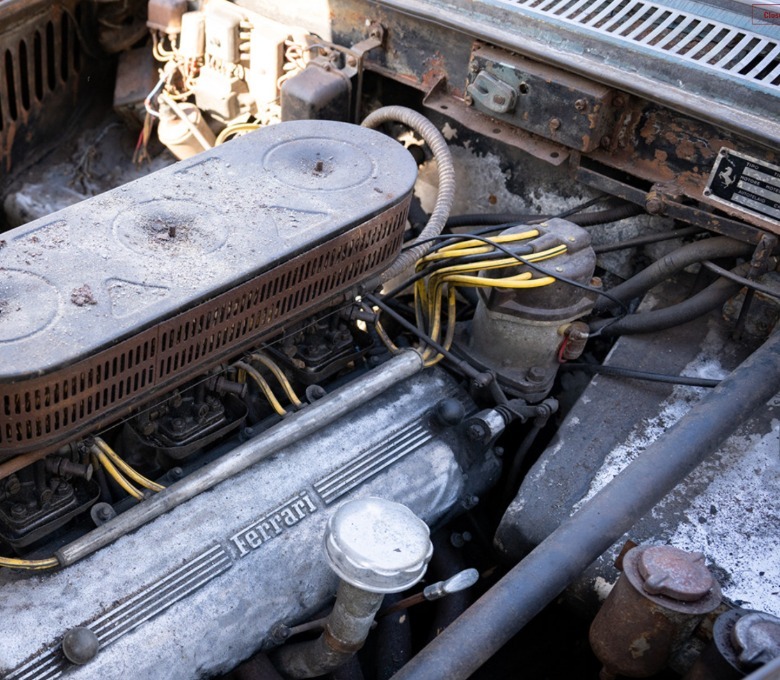
Getting rid of the surface rust and hiding the aged exterior would be terrible, but getting it back into working order would require some pretty significant work — and that's acceptable. Rebuild the engine, service the transmission and differential, re-do all of the brakes, restore the wheels to perfect round, put some road-worthy tires on it, and grease every joint. The interior looks like it could use a minimum of new bits, perhaps a recovered seat and dashboard, for example, but not much else.
If you're going to restore it completely, don't bother bidding. You'd be better off buying one already done. If you instead want to experience the joy of driving a vintage Ferrari as often as possible, this is the car you want. Pre-auction estimates put the car's value between $300,000 and $500,000, and you'll have your chance to bid on it in Florida on Thursday, March 5th. Do this car proud. Let it live a little.