

Here's How To Wash Your Car In Winter Without Turning It Into An Icicle
We may receive a commission on purchases made from links.
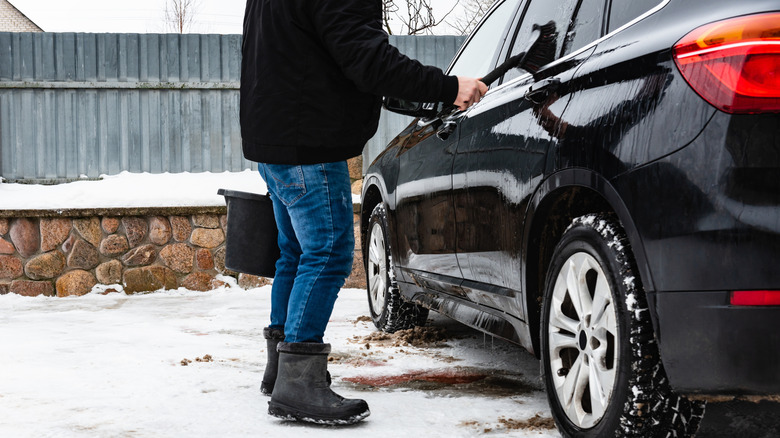
The winter season is among the harshest and most grueling for your jalopy. Freezing temperatures, road salts, and thick, muddy grime all combine to turn your ride into a filthy mess. Winter also makes it somewhat inconvenient to wash cars, but washing often during the snowy season is essential. It's a fail-safe way to prevent rust and corrosion from ruining your car's paint, undercarriage, and eventual resale value.
There has to be a compromise, because how the heck should you wash a car in the cold if the freezing weather insists on you sipping hot chocolate in front of a fireplace? It all boils down to timing and using the right tools and techniques. There's no point in trying if the mercury drops below 32 degrees Fahrenheit, because washing a car in that sort of weather will definitely turn your ride into an icicle. In fact, you might even risk freezing the metal locks and doors. Instead, it's better to wash during the warmest parts of the day. You should aim for midday or in the afternoon, or you should simply watch for when the outside temperature is above 35 degrees Fahrenheit (1.6 degrees Celsius).
Warm water is best for winter washing
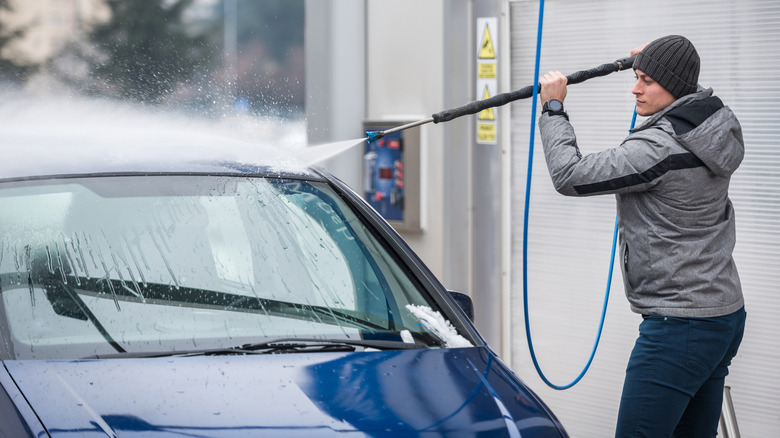
If you have ready access to warm water, use it to your advantage, but avoid washing with boiling water. Doing so in freezing weather might damage the paint, and dousing hot water over a frozen windshield might damage the glass — and replacing a windshield doesn't come cheap. For some cars, it can cost a fortune. To be on the safe side, stick to warm, not-too-hot water when washing a car during winter. Doing so makes the soap and water more effective in removing road salts and grime.
Also try using a heavy-duty car shampoo like Chemical Guys Tough Mudder or Meguiar's Ultimate Wash and Wax. Both have pH-neutral formulas and offer thick suds to make quick work of mud and grime. Dissolve a bit of shampoo into a bucket of warm water and proceed washing from top to bottom using a microfiber wash mitt. Remember to wash the roof, hood, and trunk before cleaning the lower doors and side sills to prevent scratching the finish.
When the weather gets warm enough, don't forget to douse the undercarriage, suspension, brakes, and parts of the exhaust with water to rinse off excess road salts. For this, a garden hose connected to a faucet is fine, but you can also take advantage of a self-service car wash.
Try a waterless wash
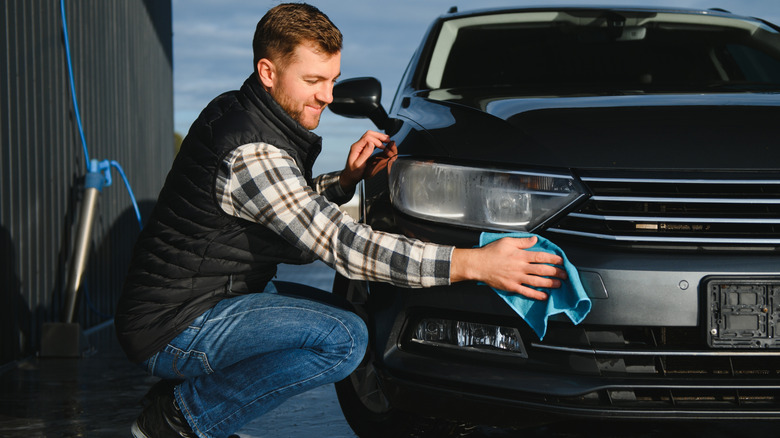
If your vehicle isn't blanketed in thick snow and grime, a waterless wash could be preferable in the winter. Products like Adam's Polishes Waterless Wash and Meguiar's Ultimate Waterless Wash & Wax are safe, convenient, and easy to use. The only downside is you might need plenty of clean microfiber towels to get the job done right — and you'll definitely need a lot if you have a big truck or SUV. On the plus side, waterless washes are safe on clear coat paint, plastic, glass, chrome, and polished metal surfaces.
That being said, waterless car washes are nothing more than just spraying liberally and wiping off the dirt. Turn the towel over when it gets soaked in dirt, or grab a new one before moving on to the next section. The golden rule of washing from top to bottom still applies to prevent excess dirt from scratching or marring the finish. Of course, you should only clean your car with a waterless wash during the warmest parts of the day, and you should revert to resting by the fireplace if the weather gets too cold for comfort, regardless of whether you're using water or not.