

What Features Increase A Car's Resale Value Most?

Everyone who has ever walked into a dealership finance office has had the same thought: "My car is special." It's a lovely sentiment. Maybe it's the unusual paint code, the pricey premium wheel package, or the fact you kept it cleaner than a surgeon's scalpel. But the used car market is a cold, heartless place that has a nasty habit of crushing sentiment with data. The features that a dealer convinces you are priceless add-ons often have the resale value of a half-eaten sandwich.
To cut through the noise, we did our own research, pulling data from Kelley Blue Book for five distinct 2020 models representing different segments: a Nissan Altima (sedan), a Toyota RAV4 (SUV), a Ford F-150 (truck), a Mercedes-Benz S560 (luxury), and a Porsche 911 (performance). Using the median mileage for each segment in the area, we then compared the KBB value changes between common equipment options. We set our location to the idyllic, non-biased paradise of Columbus, Ohio, to avoid any regional weirdness skewing the numbers, like valuing 4WD in a place where it snows 300 days a year. The results confirm what many of us suspected: The market values function over flash.
The tech and tools that add cash
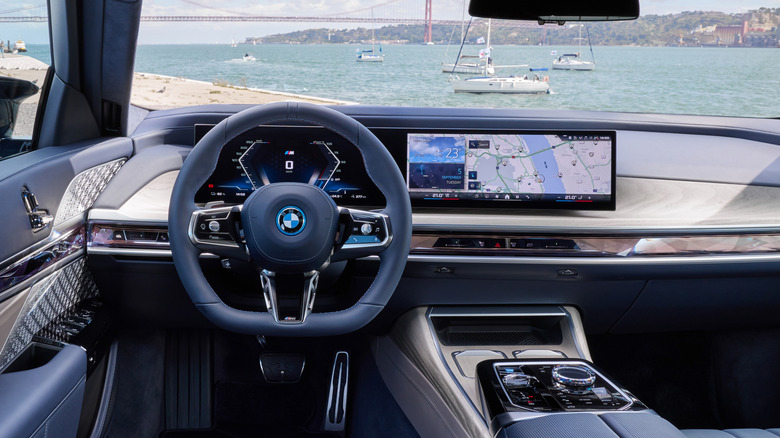
When it comes to resale, think less about what makes the car look good and more about what makes it work better. Across our sample vehicles, the options that consistently padded the resale price were the ones that improved safety, comfort, or capability. Advanced Driver-Assistance Systems (ADAS), for instance, added a respectable $630 to an Altima's private-party value and a significant $1,500 to the S-Class. The humble sunroof also punched above its weight, adding around $480 to the Altima and a whopping $1,400 to the big Benz. People like staring at the sky, apparently.
The story gets even clearer with trucks and performance cars. On the Ford F-150, opting for four-wheel drive added a cool $1,800, the tow package tacked on another $1,000, and an upgraded engine brought in an extra $2,200. Nobody seems to care about fancy wheels on a workhorse, especially when anyone can change those out to their preference anyway.
Similarly, on the 911, the option that added the most resale value was an upgrade to the stereo and infotainment system. Even for cars where forum guys swear they "never used the radio — just listen to the exhaust, bro," the numbers tell a different story.
Your personal taste is not an investment
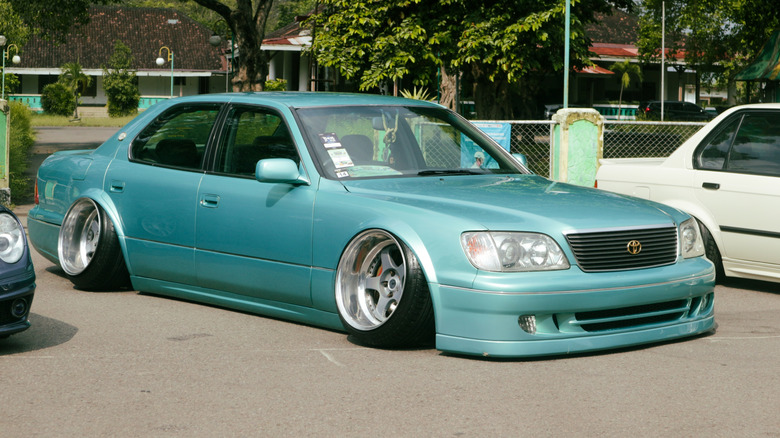
Here's a tough pill to swallow: That "look-at-me" color you paid extra for is probably worth pennies on the dollar. In our analysis, a non-standard or premium paint color added a measly $90 to a Toyota RAV4's value. For the Porsche it added nothing, but a paint to sample example can be quite valuable to the right buyers. The same goes for those massive, shiny wheels. While they might look great, they only added about $270 to the RAV4 and a laughable $35 to the 911.
This all points to a larger truth about the used car market: personal taste doesn't always equal resale value. Research from iSeeCars has shown that uncommon colors — like yellow, orange, or even green — can sometimes hold value better than the typical grayscale trio. But that doesn't mean playing it safe hurts you, either. Black, silver, and white cars make up the majority of listings, and their abundance keeps resale prices stable. Lesson here? Don't expect the unique colors to help, but it also doesn't hurt — order the cool colors.
Aftermarket modifications, though? Whole different story. Plenty of buyers see mods as a flashing red flag. Because really, how's anyone supposed to trust that you and your buddy didn't bolt on that turbo kit after six Miller Lites — with "extra" hardware rattling around in the cupholder?
The most valuable features aren't on the window sticker

While we've been focused on specific options, it's important to remind that the real kings of resale value are far more fundamental. Nothing preserves a car's worth more than its brand reputation, a clean title, and a folder full of service records. Brands like Toyota and Porsche consistently top the charts for value retention because they've built a rock-solid reputation for reliability or desirability. A car that depreciates less from the start will always be a better bet.
Beyond the badge, proof of care is paramount. A car with a salvage or rebuilt title is a financial black hole, period. Some insurers also won't offer coverage on these vehicles. But the most underrated feature you can have is a documented service history. Having receipts provides concrete proof that the car was cared for. Of course, this varies depending on the segment — a stack of receipts for a Porsche may matter more than a Nissan Altima. If you have spent any time on Bring A Trailer, you know what I mean.
Location, location, location
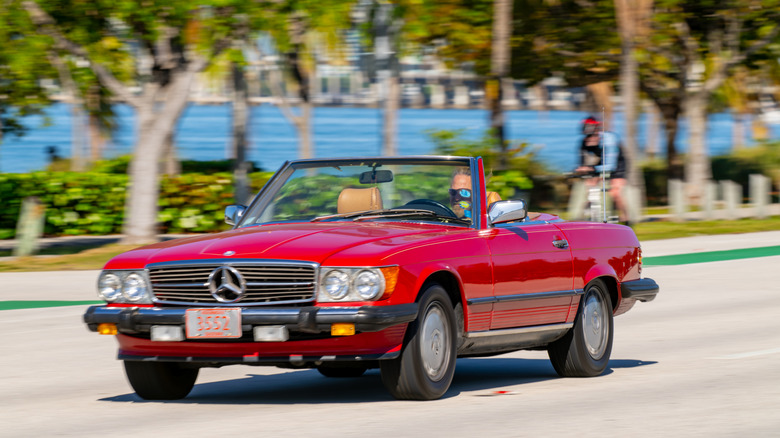
It's no surprise that what sells in Miami isn't necessarily a hot commodity in Anchorage. A car's value is deeply tied to its geographic location and the demands of the local climate and culture. Regional preferences can create significant price differences for the exact same vehicle. A convertible, for example, will almost always command a higher demand in a sun-drenched state like Florida or California than it will in the perpetually overcast Pacific Northwest. Good luck selling that soft-top Miata in Seattle in the middle of November.
The same logic applies to drivetrain options. In the snow belt, all-wheel drive and four-wheel drive aren't just nice features — they're practically necessities. Down South, where snow's more of a rumor and not a season, a two-wheel-drive pickup is a reasonable choice. I just reserve the right to question its existence every time it gets stuck in morning dew. That same truck would likely languish on a dealer lot up north, forcing a lower price just to move it. Long and short, while you can't control the weather, being aware of your local market's desires is key to understanding what your car is truly worth.