

Front Vs. Mid Vs. Rear Engine: The Pros And Cons Of Each Layout Explained
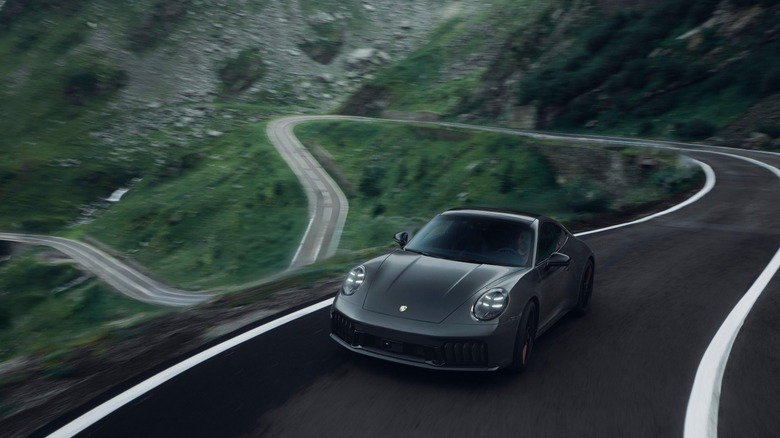
You would think that after 140 years of producing automobiles, the industry would have settled on a basic layout. After all, bicycles don't have heaps of alternative versions with the pedals and seat at the front or the rear. Rather, you sit in the middle with the pedals beneath you, the chain loops to the wheel at the back, and you steer the wheel at the front. With cars, though, it's a different story. Automakers are still doing things wildly different to one another. Porsche continues to stubbornly hang the engine out the back, whereas some like to put it right behind your head.
There is a method to the madness, though. Front-engine vehicles easy to access but more prone to understeer, mid-engine vehicles provide better performance but are difficult to maintain yourself, and rear-engine vehicles boast great traction at the cost of less storage space. Regardless of whether you hang the engine over the front wheels, place it in the middle, or drop it behind the rear axle, the decision brings about different characteristics that change how the car behaves when on the road. This article looks at which cars typically sport which layout, why they do so, and what benefits and negatives they face as a result.
The pros and cons of front-engine vehicles
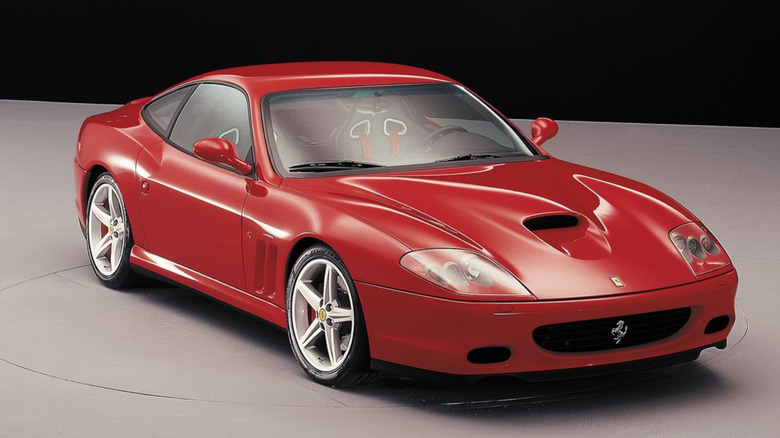
IMost of us spend our time on the road in front-engine cars. It can be found in everything, from V12-powered Ferraris gallivanting across continents to city-slick commuter cars eking out every last MPG. So there's our first pro: the front-engine layout is impressively versatile. Packaging is also quite simple, as you can easily slot the engine in transversely if it's a small four-cylinder or mount it longitudinally in case it's something larger. Access for servicing is easy, too; just open the huge, hinged hood.
There are downsides to the layout, though, especially from a performance perspective. Having a heavy engine sitting across the front axle can mean the car drives a little nose-heavy, which encourages understeer — an unfortunate trait of many Audi models. Unlike oversteer, which can be appealing in the right circumstances, understeer is no fun. It just ruins your track day and helps you to find ditches faster when darting down your favorite backroad. These layouts also aren't great for braking performance, as the weight shifts forward to the heavy front-end.
Having said that, for everyday driving, front-engine cars provide predictable handling. The layout helps to maximize cabin space too, so it's easy to see why the mass majority of models in showrooms today opt for the layout that's far more cost-effective and predictable.
The pros and cons of mid-engine vehicles
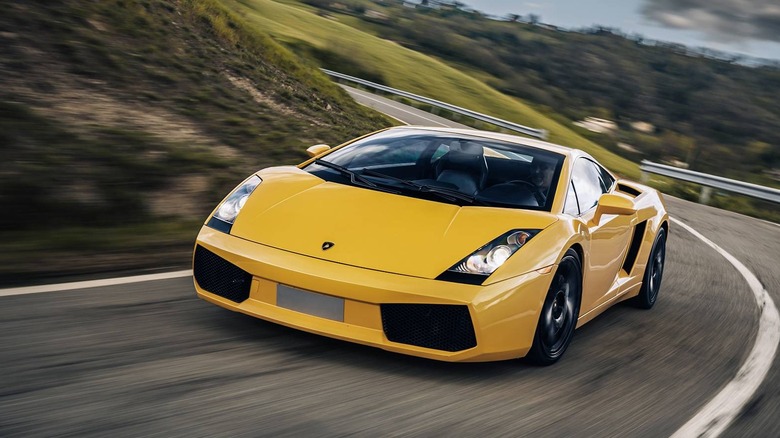
Mid-engine cars are much more uncommon than front-engine cars, and you aren't likely to find a smattering of segments employing the layout. Instead, mid-engine cars are almost always sports cars, and for good reason. Seating the heft of an engine in the middle of a sports car helps with weight distribution and therefore handling; there's no longer a lump of iron sitting at either end of the car. The layout rarely allows for any more than two seats, as there is an engine placed where the rear seats would go. However, it does allow for storage space at both the back and front of the vehicle. In other words, you can get both a trunk and a frunk.
Typically, mid-engine cars handle excellently, but they can be a little sketchy on stability and overall control. Furthermore, access to the engine itself can be especially difficult. If ease of DIY maintenance is high up on your list of demands when buying a weekend sports car, perhaps consider something a little more traditional.
One final plus-point of mid-engine cars is that they really do allow designers to show off a little. With no engine to tuck away under a hood, the front-end can be low and slippery. More often than not, the most beautiful car designs owe their svelte lines to this layout.
Pros and cons of rear-engine vehicles
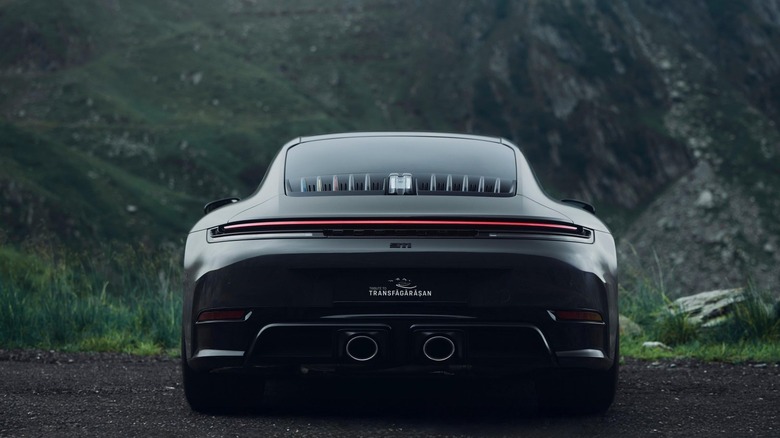
We may as well call this section "pros and cons of Porsche 911s," as there really aren't many other brands bothering to produce rear-engine cars any more. Scrolling back through the pages of history, though, reveals a smattering of rear-engine cars that certainly are worth celebrating. The original Alpine A110, the polarizing Chevrolet Corvair, and the timeless Volkswagen Beetle are all examples of rear-engine cars. They demonstrate that this layout can be wonderfully versatile, too.
Other plus points include the fact that rear-engine cars boast improved traction; with all that weight hanging over the driven wheels, it helps the tires to grip when launching hard. You might also imagine that the rearward weight would make the car a little tail-happy, and you'd be absolutely right. That could be seen as a pro or a con depending on how you like to drive. It's not ideal for commuting on wet roads, but it's brilliant fun when hurtling around a sweeping track.
One firm downside is that rear-engine cars aren't the most practical. You won't find a spacious trunk at the rear of the car, so instead you're left with a small frunk. For reference, a new Porsche 911 offers just 4.8 cubic feet of space in the front, so you'll be packing lightly for any weekend trips away. Regardless of which layout you choose, there will be inherent flaws and positives. The standard answer is usually just to buy a front-engine model, but the other choices certainly can shine in the correct setting.