

Now It's A MechaSpace Race: China Wants To Put AI Data Centers In Space, Too
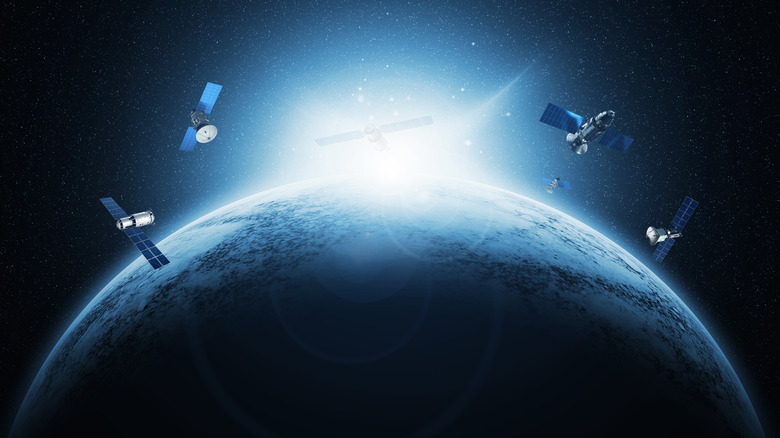
China has declared that it will get its first space-based AI data center up and running in the next five years. This is a follow-up to private Chinese company ADA Space's launch last year of 12 satellites for its Three-Body Computing Constellation, which it wants to expand to a full 2,800. Yes, America literally has a Three-Body problem. This combines two of the most important races the countries are engaged in, the space race and the AI race. In other words, a competition between space robots is here. Welcome to the 21st century.
ADA Space has been aiming at this for a while, but the Chinese government itself has now made it an official national goal in its 15th Five Year Plan, according to Reuters. Communist states have guided their economic development via five year plans since Josef Stalin initiated the idea in 1928; China, despite being quasi-capitalist at this point, still uses the system. These plans, famously, usually don't work very well. Still, it's a clear demonstration of what China sees as a critical step in its own trajectory. Bloomberg quotes space researcher Sylwia M. Gorska as saying, "China's approach here closely parallels its strategy in the electric vehicle sector — leapfrogging older technologies to establish leadership in emerging, next-generation domains."
The capitalist response
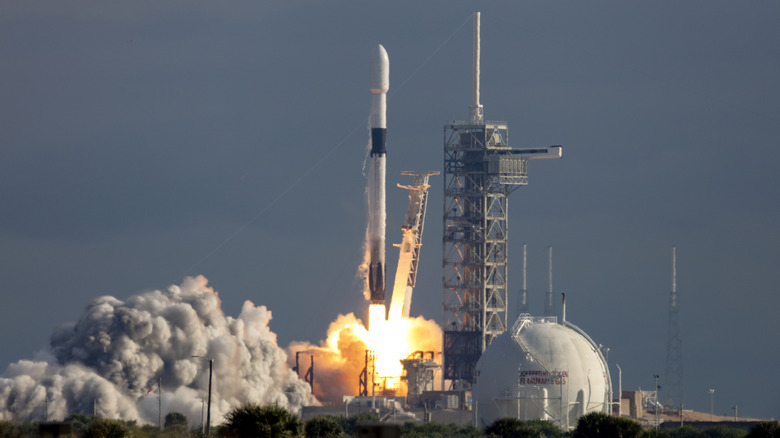
America, being America, is more or less letting private corporations drive the space AI race, rather than having a dedicated national strategy. Those corporations have been busy, though. Google's Project Suncatcher is already mapping out how to put AI data centers into space using formation-flight satellite constellations. You'll be stunned to learn that Elon Musk believes that SpaceX will dominate this sector, especially since he's considering merging his space company with his AI company. Musk said at the World Economic Forum in Davos, Switzerland that space would be the cheapest solution for AI in two or three years. And when Elon Musk puts a timeframe on something, you know it absolutely, positively, definitely will happen.
In the meantime, American startup Starcloud trained an AI model from a satellite in orbit in December using an Nvidia card, a world first. It learned English using the complete works of Shakespeare. So we have now invented a spaceborne MechaShakespeare. Why? We don't have time for that, this is capitalism!
Of course, this party may well be crashed by that worst of all buzzkills, feasibility. Despite Starcloud's success, there's a long way from there to running full data centers that can compute at the speeds necessary to compete with ground-based systems. There are still vital engineering problems to be worked out, such as radiation shielding and cooling. Plus, flying satellites in formation has never been done at large scale before. But China's new Five Year Plan makes clear that it has the ambition and government will to try.