

TH350 Vs. TH400 Transmissions: What Are The Differences?
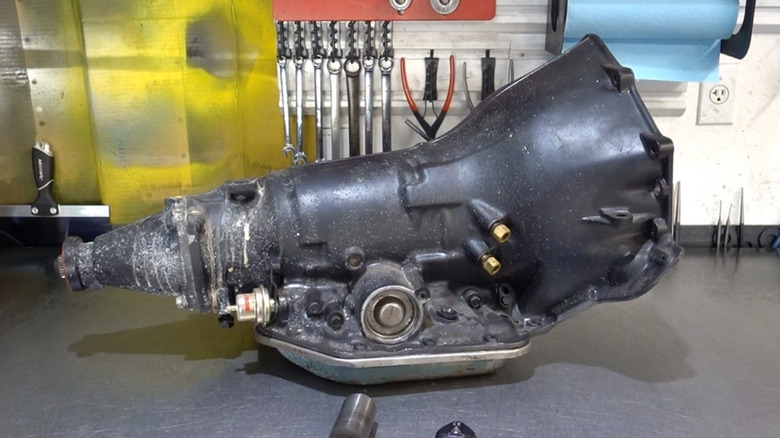
Long before automatic transmissions like the 4L60E earned such bad reputations, General Motors entrusted the Turbo Hydra-Matic family to handle shifting duties in its legendary lineup of muscle cars. The first automatic transmissions used in cars were primarily two-speed affairs like GM's popular Powerglide. However, the TH350 and TH400 automatics upped the ante with an extra forward gear. While the two Turbo Hydra-Matic automatic transmissions shared GM origins and three-speed operation, there are some important differences in their intended purpose, component design, and overall reliability.
Despite the higher number in its name, the TH400 came out in 1964, five years before the TH350. The TH400 is more heavy-duty, too, featuring stronger components like a 32-spline output shaft while the TH350 uses a smaller 27-spline version. In stock form, the TH400 is designed to handle torque inputs up to 450 pound-feet, significantly more than the 350 pound-feet rating of the TH350. Overall, the TH400 was destined with durability in mind to endure the abuse of serving in heavy-duty trucks and high-performance rides. That's why it found plenty of use in late-1960s and early-1970s big-block vehicles like the 1967 Chevelle SS and the 1970 Oldsmobile 442.
Ultimately, though, the heavy-duty build of the TH400 became a disadvantage. As production ramped down, the transmission was only finding greater use in trucks. It would go on to be known as the 3L80 in 1990, and a more powerful version would take over just one year later. Meanwhile, the lightweight TH350 became popular in production muscle cars of the era. Up until 1982, you'd struggle to find any rear-wheel drive small-block GM vehicle without it. But it, too, would find itself slowly being replaced by more advanced transmissions, eventually ending production in 1986.
Turbo Hydra-Matic automatic transmission history
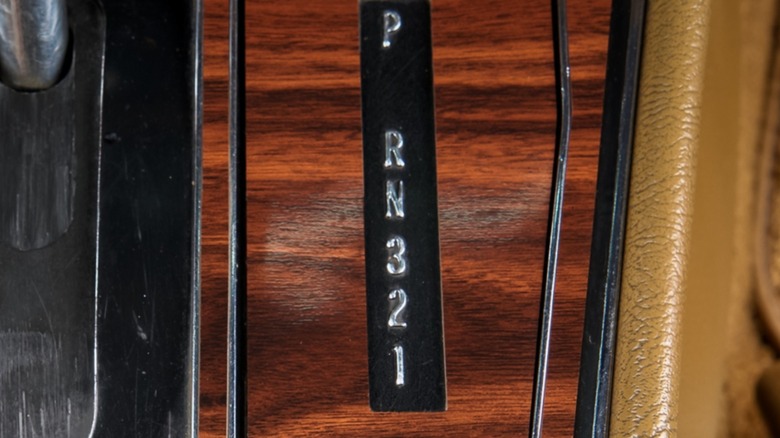
The history of the General Motors Turbo Hydra-Matic automatic transmissions goes all the way back to a time when whale oil helped cars survive before modern lubricants took its place. They were derived from the Oldsmobile-designed four-speed Hydramatic dating back to 1939. The Hydramatic was even used in World War II military vehicles, and its presence there had practically made automatic transmissions standard throughout all U.S. military equipment at the time.
The TH350 design served General Motors well from its late 1960s debut, but 1982 was when its successor — the 700R4 — would start to take the reins. The TH400 held on for a while longer, seeing use in heavy-duty applications until the 4L80E replaced it in 1991. The newer transmission designs featured overdrive, and the 4L80E in particular also included electronic controls. In time, the mechanically-controlled 700R4 was replaced by the 4L60E, another transmission with electronic controls, in the early 1990s.