

Why Window Louvers Were A Big Deal On Muscle Cars (And Aren't Anymore)
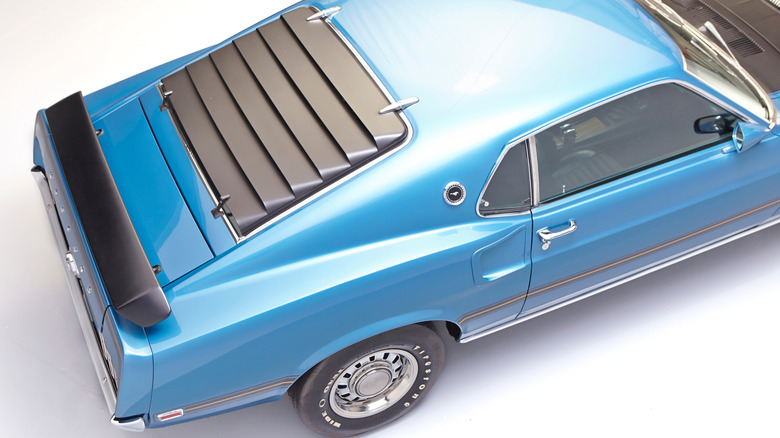
In the Venn diagram of muscle car features where function meets form, hood scoops and window louvers are two of the most visibly recognizable. Working scoops send air into the engine, but window louvers don't add any extra performance. They're slats that cover the glass, and they were installed on muscle cars to keep you cool – and to look cool while doing it.
Louvers are commonly associated with fastback designs. Fastbacks feature an uninterrupted roofline running from the top of the windshield to the tail of the car, usually paired with a huge rear glass window. The sleek profile comes with aerodynamic benefits, and it wasn't new when popular muscle cars like the 1964 Plymouth Barracuda flaunted it. Even today, models like the Porsche Panamera still boast them. Ford, Chrysler, and General Motors featured fastback variations in the 1930s and '40s, as did Tatra – which incidentally worked window louvers directly into cars like the 1938 Tatra T87.
Muscle cars took things to the next level, ultimately tying window louvers to the performance aesthetic. The '65 Mustang Fastback had functional louvers in the rear quarter windows for ventilation, while louvers covered the rear glass panel of the 1969 Mustang Mach 1. That massive glass rear could create glare and gather enough heat to cook the interior. Louvers helped to counteract those problems, which was crucial at a time when most cars didn't come with standard air-conditioning and window tinting was still in its mainstream infancy. These days, though, louvers are largely an aftermarket affair. New cars, like the 2026 Polestar 4, don't even have a rear window for louver-lovers to mess with.
From functional feature to performance symbol
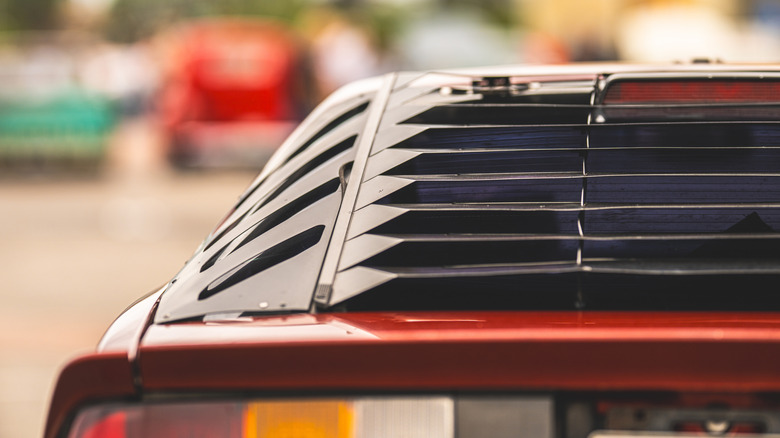
If early Mustangs — and other contemporary beauties like the Lamborghini Miura – embraced louvers for form and function, they also set an undeniable design example in the performance car world. Muscle cars without steeply-raked rears seem to have adopted window louvers mainly for looks.
Those looks later claimed muscle cars altogether in the later 1970s, when machines like the Mustang II and 1977 AMC Hornet AMX evoked the vibe (if not the performance) of their ancestors with louvers. Meanwhile, sporty cars like the Mazda RX-7 and Datsun 280ZX continued to boast them, and they remained as a staple for numerous models. One could even argue that a 1987-1993 Saab 900 hatchback just isn't complete without louvers.
Not every model had louvers available from the factory, but today's classic muscle car aftermarket offers the period look of window louvers for everything from an AMX to a Z28. Times have changed, though, and technological advancements have led to most automakers abandoning louvers altogether.
Tinting, air-conditioning, and technology
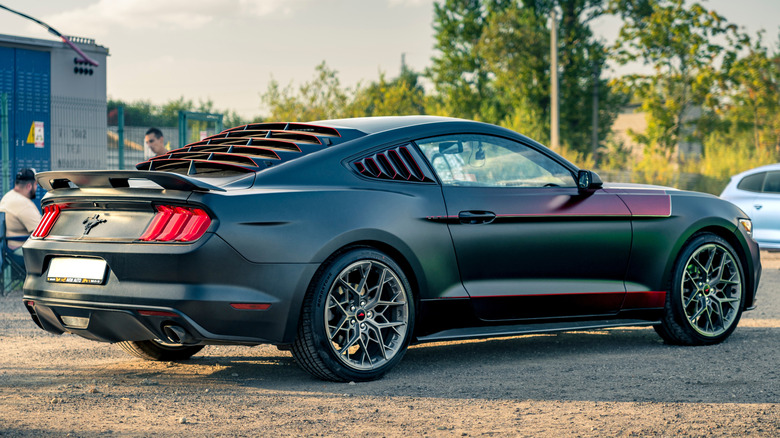
By the mid-nineties, pretty much everyone opted for air-conditioning in their cars. The Jeep Wrangler was the last car available to have it optional in 2022; now AC is the mainstream standard. Quickly cooling the cabin is no longer a big deal, negating one functional appeal of window louvers.
Then there's window tinting, which began catching on as technology improved in the 1970s. While some drivers might worry about getting fined for an illegal tint, tinting passively rejects heat that would otherwise scorch the cabin through the windows. And unlike louvers, tinting requires no bolts, maintains the car's silhouette, and can be practically invisible for a stock look. If you're into hosting your own private solar eclipse and live in one of the 13 states where 5% tint is legal, you can even create a blackout effect.
Perhaps the high-tech rear-view camera setup in the Polestar 4 is a preview of our rear-windowless automotive future. Until then, if it suits your style and your ride, the aftermarket window louver industry goes beyond supporting classics, also catering to modern muscle, trucks, and vans.