

It Wasn't The Pilots: NTSB Says The Black Hawk-Airliner Crash Was Due To FAA Failures
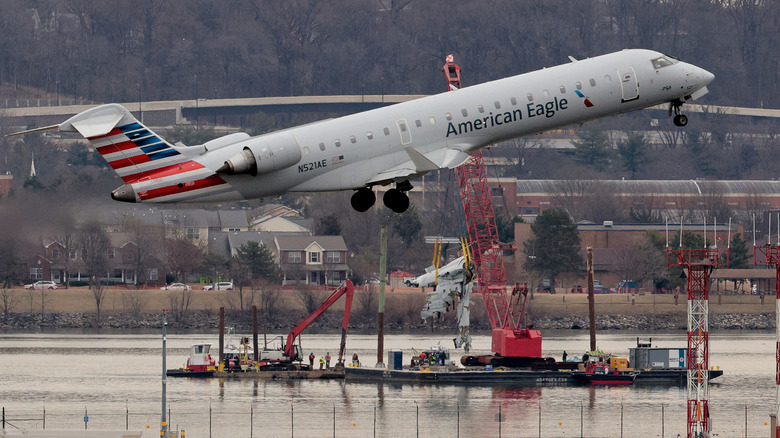
On Tuesday, the National Transportation Safety Board (NTSB) revealed the findings from its investigation into the crash between a regional passenger jet and an Army Black Hawk helicopter over the Potomac River in January 2025. While all kinds of wild ideas have been thrown around regarding the cause of the crash, the NTSB has very firmly pointed the finger at the FAA, not the pilots of either aircraft. It's a pretty damning report, listing out a long series of failures at the FAA that made a catastrophe more and more likely. In other words, this horrific accident, in which 67 people died, was not a fluke or unavoidable chance. It was the result of bad decisions compounding over time.
There's a lot to unpack from the NTSB: they accuse the FAA of a wide range of mistakes, both in the long, intermediate, and immediate term before the crash. On the night of, the air traffic control tower at Reagan National Airport had assigned only one person to manage both plane and helicopter traffic. That information was known shortly after the crash, but the NTSB has determined that there was no actual need for this to happen, per the New York Times. Staffing levels were sufficient for planes and helicopters to have separate ATCs in charge of them.
What did that lone ATC do? This person allowed the Black Hawk to go into visual separation, meaning that the helicopter would simply look around for other aircraft rather than take directions from the tower. While this is a common procedure, the NTSB found that Reagan National Airport had been overusing it for years, essentially delegating ATC responsibility to the pilot. Tragically, simulations suggested that the Black Hawk pilots couldn't see the jet from where they sat, so the visual separation led to disaster. Even this was avoidable, though, since the ATC in the tower got an automated warning a full 26 seconds before the collision, per ABC News. If the ATC had relayed that warning to the pilots, it almost certainly would have prevented the crash. For whatever reason, the ATC never did.
Compounding failures
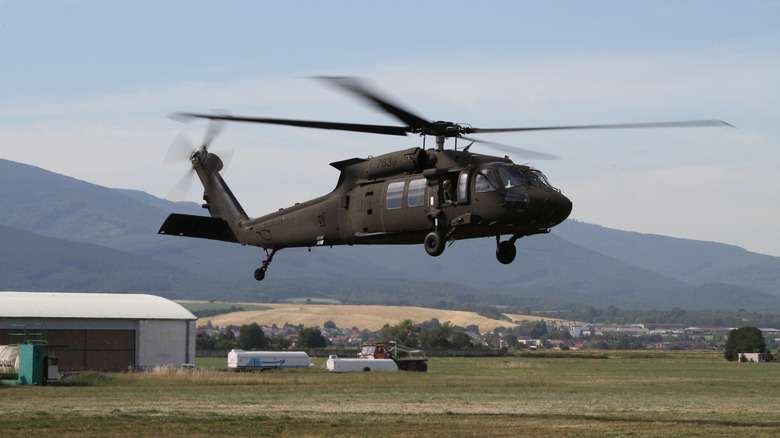
If that sounds like maybe this ATC wasn't the best, there might be a reason for that. In 2018, the FAA downgraded the Reagan National Airport's facility rating. This has the effect of lowering the experience minimums for ATCs there, lowering the tower staff's pay and thus driving away top-level talent.
There's another reason the Black Hawk pilots might have inadvertently put themselves in harm's way: they didn't know how high they were. In a sentence I sort of can't believe is real, it turns out the altimeters in Black Hawks are woefully inaccurate, anywhere up to 200 feet off. I am but a humble writer, but that seems like a major design flaw on an aircraft. Oh, and apparently, this flaw is not mentioned in pilot training or the helicopter's manual.
Additionally, Army protocol meant that the helicopter had switched off its location-broadcasting system, called ADS-B Out. There is a push in Congress right now to mandate that this system always be switched on, but the fate of the ROTOR Act is uncertain. But it doesn't even matter unless the other aircraft in question also has the system to receive that information, called ADS-B In. Very few have this installed, as it's not mandated. In this instance, if both aircraft had had the right technology and switched it on, it near certainly would have prevented the crash. The NTSB has recommended mandating ADS-B In a full 17 times over the last 20 years, but here we are.
Overloaded airspace
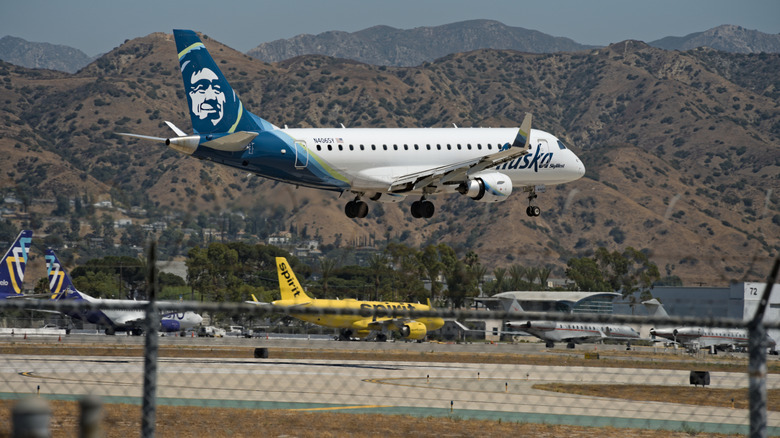
Long-term, a big part of the issue is the simple fact that air travel keeps surging over time. That means more and more planes are in the air at the same time, and near an airport, they all get funneled into a small number of landing paths. The Reagan National Airport's main runway is actually the busiest in America; that forces the airport to divert a lot of its traffic to the backup runway. The landing path for that backup runway intersects with helicopter routes. I think you can see the problem here. This is exactly where the crash occurred. If you live in LA, you'll be pleased to learn that Hollywood Burbank Airport and Van Nuys Airport are the next worst intersections of plane and helicopter traffic, per Politico.
It's going to take a long while to implement system-wide fixes for our national airspace. The NTSB has laid out dozens of them, but whether or not they are adopted is not up to them. The FAA needs to agree, or Congress needs to act. Plus, funding needs to happen. In the meantime, the FAA has made some adjustments to flight routes around Reagan National Airport, as well as Van Nuys Airport. More will need to be done. Hopefully soon.