

What Makes Engine Oil Turn Black?
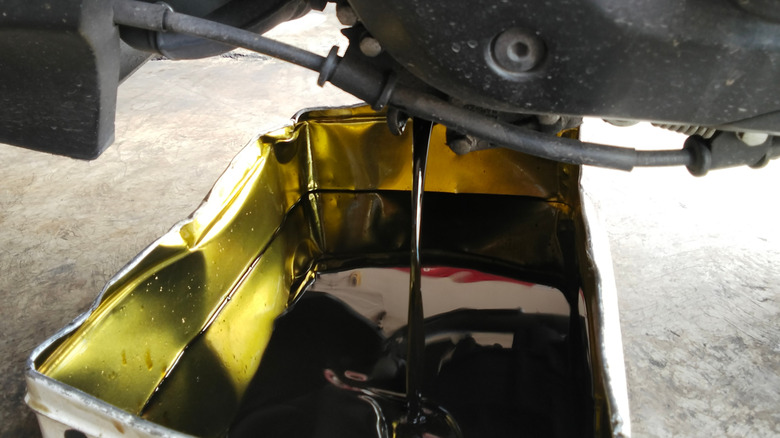
As a critical means of lubricating engine parts and preventing overheating, oil is an indispensable mixture. Since it's so important, some might even wonder if an an oil change improve engine horsepower. It's not exactly able to increase performance in that way, but it does a lot to keep your car running smoothly. And from its efforts, you might have noticed how oil typically has a golden color going into a vehicle, only to appear dark brown or even black when it's drained for an oil change.
There are several factors that contribute to oil color changes, such as thermal cycling. Engine oil may reach over 219 degrees Fahrenheit under typical driving conditions, cooling down once your vehicle is parked. This temperature oscillation can naturally darken some of the additives within the oil mixture. Engine oil oxidation, which describes the interaction of oxygen and oil molecules, also affects color and can be exacerbated by high temperatures. When oxygen and oil molecules mix, the elements of oil break down, stripping electrons away and resulting in a darker coloring over time.
In addition, the additives in motor oil are designed to help clean the engine of things like metal particles, soot, and carbon deposits. Of course, though, those contaminants have to go somewhere. While fresh oil has a clearer yellowish look to it, once it's added to the engine and travels throughout, the debris it grabbed will have caused it to take on a darker shade. The process utilized on used motor oil typically removes these additives, restoring its original color.
Oil darkening in color is normal, but here is what's not
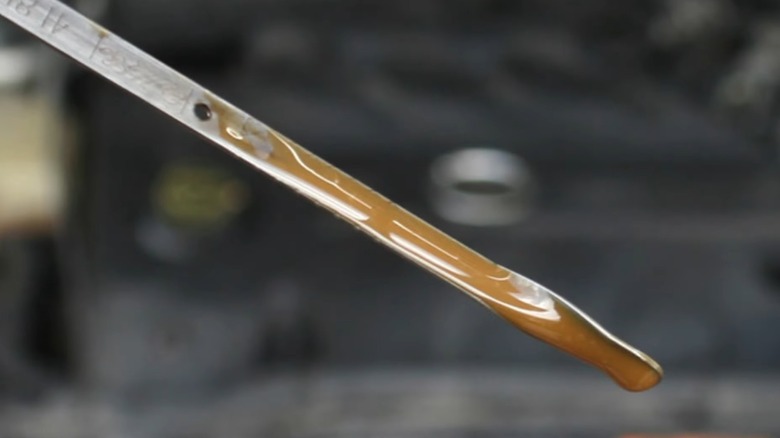
It's a common misnomer that engine oil color alone can determine whether or not a change is required. Oil becoming darker soon after a change could simply signal it's captured a bunch of muck and is doing its job admirably. This is why vehicle-specific maintenance intervals are in place, helping owners identify when it's appropriate to change out the old, for fresh oil. However, there are a few worrying signs that can signal it's time to visit the shop.
Viscosity describes the thickness of oil, and it's important to use the recommended viscosity for your engine. A higher-than-recommended viscosity won't allow the oil to flow as quickly or efficiently as it's intended. If you notice that your darkened oil is extra thick, it could indicate that the mixture is being overwhelmed with contaminates and needs to be changed.
Another alarming symptom related to oil is if you see it's brown and bubbly. This could indicate that coolant has escaped into areas of the engine it's not meant for, causing it to get mixed in with the oil. The coolant undoes much of the good work performed by the oil, making this a critical situation for engine health.
A diesel engine turns oil dark quicker than a gasoline one
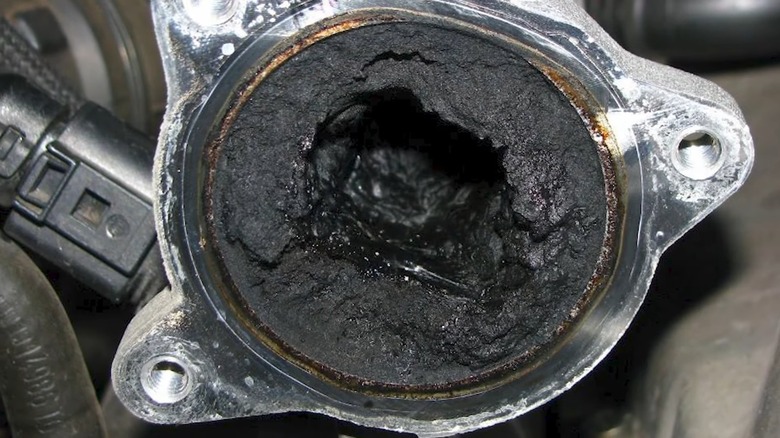
Gasoline and diesel engines have several differences, even in the way combustion is generated with spark ignition vs. compression ignition, for example. While a diesel engine presents some advantages, the fuel used burns a lot dirtier than gas, and more soot is produced as a result of greater compression in the cylinders. To counteract this, modern diesels have exhaust components like a diesel particulate filter, which is used to burn away the extra soot particles before they can disseminate into the outside air. However, because of how much soot is generated during operation, fresh oil can darken rapidly in as little as a day following a change.
This soot can also find its way around the piston rings, which puts it into contact with engine oil. The oil picks it up and turns darker as a result. This, again, is an example of color not necessarily being the be-all indicator of an oil change. The oil in this case could still be performing well; it simply accumulated some extra soot following its travel through the engine.