

Gas Vs. Hydraulic Shock Absorbers: What's The Difference
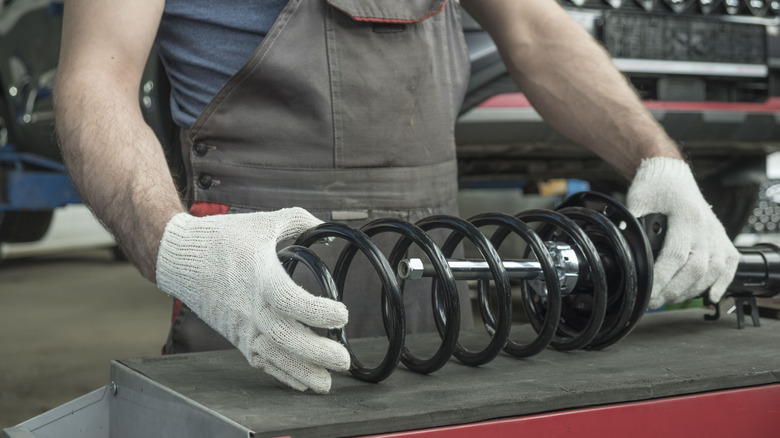
Shock absorbers — also known as dampers — do the dirty job of absorbing bumps and keeping your vehicle planted to the road, all while residing in the undercarriage and getting their fair share of heat, mud, and dirt. Shocks are different from struts, but they have a similar purpose, focused around dampening your car's spring and suspension movements to improve driving comfort. By keeping the springs in check, the dampers ensure that your car's wheels are constantly touching the pavement instead of bouncing uncontrollably.
Shock absorbers work by extracting heat from the suspension's movements using piston valves, rod assemblies, and hydraulic fluid. As the coil springs move up and down, the piston inside the dampers compresses hydraulic fluid, pushing it through the valve to create the necessary resistance. Modern jalopies can either come with oil-filled hydraulic shocks or gas-charged dampers. The type will typically depend on the make and model of your vehicle, and it's important to use the right one when servicing the suspension to preserve the stock ride comfort, handling, and ride height of your car. Both hydraulic and gas shock absorbers use oil or hydraulic fluid for damping, but the latter is purportedly better for performance applications due to its optimized design and construction.
Hydraulic shocks offer better comfort
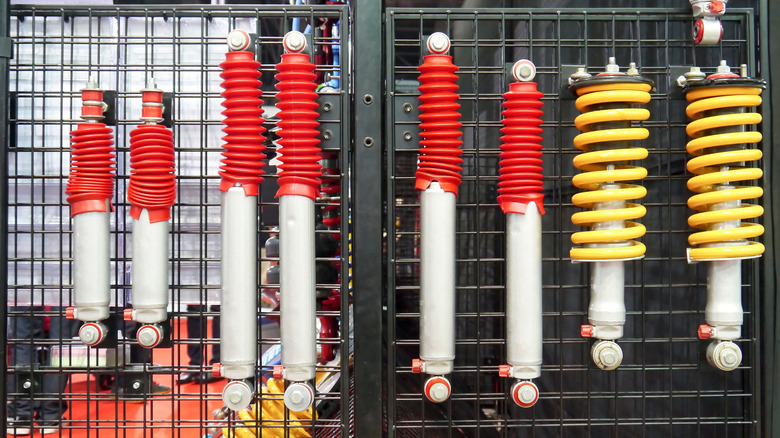
Hydraulic shocks are filled with oil to suppress the spring movements of your ride. They are simple, affordable, fairly durable, and applicable to many types of vehicles that demand comfort above all else. Despite their merits, hydraulic dampers can buckle easily under heavy loads, and spirited driving can often lead the oil inside to degrade or foam. This can create a phenomenon known as shock fade, which is when the oil has degraded so much that it can't provide effective shock absorption any longer.
Shock fade also means poorer handling, squatting during acceleration, more body roll, noticeable brake dive, and a bouncier ride. Furthermore, hydraulic shocks have a shorter lifespan and can be especially ineffective if the vehicle is subject to frequent off-roading, towing, hauling, or heavy-duty use. Aggressive driving and excessive loads can aerate the oil and decrease the damping rates of the shocks, which is why oil-filled dampers are not a stellar choice for sports cars and performance vehicles.
Gas dampers are more resistant to shock fade

Gas-type shock absorbers share a similar design and construction to hydraulic dampers. In most cases, it's almost impossible to tell them apart until you decipher the part number. Regardless, gas dampers deliver better performance due to their combination of oil and nitrogen gas.
This oil-and-gas mixture offers several key benefits. The gas prevents the oil from foaming under heavy duress and improves the damping performance, offering an extra layer of resistance. It also helps the movements of pistons to better guarantee that the wheels are contacting the ground. The result is niftier handling, less body roll, more consistent damping, and a generally longer lifespan than hydraulic shocks.
The cons of gas shocks include higher costs, as well as the fact that bumps in the road will disturb you much more easily. But the upsides are worth the demerits for performance cars or sport-luxury vehicles. No matter which type is in use, the shock absorber will eventually wear out and degrade, and persistently driving with bad dampers is detrimental to safety and vehicle control. The telltale signs of a worn suspension include a bouncier ride and jarring noises from the undercarriage when going over potholes or speed bumps.