

Why Did Automakers Switch From Sealed Beam Headlights?
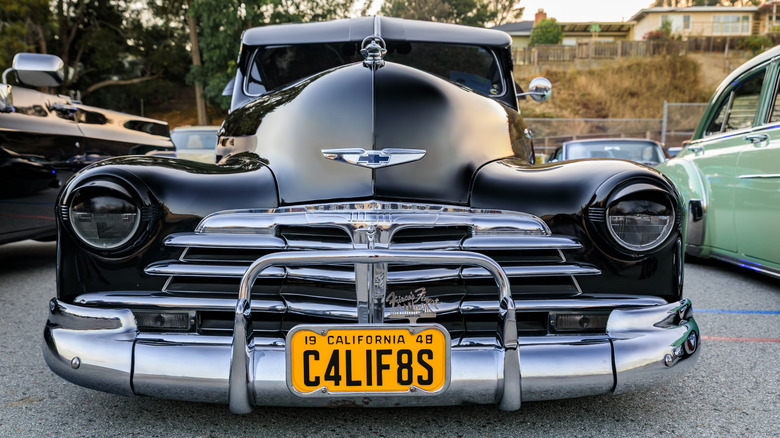
Do you remember sealed beam headlights? Depending on when you were born, you might never have driven a car with them. But they used to be all the rage in the automotive world, even being required by law by 1940. But now, you don't see them anymore on any new car. New lighting technology and automakers seeking to further design their cars were among the primary reasons as to why they vanished. No matter how great sealed beams were at solving automotive lighting problems, they also hindered design.
The seven-inch round sealed-beam headlight was mandated in 1940, and every new car sold came with it. The design was easily duplicated at scale, and since suppliers could build them in large numbers, it reduced the overall cost of the lights. Thanks to parts shortages due to World War II, finding the right parts for bespoke lighting was difficult. Making just one type of headlight for every car solved that problem.
But the sealed beams had an additional benefit: they were far more reliable than lighting at the time. Since they were completely sealed, water and grime couldn't enter the housing and affect the lighting's performance. Unfortunately, they also weren't user-serviceable. If a light went out, you had to throw the entire assembly away. But since every car used the same type of light, it was easy to get a replacement, and you didn't have to worry about making sure it was the right size.
Better aero and better design
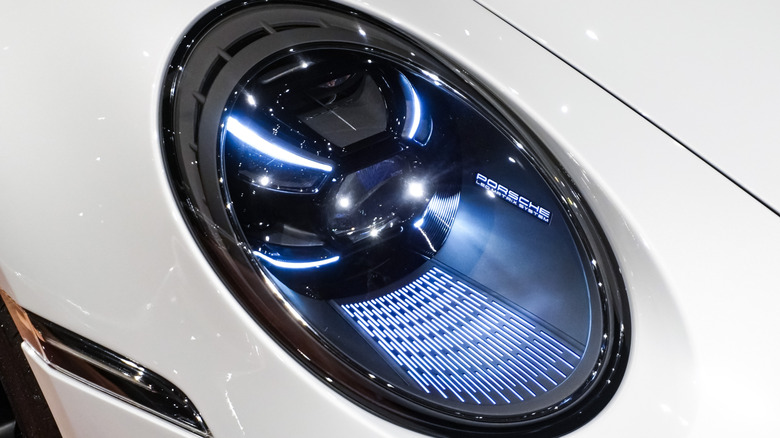
The downside to every car having the same headlights was that, well, every car had the same headlights. It became difficult for car designers to differentiate their front ends if the size and shape of their headlights were dictated by law. In 1975, the National Highway Traffic Safety Administration allowed rectangular shapes to be sold, too. Some automakers were creative, placing sealed-beam units within a pop-up or hidden headlight. On top of designers being able to have more freedom with their front-ends, those front-ends could also be more aerodynamic.
Composite headlights arrived in Europe in the 1950s, but European car designers had to find creative ways to make sealed-beam lights work in the U.S. Ultimately, though, composite beams were allowed in 1983 after lobbying from Ford. Soon, American automobiles began to take advantage of the design benefits that composite headlights offered. Of course, technology continued to advance, and today we have LED headlights with adaptive driving beams, though Europeans remain ahead with matrix lighting that can dim parts of the headlight beam for oncoming traffic while maintaining maximum illumination everywhere else. It only hasn't arrived in the U.S. because some think the new lights can be dangerous due to their glare – even if that's not true.
Aerodynamic requirements and designer preferences have led the industry to move away from sealed-beam lights towards far more advanced (and more expensive) setups. But it's hard not to be nostalgic for the days when replacing a broken or burnt-out headlight only required a quick trip to the auto parts store and not an expensive trip to the dealer.