

Why A $100 Traffic Ticket In California Can Cost You Nearly $500
California is a wonderland for car owners set in a tough hellscape of rules and regulations. On the one hand, the perfect weather and amazing driving roads means beautifully maintained cars from every era can be spotted carving up and down canyons on any given day, however, the Sunshine State is also notorious for its enthusiasm for setting its own emission regulations and strict traffic laws. California's traffic tickets are the highest in the country, piled high with hidden fees that often have nothing to do with driving.
Take the story of Kris Kahrs, who was hit with a red light ticket in April of 2025, CBS News reports. Her $100 ticket arrived... with a bail amount for $486. Yikes. It's not just red light tickets either. The Fines And Fees Justice Center found a $35 ticket for running a stop sign can cost Californians up to $238 when all is said and done.
Breaking it all down
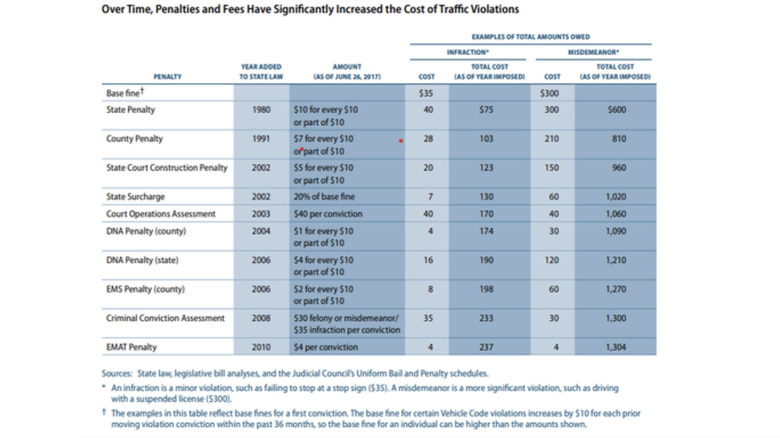
State lawmakers are to blame, because of course. From CBS:
It turns out lawmakers have been tacking on nearly a dozen different hidden fees to traffic tickets over the years. Some of those fees, like the Fish and Game Preservation Fund, have absolutely nothing to do with traffic violations.
"It feels like they're trying to hide something," Kahrs said.
California lawmakers have been quietly using traffic violations as a revenue generator for the state, or at least they've been trying. But as the state faces a multi-billion-dollar deficit, state data reveal revenue has been decreasing year after year.
An audit in 2017 found a plethora of "arbitrary fees" and the auditor urged lawmakers to throw the whole fee structure out and start again. Eight years later and nothing has changed in California. California even has strict laws on the books about hidden fees for everyone except the state, of course.
Traffic fines fall disproportionally hard on the poor, as rich people can just send in $500 and be on their way. California's income from such fines is actually falling because, since people can't afford to pay all of it, they don't pay any of it. It's a terrible state of affairs for hard-working Californians, one that one end any time soon.