

10 Top-Rated Car Museums To Visit In The US
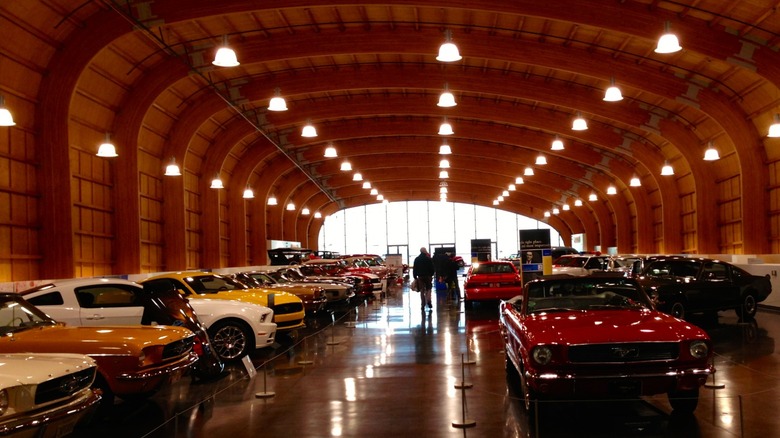
The National Association of Automobile Museums maintains an extensive roster of member institutions spread across the United States. It's an impressively long list, but membership alone is not a measure of excellence. Only a select few rise above the rest as the closest thing to a pilgrimage for automotive enthusiasts, and a worthy engineering and historical/engineering classroom for casual visitors with a passing interest in cars.
These museums are more than just expensive parking lots stuffed with polished metal. At their best, they possess cultural, historical, architectural, and engineering significance of a caliber that inspires near-fanatical worship. It's hardly surprising: automobiles, perhaps more than any other modern piece of engineering, tell stories about the minds who built them, the cultures that embraced them as a national invention, and the subtle art of daring that propelled innovation.
Our ranking of the pinnacle of automotive preservation in the United States relied on audience ratings from TripAdvisor. In truth, though, visiting any museum on this list is a once-in-a-lifetime experience, regardless of where it falls in the order. So buckle up.
Petersen Automotive Museum (4.6 out of 5)
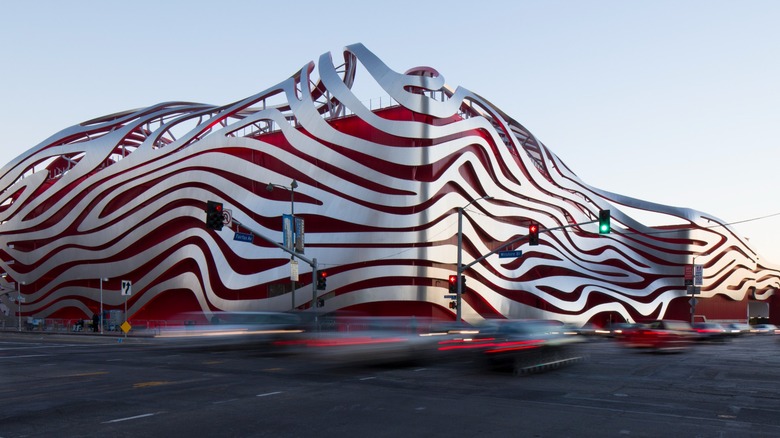
For car enthusiasts in the U.S., there's perhaps no greater sanctuary than what sits in Los Angeles' Museum Row: the Petersen Automotive Museum. Its iconic red and stainless-steel ribbon exterior is a landmark in itself, but inside is where the real thrill's at. Spread across three floors are over a dozen exhibits that hold everything on four wheels one can imagine. Visitors can find the earliest cars and other training wheels of automobile history, iconic Hollywood rides on the second floor, off-road racers (in the "Legends of the Dirt" exhibit), and even a practice lunar rover for moon landings.
No visit is complete without descending to the museum's pièce de résistance: the Vault. A century's worth of history of automobiles is displayed in over 300 holy grail cars. Highlights from the recently expanded Vault include a Lamborghini Countach LP5000S, a one-of-300 Lamborghini LM002s, a Rolls-Royce Silver Shadow two-door coupe, a 1925 Rolls-Royce Phantom1 Round Door, a Ford GT40 race car, a never-before-seen Chevrolet HHR land speed car, a Tesla Roadstar concept car, and a 1998 Cadillac specially built for, and blessed by, Pope John Paul II, though he never rode in it.
Petersen Automotive Museum tickets with Vault access cost $51 (age 18-62), $49 (age 62-plus), $42 (ages 12-17), and $25 (ages 4-11), while regular admission is $22, $20, $13, and $12, respectively. Buying them online is recommended, as Vault slots often sell out. Also recommended is scheduling a trip during weekdays, which are less busy, although the museum is open from 10 a.m. to 6 p.m. all week.
Indianapolis Motor Speedway Museum (4.6 out of 5)
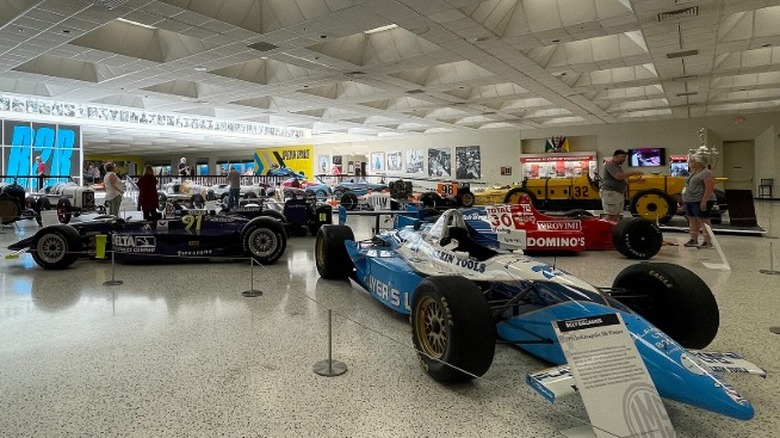
Stretching 2.5 miles in Indianapolis (the self-acclaimed "racing capital of the world"), Indianapolis Motor Speedway is a hallowed ground for motorsport and, by extension, race car lovers. Each year, it hosts the Indianapolis 500, one of racing's most prestigious events, drawing the world's greatest drivers to its legendary oval. Nestled between Turns 1 and 2 is the 80,000-square-foot Indianapolis Motor Speedway Museum, which has called this place home since 1976, though its origins trace back three decades earlier. What began with a modest collection of a dozen vehicles has grown into an archive of more than 150 historic cars and 55,000 motorsport artifacts.
The roughly 140,000 faithful that troop in annually come to see winning Indy 500 vintage rides such as Ray Harroun's single-seater Marmon Wasp that he drove to triumph at the 1911 inaugural race, Jim Clark's 1965 Lotus-Ford, Bill Vukovich's 1953 Kurtis Kraft Fuel Injection Special, and the rich assortment of trophies, photographs, and other memorabilia. Guided track tours traversing the famed brick-lined racecourse are on offer, as are stops at landmarks such as the legendary Pagoda control tower.
The Indianapolis Motor Speedway Museum is open daily from 10 a.m. to 4 p.m. Tickets can be booked 60 days in advance and cost $25 for adults; $23 ages 55 and older; and $18 for military personnel and veterans, as well as ages 6 to16. There's free admission for ages 5 and below. Don't mistake museum admission for automatic Motor Speedway entry; additional fees apply for access to the Speedway grounds during major events.
National Corvette Museum (4.6 out of 5)
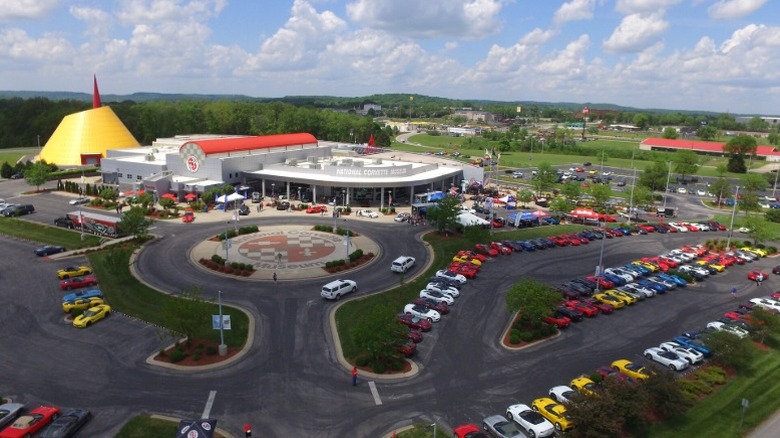
Europe has its Ferraris, Lamborghinis, and Porsches, but the indigenous Chevy Corvette remains the most revered sports car for the American community. So celebrated is General Motors' flagship that there's a sanctuary in Bowling Green, Kentucky, dedicated to this one model. It's neither the General Motors Bowling Green Assembly Plant — the birthplace of all Corvettes since 1981 — that sits just a mile away, nor the NCM Motorsports Park, laden with folks craving the first-hand feeling of racing a Corvette on a professional track. It's the National Corvette Museum.
Opening its doors in 1994, this 115,000-square-foot Vette heaven is blessed with the very first 1953 Corvette, the only 1983 Corvette in existence, a Corvette with a V10 engine, and rides that have etched their tires in Le Mans and Daytona. Along with a peek into the model's bright evolutionary history (including the over 70 examples on display and the annual temporary exhibits), there's room for the not-so-bright moments. Case in point: the Skydome's immersive Sinkhole exhibit, where visitors can learn the story of the 45-foot-wide sinkhole that gulped eight cars in the museum in 2014. Some of them were restored, but others are displayed in their damaged state as a reminder of nature's brutality.
True to Corvette culture, the experience extends beyond static displays. Visitors can browse exclusive merchandise and test their skills in a Corvette driving simulator.
The National Corvette Museum opens daily from 9 a.m. to 5 p.m., except for January and February, when it's closed on Tuesdays. Access costs $25 for ages 13 to 61, $23 for ages 62 and above, $14 for ages 5 to 12, and is free under age 5 .
LeMay America's Car Museum (4.7 out of 5)
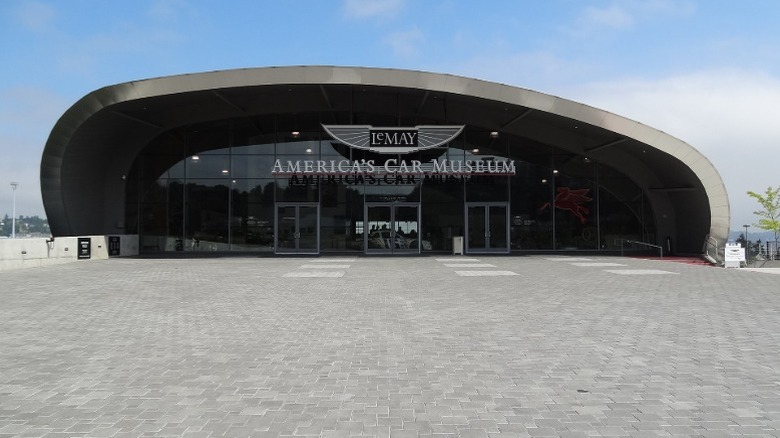
Across from the famous Tacoma Dome in Tacoma, Washington, stands the 165,000-square-foot LeMay America's Car Museum, a sprawling automotive showcase named after its founder, Harold E. LeMay. It's one of the newer car museums, debuting in 2012, but that doesn't make it less captivating. Every one of its five permanent exhibits, holding over 300 vehicles from LeMay's estate (once the largest private collection on earth), is worth exploring.
For instance, "Custom Coachwork" highlights the rolling chassis era of the 1930s; you'll find a 1906 Cadillac Model M Tulip Tourer and a 1930 Duesenberg Model J Convertible, as well as some Packards and Lincolns. "British Invasion" holds the hallmarks of British automobiles that shone brightly in 1960s America. Think Rolls-Royces, Bentleys, and MGs. Individual examples from other exhibits include rides like one-of-117 1958 Dual Ghia Coupé and a Gothik Coach custom car with a red stiletto high-heel shoe for a chassis.
Then there's Steve Saleen's "The Birth of the American Supercar," scheduled to run through October 2026. For anyone into supercars and hypercar technology, this is a must-see.
The LeMay America's Car Museum is open from Thursday to Monday, 10 a.m. to 5 p.m., but is closed on Tuesdays, Wednesdays, Thanksgiving, and Dec. 24, 25, and 31. Tickets are $24.50 for ages 13 to 64, $22.50 for ages 65-plus and active or veteran military personnel with ID, $17.50 for ages 5 to12, and free for ages 4 and under.
Lane Motor Museum (4.7 out of 5)
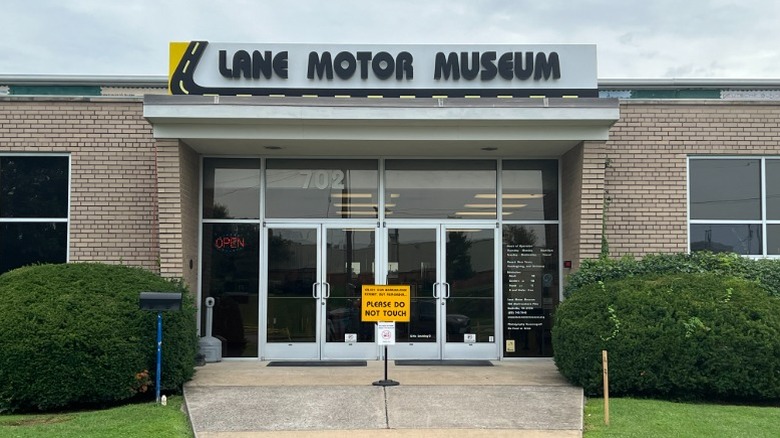
Lane Motor Museum's story is an interesting one: from an old Sunbeam bread factory in Nashville to a 70-vehicle museum founded by collector Jeff Lane to what is now the largest collection of European cars in the U.S., with vehicles ranging from the early 1900s through today.
Over 550 vehicles, sourced mainly from Europe but also from around the world, sit in about 40,000 square feet of open space. Among these vehicles is the Peel P50, a microcar so tiny it could fit into a closet: 4 feet 5 inches long, 3 feet 3 inches wide, 4 feet high, and weighing just 250 pounds, it holds the record as the world's smallest passenger car. Nearby sits the Amphicar 770, a 1964 German-built vehicle that could drive on land and cruise at about 7 mph on water. It earned its reputation as the most successful amphibious car ever to be produced.
Curators were wise not to display the entire collection at once; rather, exhibits are rotated and limited to only about 150 cars and motorcycles at a time. With this, every visit to the Lane is almost guaranteed to be a fresh one. The museum also made sure history didn't just stay behind the glass by creating a yearly event, "Rally for the Lane," which gives visitors the chance to drive one of its unique collection items for a full day.
The Lane Motor Museum is open 10 a.m. to 5 p.m. Thursday through Monday, closed Tuesday and Wednesday. Tickets cost $15 for ages 18 to 64, $10 for 65 and older, $3 for ages 6 to 17, and are free under age 5.
Simeone Foundation Automotive Museum (4.7 out of 5)
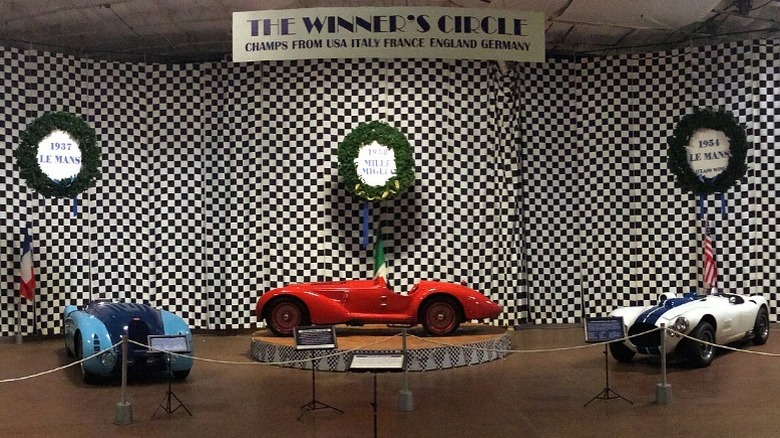
Thanks to the lifelong passion of the late surgeon and car collector, Dr. Frederick Simeone, America is home to the Simeone Foundation Automotive Museum, Philadelphia's world-class car shrine. Established in 2008, the museum houses over 75 of what can rightly be termed one-of-a-kind competition cars, fittingly unified by its guiding theme: "The Spirit of Competition."
Among the highlights is a six-cylinder 1934 MG K3 Magnette ridden by Lindsay Eccles and C.E.C Martin to fourth position at the 1934 Le Mans, the best result British manufacturer MG ever achieved at the race. Also on display are a 1937 and 1939 BMW 328; a 1936 Aston Martin that competed at the Irish Motor Racing Club, Silverstone, and Vintage Sports-Car Club races; a 2-liter 1926 Bugatti Type 35; a 1958 Aston Martin DBR1 that Jack Brabham and Stirling Moss used to win the Nürburgring 1,000-kilometer, and a Mille Miglia-winning 1938 Alfa Romeo.
To truly make your visit memorable, check out the Demonstration Days ("Demo Days" as they are called), where select vehicles from both the museum and foreign collections are driven outdoors within the museum grounds.
The Simeone Foundation Automotive Museum is open 10 a.m. to 6 p.m. Tuesday through Friday, 10 a.m. to 4 p.m. weekends, closed Mondays and Easter, Independence Day, Thanksgiving, Dec. 24, 25, and 31, and Jan. 1. Tickets cost $17.85 for ages 18 to 64, $14.64 for ages 65 and above, free under age 18. Once purchased, tickets never expire.
Henry Ford Museum of American Innovation (4.8 out of 5)
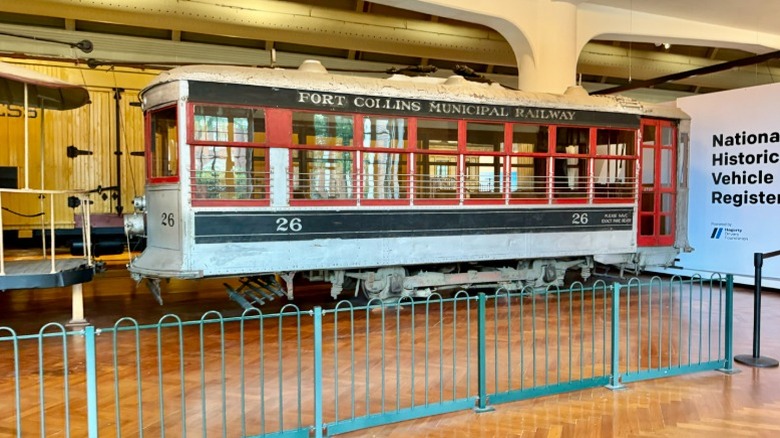
Simply known as "The Henry Ford," this museum in Dearborn, Michigan, serves as an archive of roughly three centuries' worth of American engineering excellence. The 26 million artifacts that dot this 250-acre campus, including automobiles, aircraft, and even entire historic buildings, are housed in three different attractions. Skipping the Greenfield Village (an open-air living museum) and the Ford Rouge Factory Tour would be a missed opportunity, but the main beacon inviting car enthusiasts is the Henry Ford Museum of American Innovation.
Within are milestones of American motoring history: the 1865 Roper (the first American-made car), the original Ford Model T, a 2002 Prius, the 1961 Lincoln Continental presidential limo that was carrying John F. Kennedy when he was assassinated, other past presidential cars, and even the GM bus which held a defiant Rosa Parks. More than just automobile-related wares are on display here. Visitors will also encounter steam engines, jet engines, early agricultural machinery, and the rocking chair that sat Abraham Lincoln during his assassination on April 14, 1865.
The sheer scale of The Henry Ford's exhibits can be too overwhelming to squeeze into a one-day trip. So, choosing a specific attraction or theme beforehand is the best approach.
The Henry Ford is open all week from 9:30 a.m. to 5 p.m.. Non-member tickets to the car museum cost $34 generally, $30 for ages 62-plus, and $25 ages 5-11. The other attractions are priced separately.
National Automobile Museum (4.8 out of 5)
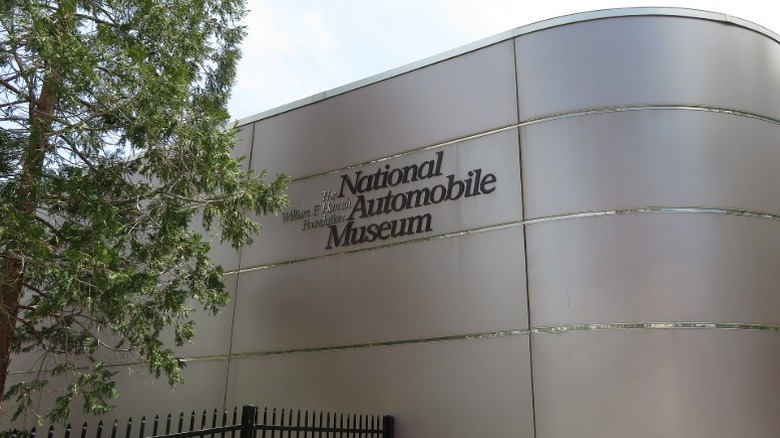
Much like the LeMay and Henry Ford museums, the National Automobile Museum (also dubbed "The Harrah Collection") owes its existence to the vision of a single passionate collector. In this case, that figure was casino magnate Bill Harrah, whose lifelong obsession with automobiles laid the foundation for one of America's finest car museums. Opened in 1989 in downtown Reno, Nevada, the museum contains over 240 cars, most drawn from Harrah's 1,400-strong collection.
In the Thomas Flyer Exhibit lies the 1907 Thomas Flyer that competed and won the audacious 1908 New York-to-Paris automobile race. A new addition, the Paul Newman Exhibit presents the 12 championship-winning race cars once owned or driven by Oscar-winning-actor-turned-professional-racer Paul Newman. Examples include a 200-horsepower 1977 Nissan 200SX, a 933-hp V8-powered 1979 Nissan 280ZX, a custom-built 1987 Nissan 300ZX 2+2, and a 1972 Ford Cosworth.
What's a car museum without limited-edition models? The National Automobile Museum has that and many more rare rides on display. Worthy examples include a rotary-engine 1906 Adams-Farwell 6A convertible runabout, a one-of-six 1931 Bugatti Type 41 Royale Kellner Coach with a massive 12.7-liter straight-8 engine, a 1931 Duesenberg Model J Derham Tourster featuring a disappearing convertible top, and a 1936 Duesenberg SJN LaGrande Convertible Roadster. Don't miss the 1973 Cadillac Eldorado owned by Elvis Presley in the Cars of the Stars exhibit or the 1924 Porter from the 1965 sitcom "My Mother the Car."
The National Automobile Museum is open 10 a.m. to 4 p.m. on weekends, 9 a.m. to 5 p.m. weekdays. Adult admission is $16; age 65 and older, $15; ages 6 to 17, $13; age 5 and under, $3; and military personnel (active or veteran) and first responders with ID, $14.
Orlando Auto Museum (4.8 out of 5)
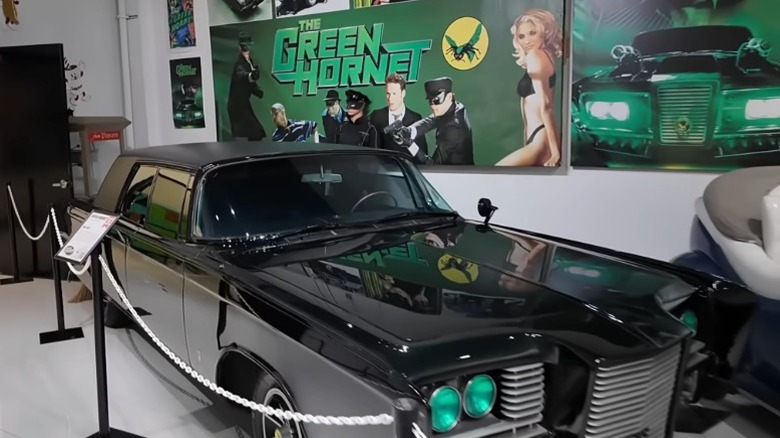
A ticket to the Orlando Auto Museum opens access to a world of automotive history and innovation. Sitting in the 850,000-square-foot Dezerland Park, Orlando, Florida, it houses over 2,000 cars valued at $200 million. Unlike traditional museums with a single hall for showing automobiles, the Orlando Auto Museum is laid out as a series of themed rooms.
Of the 20-or-so rooms, the most eye-catching are those housing what pop culture fans hold dear. The Batcave theme room hosts exactly what it sounds like: iconic rides that have shaped Batman and the larger pop culture. Inside are Adam West's and Michael Keaton's Batmobiles (the latter arguably the most practical ride of the Dark Knight) and two extremely rare Batcycles. The 007 Bond lounge unsurprisingly hosts the world's largest James Bond-movie vehicle collection and even includes a Soviet-built T-55 main battle tank that featured in Pierce Brosnan's "GoldenEye" in 1995. And the Gatsby Lounge ushers visitors into a bygone era of automobile style and innovation of the "Great Gatsby" 1920s.
The museum's experience goes beyond mere staring at static cars. Some cars have interactive photo opportunities with themed backgrounds that invite visitors to engage more personally with the exhibits.
The Orlando Auto Museum is open for tours daily, 1 to 8 p.m. Tuesday through Thursday, 1 to 10 p.m. on Friday, and 11 a.m. to 11 p.m. Saturday through Monday. Tickets can be purchased at the museum entrance or online. General admission costs $33.57 for adults, $23.48 for children, while adding a 45-minute VIP tour raises the price to $50.38 for adults and $40.30 for children.
Gilmore Car Museum (4.9 out of 5)
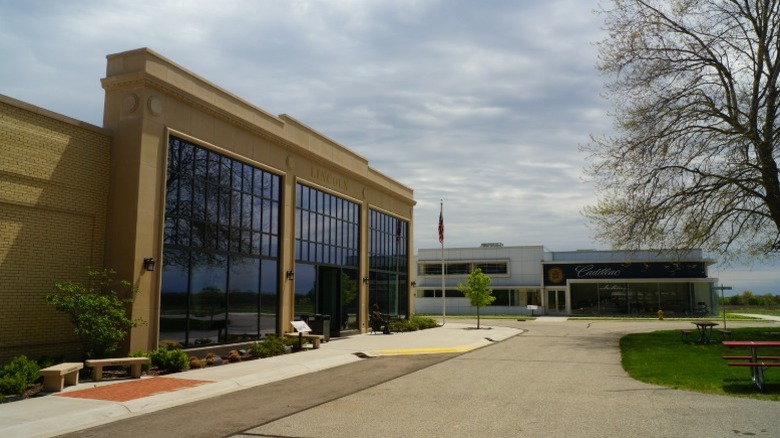
Spanning 90 acres, protecting over 400 vehicles across 209,000 square feet of exhibit space, and holding the title of the largest of automobile museum in North America, the Gilmore Car Museum needs little introduction. Its breadth and variety draw 112,000-odd visitors annually. Launched by collector Donald S. Gilmore and his wife, Genevieve, in 1966, the museum in Hickory Corners, Michigan, a couple of hours from Detroit, is home to an expansive range of vintage automobiles and motorcycles representing multiple eras and disciplines of motoring history.
American muscle is well represented, with standouts such as the 1970 Ford Torino 429 Cobra Jet, 1967 Shelby GT500 Prototype, and 1970 Dodge Challenger R/T Hemi, as are much older vehicles like a 1927 Ford Model T, a 1920 Pierce Arrow, and even a 1899 Locomobile steam car. An exhibit dedicated to Chrysler engineering, open through April 2026, holds everything from a 1934 Chrysler Airflow to a 2005 Chrysler Firepower concept car.
Museums are all about aesthetics (in other words, what they invoke), as much as what they teach. In this regard, the Gilmore Car Museum's campus grounds are sightseeing-worthy in themselves. Art Deco elegance anchors the main building, while a pastoral 19th-century village and the museum's signature red barns spread outward.
The Gilmore Car Museum is open from 10 a.m. to 5 p.m. from November 29 to March 31. From April 1 to November 28 it opens at 9 a.m., closing at 5 p.m. Monday through Friday and 6 p.m. on weekends. Tickets cost $20 for ages 18 and up, $25 during car shows; $18 for military veterans with ID, $20 during car shows; $12 for ages 11 to 17, $15 during car shows. Age 10 and under are always free, as are active military with ID.