

Why Does Chevy Make Vehicles In Mexico?
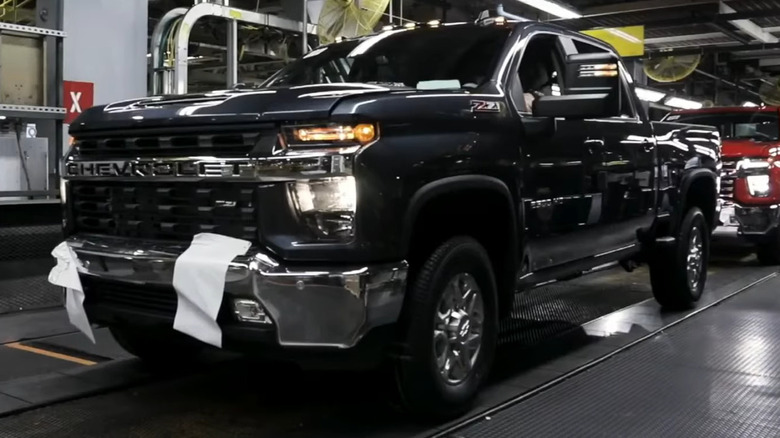
For many, owning a Chevrolet is as patriotic as it gets. After all, the bowtie badge represents a significant part of the made-in-the-U.S. movement. But what if your wheels of freedom aren't made in the U.S. at all? An easy way to know is to take a peek at the door jamb of your Chevrolet car or SUV. If the VIN starts with 3, congratulations — your pride and joy was made in Mexico.
This isn't a new thing for General Motors. The automotive conglomerate turned to our neighboring country a long time back – 1935, to be precise. In fact, Mexico is an automotive powerhouse for GM, building everything from basic work trucks to cutting-edge EVs. So if you own a Silverado workhorse or an electric Blazer, there's a high likelihood that your car crossed the border in a railcar before reaching your doorstep. There are many reasons for this, and politics is the least important of them all.
The straight answer is money, and lots of it. Manufacturing a car in Mexico is way cheaper than making one in the United States. It goes beyond the cheap labor trope, too. It's about geography, infrastructure, and an automotive ecosystem decades in the making. It is also due to the United States-Mexico-Canada Agreement (USMCA) laid out in 2020, a successor to the North American Free Trade Agreement (NAFTA) established in 1994 for the facilitation of easy trade between the three neighboring countries.
Why Mexico, though?
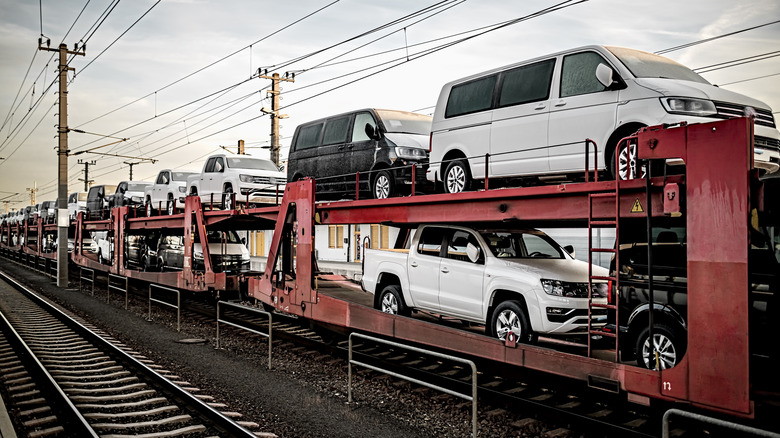
By building a car in Mexico, GM can avoid outrageous shipping costs and long delays associated with manufacturing and importing cars from low production cost countries in Asia, and still stay competitive with brands like Hyundai and Kia.
And of course, there are associated labor costs. Labor in Mexico is cheap, almost a fraction of U.S. wages. That's a huge saving when it comes to production, and one that also helps keep vehicle costs low and competitive.
Contrary to opinions, Mexico boasts of state-of-the-art manufacturing plants that can compete with the best automotive assembly lines in the United States. And it is backed by tier one and tier two suppliers that are literally next door to these plants. GM has four major factories in Mexico. They are Ramos Arizpe in Coahuila, Silao in Guanajuato, and San Luis Potosi. The one in Toluca is an engine plant primarily producing gasoline engines.
The heavy hitters
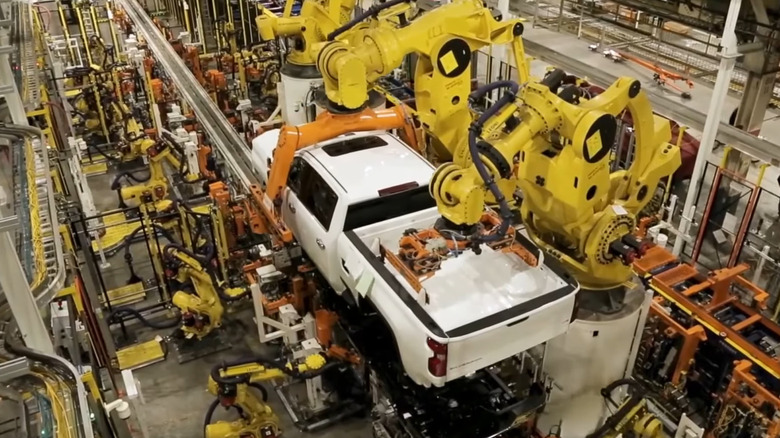
The Silao and San Luis Potosí manufacturing facilities build a significant amount of Chevrolet's inventory. Here, SUVs, trucks, and crossovers including the Chevy Silverado 1500, Equinox, and Trax are assembled. While the Silverado 1500 is manufactured in Indiana as well, a massive chunk of the crew cab configuration Silverados, the ones mostly used by families, roll off the Silao assembly line.
The Equinox crossover is sold globally and the staple product of GM's San Luis Potosi manufacturing facility. The plant pushes out a good chunk of the global supply of this gas-powered crossover. The Chevrolet Trax SUV, meanwhile, is a global product. Most of them come from GM's Korea plant, but San Luis Potosi has been a crucial part of the Trax's North American supply chain and instrumental in keeping the SUV's prices competitive without compromising on quality.
That's just Chevrolet's bread and butter models — the carmaker has a stake in Mexico's EV manufacturing facility as well.
The EV bet
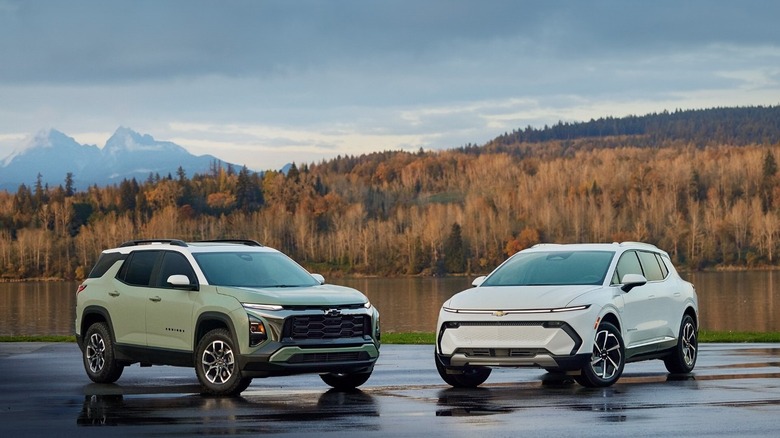
GM is betting big on its EV manufacturing in Mexico. This confidence stemmed from the fact that the carmaker has been Mexico's biggest automotive conglomerate since 2018, and was further boosted by its huge network of established Mexican suppliers eager to support GM's EV shift.
Its Ramos Arizpe plant in Coahuila has been under General Motors for its other automotive offerings since 1981 and has seen the production of cars like the Pontiac Aztek and the Chevrolet HHR. Today, it stands as the focal point of Chevrolet's electrification plans, producing battery-powered vehicles like the Chevrolet Blazer EV, Equinox EV, and even the ICE Blazer.
In July 2022, GM announced its intent to manufacture the Blazer EV in Mexico at the same time it revealed the electric SUV. Officially, production started at the Ramos Arizpe plant in late 2023. In fact, besides importing the Blazer EV to the U.S., Chevy also sells the Blazer EV in Mexico. Chevrolet also makes the gas-powered Blazer here, with the SUV being one of the older products manufactured in this plant.
The Ramos plant's other battery-powered product is the Equinox EV. It was GM's second EV to be assembled in that plant after the Blazer EV. The Ramos plant used to make the gas-powered Equinox as well, but that was discontinued in April 2024 as part of GM's plan to convert the facility into a purely EV manufacturing hub.
Policies dictate production
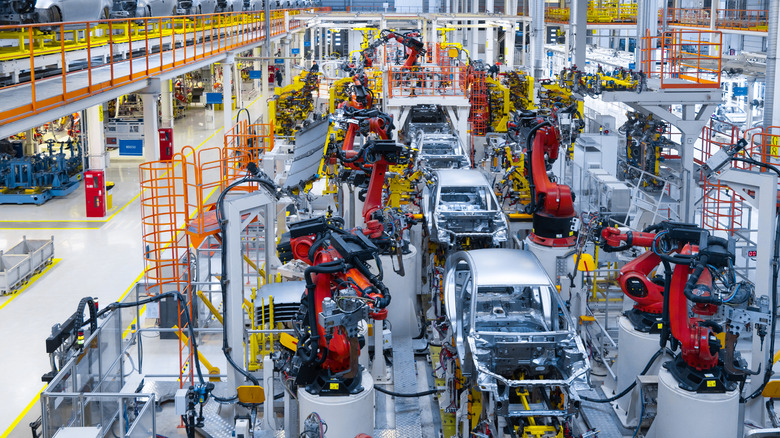
The automotive relationship between the U.S., Mexico, and even Canada relies heavily on the United States-Mexico-Canada Agreement that superseded the North American Free Trade Agreement, a pact that made the countries a free-trade zone by eliminating tariffs and trade barriers. This included trade in fields like automobiles and agriculture.
The USMCA was an attempt to modernize these trade rules to better suit the 21st century. Under USMCA, to qualify for zero tariffs, automakers had to clear a few stipulations. For starters, 75 percent of the vehicle's components have to be made in North America, which was up from 62.5 percent under NAFTA. Another crucial stipulation was the Labor Value Content rule under which 40 to 45 percent of the work done on the vehicles would have to be handled by workers making at least $16 an hour.
While these rules were made with the intent to bring back the work to American shores, many manufacturers simply chose to focus more on Mexican manufacturing to offset the associated rising costs.
What about tariffs?
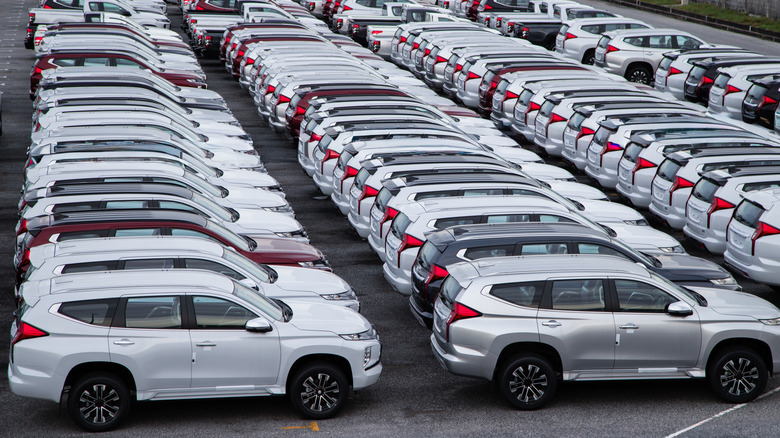
During his first term, Donald Trump called NAFTA the worst trade deal ever made while implementing the USMCA to replace it. At the start of his second term in 2025, Trump announced tariffs on other countries, including Mexico, with a 25 percent tariff on imports from the country.
While the recent tariffs have the intention of bringing jobs back to the U.S., it's gonna be a lot more complicated and time-consuming. The Mexican-North American supply chain is so tightly interwoven that to make an engine could cross the border multiple times, adding both cost and time. If carmakers decide to keep manufacturing in Mexico, the 25 percent tariffs also add costs, some of which will trickle down to American consumers in the form of increased vehicle prices. Some of these tariff costs will hit you in the form of destination fees. GM has projected the total tariff costs to its vehicles to be around $4 to 5 billion.
According to the Center for Automotive Research in Michigan, these tariffs are projected to cost the U.S. auto industry close to $108 billion. To counter this, many automakers announced domestic investments, including Chevrolet's parent company, GM, which announced plans for a $4 billion infusion to move production from Mexico into its three major manufacturing hubs in Kansas, Michigan and Tennessee. This includes moving production of the Blazer and Equinox to the U.S.
It remains to be seen how this will impact Chevy's larger manufacturing footprint in Mexico, but it is already starting to hit automakers' bottom line. In fact, GM disclosed that it suffered a 35 percent drop in profits in its second quarter after Trump's tariffs came into effect, and there are further indications that 2026 will likely be rough for car sales as well.