

Battle Of The Ignored Engines, The Chrysler 383 Vs The Ford 390 FE
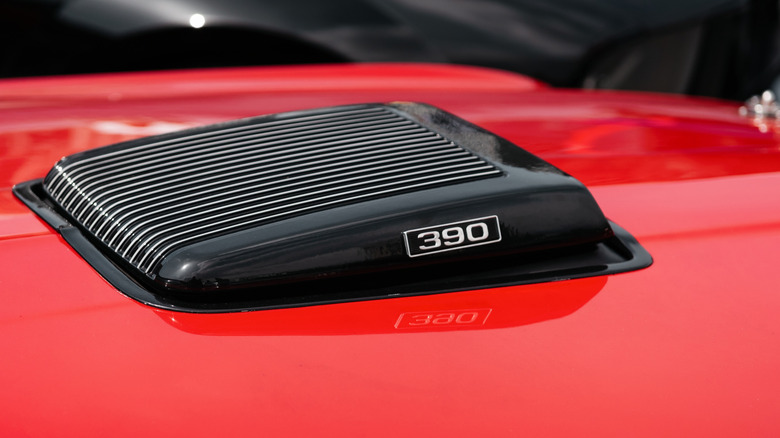
Visiting automotive museums, scrutinizing thick coffee table books about muscle cars, and watching movies revolving around car culture could make you think that every other car in the '60s had a 426 Hemi, an L88 427, or a 428 Super Cobra Jet. The truth is, the ultimate performance powerplants of the era represented a fraction of a percent of the powertrains you'd encounter on the street. Two V8s you actually would run across with regularity were Chrysler's B-series 383 and Ford's 390 FE. But you wouldn't find much respect for them among customers hungry for performance.
The main issue that kept 383s and 390s in the "working-class hero" category is that, by the mid to late 1960s, they were old hat. Sure, they were voluminous in the early '60s, but sub-400-cube engines felt a bit quaint alongside big-blocks with wine barrels for cylinders. It's a shame, because while the big-blocks were stealing all the limelight, the Mopar 383 and the Blue Oval's 390 responded well to mods and were in a wide swathe of vehicles within financial reach of the average person.
For drivers who wanted a street-legal car that still had the torque to give a solid shove, not to mention plenty of replacement parts that weren't exotic, expensive, and rare, they were fantastic options. So, while "LS6 454 vs. 455 Super Duty" is the more exciting, high-profile comparison, 383 vs. 390 is probably way more realistic, as these engines likely had more impromptu stoplight drag races. The cars they powered have recently enjoyed a bit of a renaissance among collectors, too, so let's pit them against each other in the battle of the ignored engines! Thanks to reader Factoryhack for the idea.
Where you can find 383s and 390s
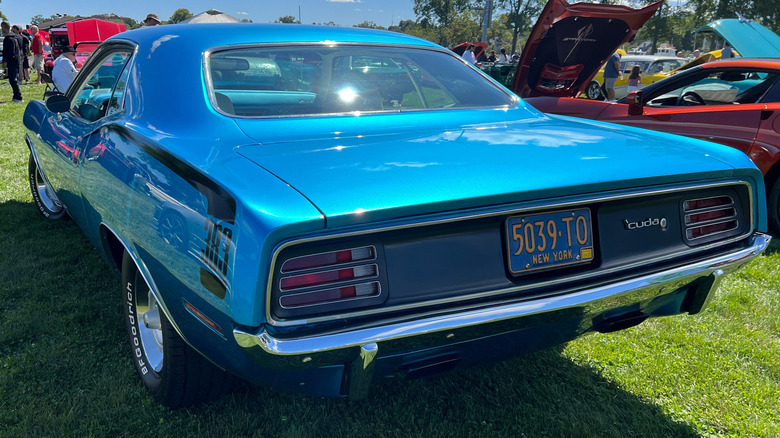
Battle one: production numbers. From the 383's introduction in 1959 to its replacement with the 400 in 1972, Chrysler used it across all its divisions' vehicles (except Imperials). It even found its way into the gorgeous Facel Vega and the otherwise indubitably British Jensen Interceptor. In all, Chrysler built more than 3 million 383s. For comparison, Chrysler only built 11,000 Gen-II 426 Hemis. Ford 390s are also plentiful, as Ford built 4 million 390s and 428s, with production numbers skewing heavily toward the 390. They were in boat-ish Thunderbirds and mid-size Fairlanes, as well as more spritely Mustangs and Mercury Cyclones, not to mention scores of pickup trucks. The production numbers may be a toss-up, though 383s went into some more exotic metal (namely the Facels and Jensens).
Battle two: factory performance. In 1959, the DeSoto Adventurer got a dual-quad 383 with 350 horsepower, a solid figure for the late '50s. Ford had it beat by 1961, though, as the 375-horsepower four-barrel solid-lifter 390 graced full-sized models, and buyers could even opt for a dealer-installed triple-two-barrel setup for 401 horses. While this gives Ford the early edge in this comparison, things evened out by the late '60s, when both the 390 and 383 made 335 horsepower in their most powerful guise. They were neck and neck acceleration-wise at this point, too. Car and Driver pulled a 15.2-second quarter-mile at 91 mph in a 1967 Ford Mustang GT/A with the 320-horsepower 390, and Motor Trend took a 1968 Plymouth Road Runner with the 335-hp 383 Magnum through the quarter in 15 seconds at 93 mph.
Why you want 383s and 390s
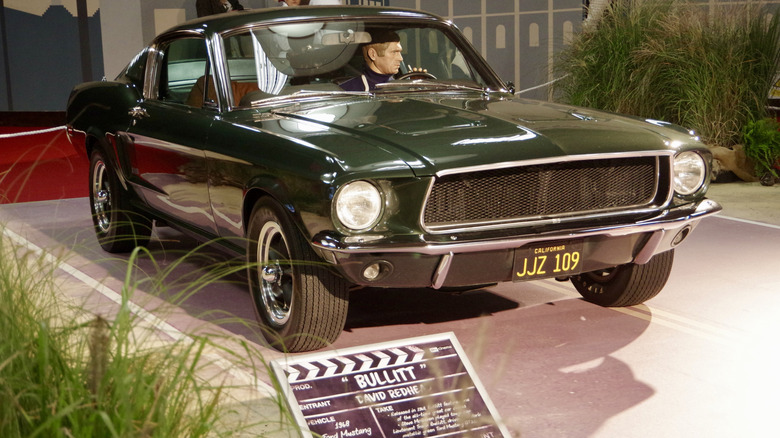
Battle three: collectability and value. A rising tide lifts all boats, and with 426 Hemi and 440 Six Pack/Six-Barrel cars nabbing six and even seven figures, it makes sense that collectors seeking value would turn to the "lesser" 383s. A '71 'Cuda with a 383 can bring more than $100,000 in concours condition. As for the Ford 390, it's most valuable in Mustangs, thanks vastly to the Steve McQueen/"Bullitt" connection. A '68 390-powered Mustang GT coupe will bring over $90,000 in concours condition. The 383-powered cars are generally more valuable, especially Facel Vegas, which can fetch more than $250,000. Though the "Bullitt" movie Mustang did sell for $3.74 million in 2020, so one point for the 390.
Battle four: performance mods. In 1967, Hot Rod took a stock 383 from 278 horsepower to over 370 horsepower after advancing the timing, then installing exhaust headers, a Holley 3916 carburetor, a high-rise intake, and a more aggressive solid-lifter cam. A Mallory ignition and blueprinting wrought 415 hp, all with stock heads and spinny bits. As for 390s, Wolverine Engines got 381 horsepower out of a 390 FE with a roller cam and iron heads, and then built a 390 FE with Edelbrock aluminum heads and a mild cam that made 528 horsepower.
Stroker builds and period-correct big-sibling heads, such as those from 440s and 428 Cobra Jets, can make for stupendous power, though genuine vintage Ford FE parts are rarer and more costly than Chrysler RB parts. It seems both the 383 and 390 just need some external assistance with funneling more air, from carbs and intakes that may inhale errant small birds to exhaust systems you could shove a toddler through, and the performance gains are spectacular. Let's call it a draw.