

The Evolution Of The Ram Pickup (And How It Saved Dodge)
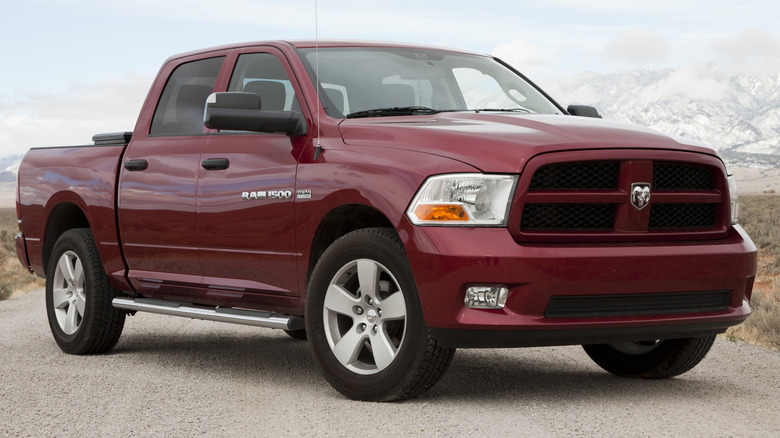
The Ram pickup is a colossus. It dominates job sites and suburban driveways, perfectly acting out the role of both work vehicle and status symbol. Today, these pickups are among the best-selling vehicles in the U.S., with Ram selling over 373,000 trucks in 2024.
However, the brand and the model didn't always live through moments of glory. Rewind 40 years and buying a then-Dodge pickup was the equivalent of ordering an off-brand cola and pretending it tasted as good as Coke. In the late 1980s and early 1990s, Dodge truck sales were embarrassing — sometimes making up as little as 7% of the pickup market.
Back then, while Ford and Chevy trucks were devouring the pickup pie, Dodge wasn't even seated at the table. Instead, it was just watching from a nearby window. Luckily, that all changed with a gamble. In 1994, the completely rebuilt second-generation Dodge Ram did more than just sell — it changed pickups forever. This is its story.
The Dodge Power Wagon
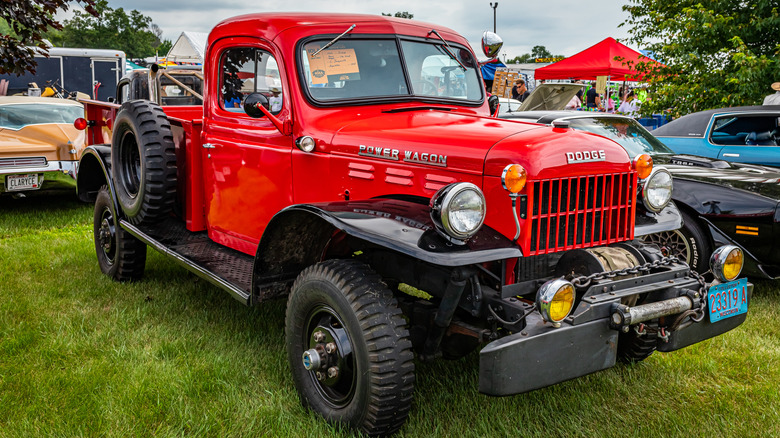
During World War II, Dodge built over 256,000 3/4-ton military trucks for the U.S. Army. The trucks were powerful and reliable, and military models like the iconic Dodge WC still get picked up by collectors today. It's from these vehicles and their success that the iconic Power Wagon – the great-grandfather of the modern Ram — was born. Launched in March 1946, the Power Wagon was a rugged, medium-duty vehicle and one of the first mass-produced civilian trucks offering four-wheel drive. It found success among utility companies, municipalities, and even farmers, who could use it to tow plows and work their fields.
Dodge even marketed the Power Wagon as "a self-propelled power plant," because its front and rear power take-off units could run a wide variety of farm equipment. Though the Power Wagon stayed on the roster for decades, Dodge also introduced the even more civilian-friendly B series in 1948. These trucks featured the iconic pilothouse cabs that used increased width and height to greatly improve comfort and visibility for drivers.
Meet the C series
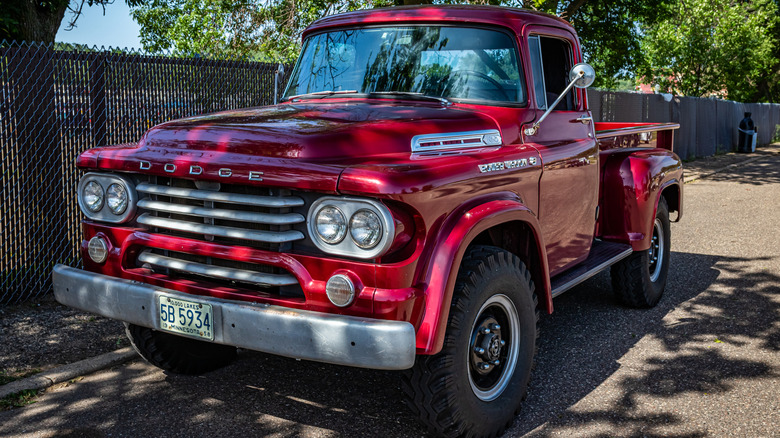
In 1954, Dodge's B series got replaced by the C series. While the large pilot house cabs continued, these trucks featured many improvements and a complete redesign that departed from the look of the brand's earlier wartime models. Right at eye level, the trucks featured a large, curved one-piece windshield and a lowered cab that was as attractive as it was practical. Under the hood, Dodge's C series came with either a 3.8-liter inline-six or a variety of V8 options.
The C series also saw the introduction of two- and three-speed auto transmissions while later generations added power steering; power brakes, and 12-volt electronics. To add even more flair to the exterior, Dodge introduced the stylish Sweptside and Sweptline beds with luxury trim options like two-tone paint and plenty of chrome. The innovative design of Dodge's C series pickups also spilled over to the brand's Town Panel and Town Wagon trucks.
The Dodge D Series
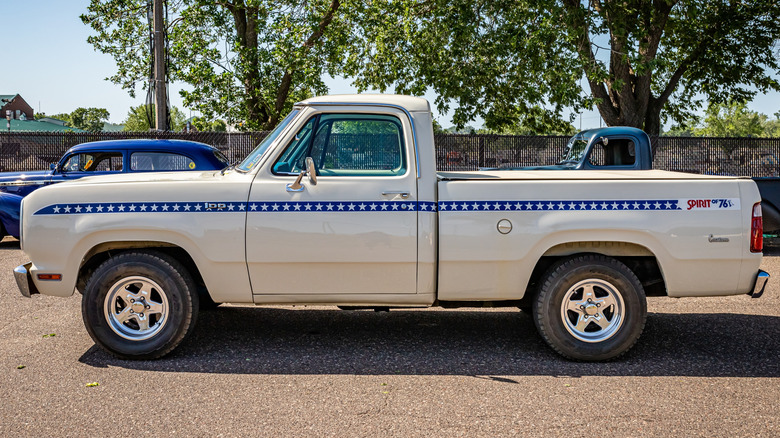
In 1960, Dodge launched its iconic and extremely long-selling D/W series — a truck that lasted three generations and a total of 33 years on the market. In hindsight, the launch of the D series seems like both a blessing and a curse. On the one hand, D series trucks are now legendary, but they also marked a period of massive stagnation in innovation and style.
The first-generation D series lasted until 1965 and featured 6.5-, 8-, and 9-foot beds; Slant Six and V8 engine options; two-wheel and four-wheel drivetrains (D series and W series, respectively), and the first four-door crew cab among the Big Three American pickup manufacturers of the time. Starting in 1964, Dodge also produced a small batch of custom D100s and D200s called the Custom Sports Special. These featured a 426-cubic-inch wedge-head V8 capable of producing up to 365 hp. By 1967, Dodge's D series were also commonly equipped with 383-cubic-inch big block engines.
The second and third-generation D series, however, were much less exciting. The models' exterior stayed largely unchanged (except for the addition or subtraction of headlights and different grilles), though the 1972 third-generation had a notably more rounded look. Chevy had the iconic, clean Action Line and Ford's F-series seemed to only get bigger and better. Meanwhile, the looks of Dodge's D series trucks stagnated for decades, and even though their performance was good, it wasn't enough to keep them relevant and competitive.
The end of the D series and the Adult Toys era
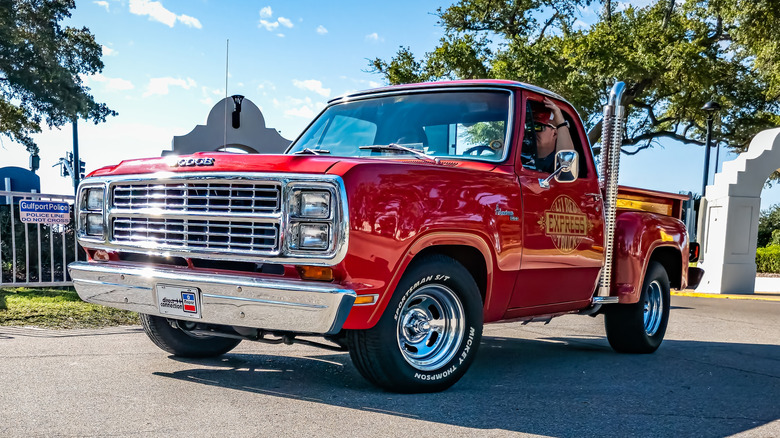
In the late 1960s and early 1970s, we see Dodge fumble (and fail) to regain its slice of the pickup truck pie with the launch of a number of special trims.
In 1968, for example, it launched the Adventurer series — one of the first American pickups to boast car-like features. The 1970 Adventurer SE featured chrome and wood on the dash, full carpeting, extra insulation, luxury door panel trim, and padded vinyl seats — more than enough to make a truck seem like a car, not just a workhorse. In 1970, Dodge began offering the Dude — a name that Ram brought back in 2025 – which was a sport trim package that, despite the fun name, offered little more than some underwhelming aesthetic trims: tailgate decals, new taillights, colored hubcaps, painted wheels, and a color-matched roof.
Next came the Lil' Red Express — a muscle truck with a 5.9-liter V8 engine and 225 horsepower that, by accident, became America's fastest vehicle of its time. Other notable members of Dodge's weird 1970s Adult Toys lineup included the Macho Power Wagon, featuring special paint jobs with racing stripes, built-in roll bars, black interior, a sport steering wheel, and beefy off-road tires. There was also the Warlock, a collector's item that still sells for up to $25,000 with gold trim, flared wheel arches, chrome running boards, all-black interior, bucket seats, as well as power engine options.
In 1978, Dodge also introduced a 4L 6-cylinder Mitsubishi diesel to the D series – an engine that, with just 105 hp, didn't offer enough power and was quickly discontinued.
The diesel savior: Enter Cummins
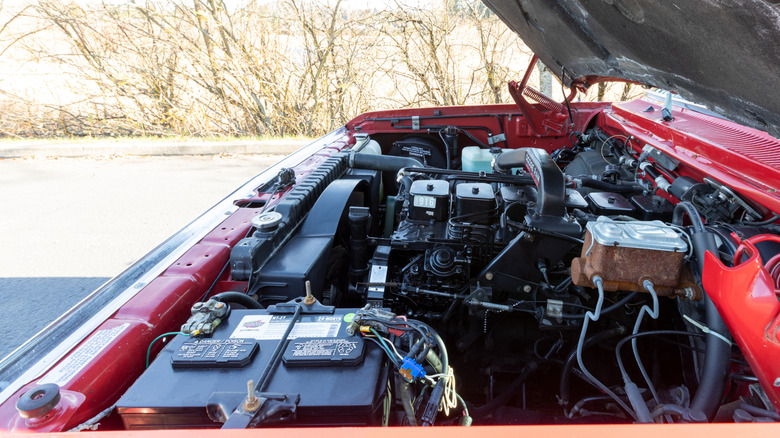
Dodge launched what would become the first-generation Ram in 1981. Big and powerful, the new name accompanying the still present D/W series designation came from the little chrome mascot it featured, which first appeared on Dodge cars from 1932 to 1954 and again on the 1973 Big Horn Class 8 Semi. Facing stiff competition from Ford and GM, Dodge found a way to hold on to its ever-smaller slice of the pickup pie through a collaboration with Cummins — already a leading manufacturer of commercial engines at the time — that began in 1989.
By dropping a 5.9-liter B-series Cummins turbodiesel in its pickup, Dodge not only stayed in the race against Ford and Chevy — it beat the competition, offering the only turbocharged direct injection diesel engine in its class along with significantly more torque than its competitors. The Cummins engine became, without a doubt, the selling point for first-generation Dodge Rams and saved the brand's poorly aging trucks — or at least gave them a few more years. Moreover, it marked the beginning of a collaboration between Dodge and Cummins that lasted over 30 years.
Project T-300: Rejecting the status quo
Development on the second-generation Ram began in 1986, with rumors that Dodge was planning a full-size truck and van option. By 1987, that design was ditched, and a more conservative model was proposed for launch in 1991. That design didn't last long either — per Diesel Army, Dodge's chief designer Philip Payne said it came out looking "like nothing more than a rehash of everyone else's truck."
So, Payne tackled Project T-300 — the internal code name for the second-generation Ram — from scratch one last time. Pulling inspiration from iconic trucks like the 1978 Li'l Red Express and the 1987 rad-in-retrospect Dodge Dakota, Payne created a design that would forever change the image that comes to mind when we think of the word pickup. The new truck mashed together the smooth lines and rich paint of the original Dodge Viper with the fat, dropped fenders of original 1950s Studebaker trucks. At the 1990 North American International Auto Show, Dodge briefly presented the result — the LRT (short for Little Red Truck).
Besides its polarizing aesthetic, the Dodge LRT promised to back up its good looks with muscle — something that was missing from Dodge's earlier trucks, partially due to emissions regulations that choked the power from American engines in the late 1970s. While the LRT never actually came to market, it played a massive role in restoring Dodge's glory, namely by testing the crowd with its landmark design.
The 1993 Detroit Auto Show reveal
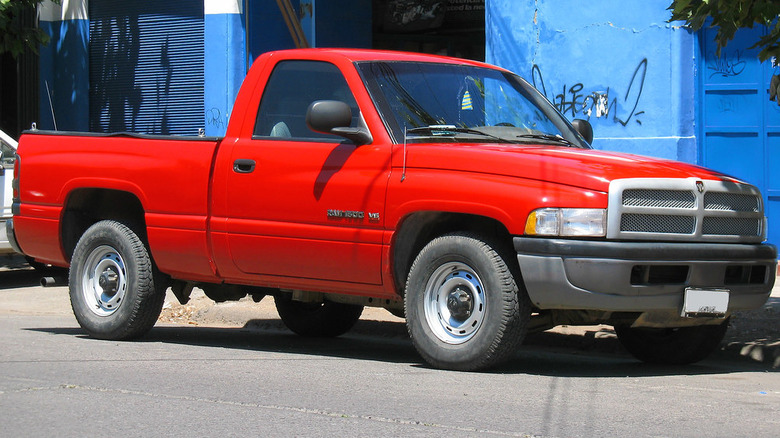
Dodge's new Ram didn't knock on any doors — on January 5, 1993 at the Detroit Auto Show, it dropped in through the ceiling – literally. While it wasn't the LRT, the new Ram drew on everything that made Dodge's concept truck such a hit. That included the big-rig style crosshair grille, smooth lines, bright red paint, and plenty of power — in fact, the top engine trim boasted an engine design borrowed from the Viper's V10, with smaller V6s and V8s also available.
When the second-generation Ram went on sale for the 1994 model year, it was a complete success, driving Dodge's truck sales from 80,000 to over 232,000 in its first year, then to 410,000 units by 1995. Besides its powerful engines and innovative design, the 1994 Ram also had all the right features. It was the first full-size pickup with a driver's airbag; boasted a much-needed interior lift and the largest single-cab available at the time. Also included were a 4-speed automatic transmission and, of course, 2-wheel and 4-wheel drivetrains.
For the first time in years, Dodge wasn't lagging behind the competition — it was leading the race. Even more, the design that put it at the front changed the look and feel of pickups forever.
Forcing the competition's hand
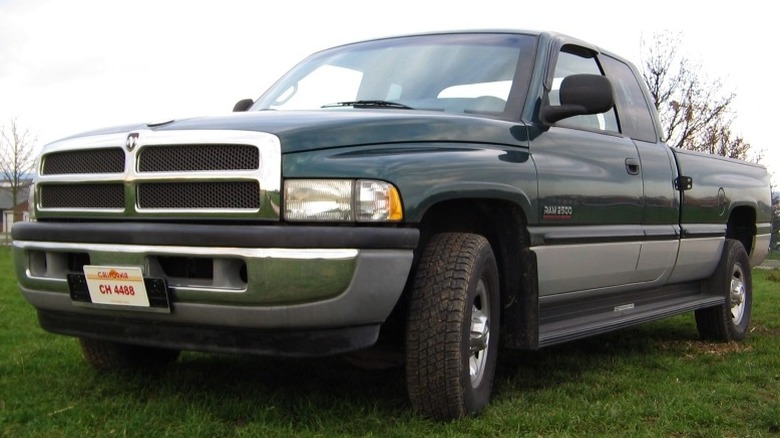
By the mid-1990s, Dodge was selling over 400,000 trucks per year and firmly back in the pickup game. Meanwhile, its competitors, who'd long dominated the market, had to scramble to keep up. In 1997, Ford's 10th-generation F-Series adopted similar aerodynamic styling and was soon split into two categories — the contemporary F-150 and the Super Duty line that was introduced in 1998, which consisted of the F-250 and the F-350.
Meanwhile, Chevy launched the GMT800 series in 1999. Though late to the party, by 2001 the series brought a slew of firsts to the pickup game, such as a five-speed automatic transmission, the AAM 11.5 rearaxle that Dodge later adopted in its heavy-duty Rams, and the beloved Duramax V8 diesel engine built in collaboration with Isuzu.
Despite the different technical specs, it's hard not to look at these late 1990s pickups and see very obvious aesthetic ties to the second-gen Ram.
The road to independence
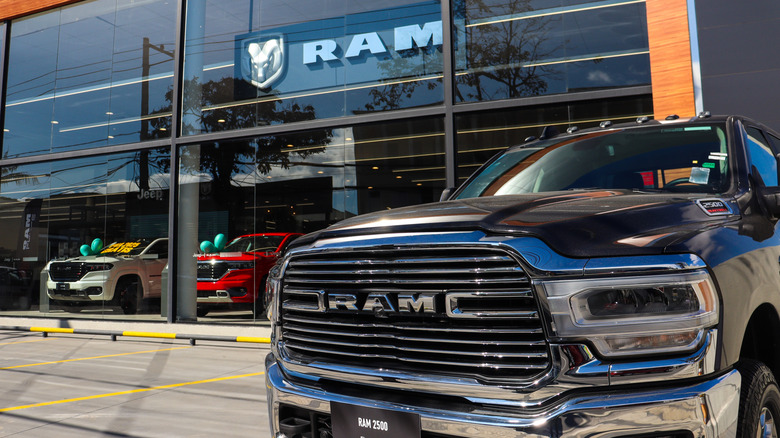
Dodge had a big act to follow with the launch of the third-generation Ram trucks. Thankfully, it delivered, creating a model that sold nearly 400,000 units in its first year. The new generation of 1500 trucks launched for the 2002 model year, bringing in both aesthetic and performance upgrades that took the model even further. Massive fenders, a large chrome grille, and smoother lines made the 2002 Ram 1500 look both more modern and bulkier.
Beneath the hood, the trucks featured a base 3.7L V6 with 210 horsepower or an optional 4.7L V8 with 240 hp. In 2003, a 5.7L Hemi offering 345 hp and much better fuel economy also became available. Meanwhile, independent front suspension helped improve the ride quality of the new Rams, while a new interior delivered even more comfort.
In 2009, fourth gen Rams hit the streets, offering an even better ride thanks to coil spring suspension as well as improved interior comfort with softer seats and Uconnect touchscreens. In addition, improved engines, an iconic exterior featuring a forward-leaning grille, and the introduction of the RamBox cargo system with drainable storage bins made this generation distinct.
Ram, the quintessential American truck brand
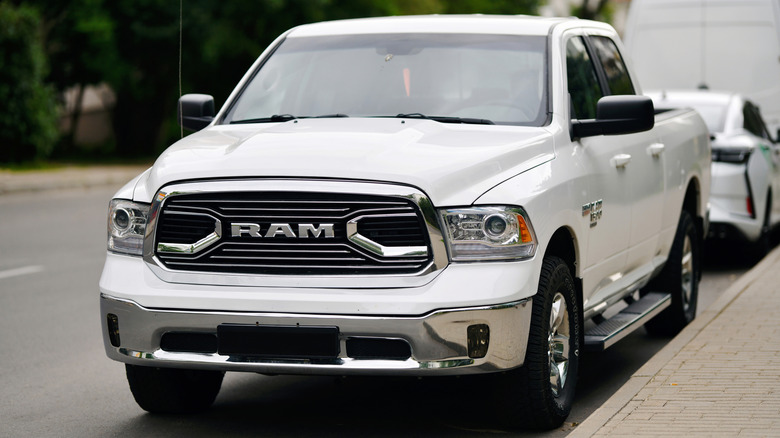
Despite the Ram's success, Chrysler wasn't able to shake the financial hardship that had followed it since the late 1970s. In 2009, the company filed for bankruptcy, saved by a partnership with the United Auto Workers, a buyout from Fiat, and backing from the U.S. and Canadian governments. By January 2014, Fiat took over Chrysler Group entirely to form the Fiat Chrysler Automobiles alliance. By then, the strategy for Ram was clear — to allow the brand, which had already been an independent since 2009, to fully establish itself as a leader of the truck market.
The shift to independence proved transformative for Ram. Ram's executive teams were free to pursue both consumer truck buyers and the commercial vehicle market with Ram Commercial (now Ram Professional). Meanwhile, brands like Chrysler, Jeep, and Dodge could focus on other target groups. In the case of Ram, the plan worked — in 2014, Ram overtook the Chevy Silverado in monthly sales for the first time since the late 1990s, and today it is among the top five best-selling trucks in the U.S.
It's undeniable — Dodge's bold gamble to reinvent its Ram paid off. In 1994, Dodge broke free from years of square body stagnation and shattered the norms that had choked the life from its trucks. Ever since it dropped from the roof of the Cobo Hall in Detroit, the Dodge Ram has been driving the evolution of the entire pickup segment and forever changing the DNA of American trucks. Without the dramatic redesign of the second-generation Ram and the success snowball it triggered, we likely wouldn't have the RAM brand — and we definitely would never have imagined pickups to be a status symbol rather than just a workhorse.