

These 10 SUVs Have The Most Occupant Fatalities Per Mile

Traffic fatalities were on the downswing in 2025, with the National Highway Traffic Safety Administration (NHTSA) reporting an 8.2% decline in the first half of the year. (Its year-end data hasn't been released yet.) Even with that decline, though, we're still talking about more than 17,000 fatalities in those six months, which is a lot, even if motor vehicle accidents don't crack the top 10 when it comes to causes of fatalities in the U.S.
That said, any number of vehicle fatalities is going to feel like a lot if one of them happens to be you, so we took a look at the data to try making sense of how your choice of vehicle can help swing the odds further in your favor. We reviewed an iSeeCars analysis of NHTSA fatality data, which determined that for all vehicles the average fatal accident rate is now 2.8 per billion miles. The very worst (highest fatality rate) on the list is just under five times that average, meaning that all vehicles are indeed not created equal in this respect. Today we mainly aimed to fact-check our gut assumption that big, lumbering vehicles were more likely to keep occupants alive.
What did we learn? With an overall average of 2.2 fatal accidents per billion miles, SUVs have fewer fatalities than smaller cars, but not all SUVs are the same. Read on for the 10 with the most occupant fatalities, and keep in mind that this data reflects the fatal accident rate per vehicle per billion vehicle miles, meaning that when we say "the most occupant fatalities," we don't mean that in absolute terms, and when we say "higher than average" we mean higher than the average for SUVs as a whole.
Number 10: Nissan Kicks - 5.1 fatal accidents per billion miles
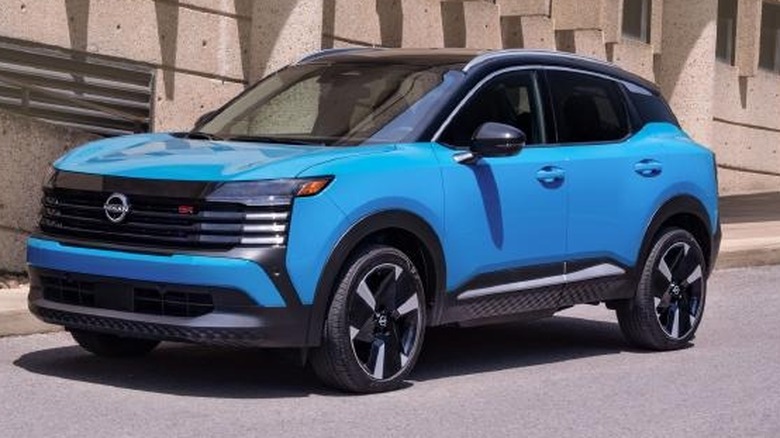
The Nissan Kicks is a cheap car done right, so we'd be remiss if we didn't point out that even though it's clinging to the bottom of our list for most SUV fatalities per mile, it doesn't make the top 20 when you look at all vehicle types. This thing has barely 8 inches of ground clearance and starts around $22,000 brand new, excluding destination charges, so we're not exactly aghast to learn that it has a fatality rate vaguely in line with the Mercedes-Benz G-Class, basically a tank on the road to the point that if we're not safe in one of those, we don't really want to play this game anymore.
All that said, Consumer Reports doesn't recommend you buy one of these, but that's because of meager power and an annoyingly noisy driving experience. Assuming you're on board with those trade-offs as part of the increasingly uncommon new vehicle bargain, the NHTSA fatality data on this one isn't necessarily alarming enough to automatically drop it from consideration.
Number 9: Hyundai Kona - 5.1 fatal accidents per billion miles
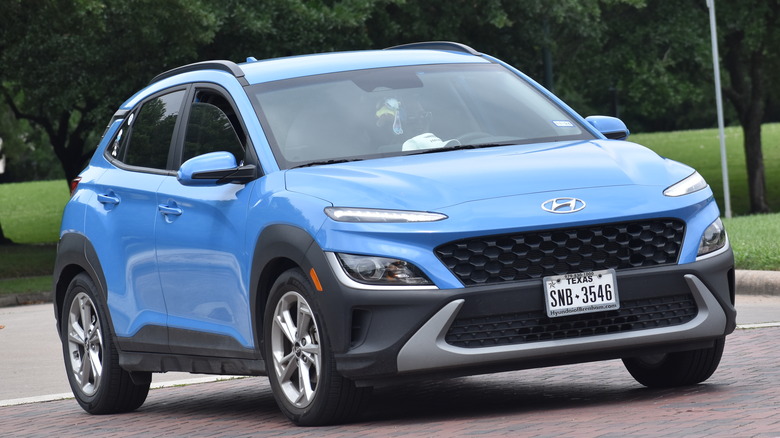
The Hyundai Kona is a utilitarian crossover in a stylish wrapper and in terms of fatal accidents per billion miles, it's tied with the Nissan Kicks. It costs a bit more new than the Kicks, starting just over $25,000, but it also comes from a company that nobody thinks might be out of business in five years, so it might be something of a tossup as far as long-term value is concerned.
We're still firmly on the relatively safe end of our list of SUVs that are likely to kill you, so we're neither shocked nor alarmed to see another lower-cost, smallish SUVish vehicle landing in this spot. The Kona was even the 2025 Kelley Blue Book Best Buy Award winner for the best subcompact SUV and despite its appearance on this list, it has been earning the Top Safety Pick+ recommendation from the Insurance Institute for Highway Safety (IIHS) since 2024, so while the real-world data paints a picture that's slightly less than a safety slam dunk, there really aren't any red flags here.
Number 8: Toyota Venza - 5.6 fatal accidents per billion miles
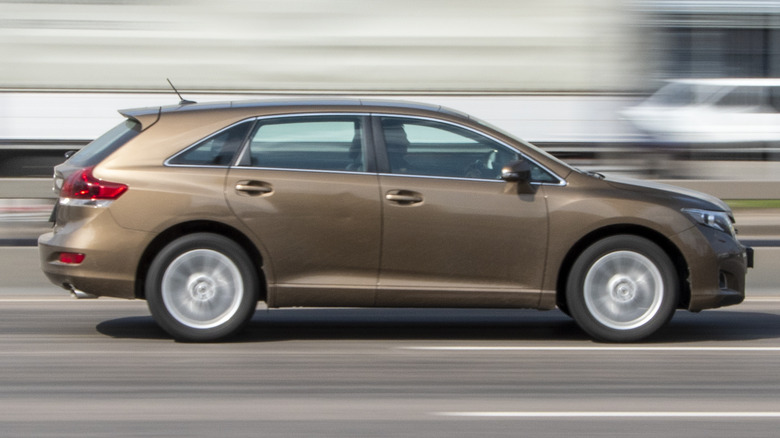
The Toyota Venza was an IIHS Top Safety Pick for the 2024 model year, but it's worth mentioning that Toyota's small SUV lost the distinction for the 2025 model year following significant changes in the award calculation that actually left perennial safety rating leader Toyota with only two SUVs of any size earning the distinction, the bZ4X and the Corolla Cross four-door SUV. We admit that both of these vehicles had us heading over to Toyota.com to verify that they do, indeed, exist. They do, though the bZ4X is now simply the bZ and that Corolla variant is the biggest affront to a nameplate since the Eclipse Cross.
In any case, we're not ready to bump Toyota from our list of popular car brands known for their safety just yet, even if it seems to be struggling a little with navigating the latest IIHS standards.
Number 7: Ford Bronco / Bronco Sport - 6.6, 6.2 fatal accidents per billion miles
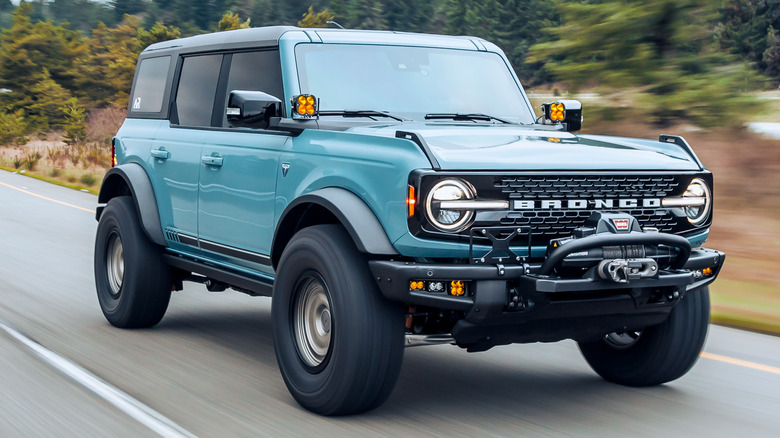
The new(ish) Ford Bronco is the compromised off-road beast you dreamed it would be, and it pretty well took the enthusiast world by storm in 2021 when Ford demonstrated that it knew how to make a throwback vehicle sing. And while on-road safety wasn't generally at the forefront of that excitement, both the Bronco and the Bronco Sport do manage middling, not-great-but-not-bad scores from IIHS.
But perhaps more interesting than that, is the microcosm of the "bigger equals safer" premise that the Bronco and the Bronco Sport provide. We combined them as one entry here, and when broken down individually they land side-by-side in the data, though it's worth pointing out that the bigger of the siblings actually fared marginally worse than its smaller counterpart, though not enough to separate them on iSeeCars' list. Regardless, the Bronco represents the first model to cross the threshold of 3x more fatalities than the SUV average, so our list is starting to get interesting.
Number 6: Kia Seltos - 6.8 fatal accidents per billion miles
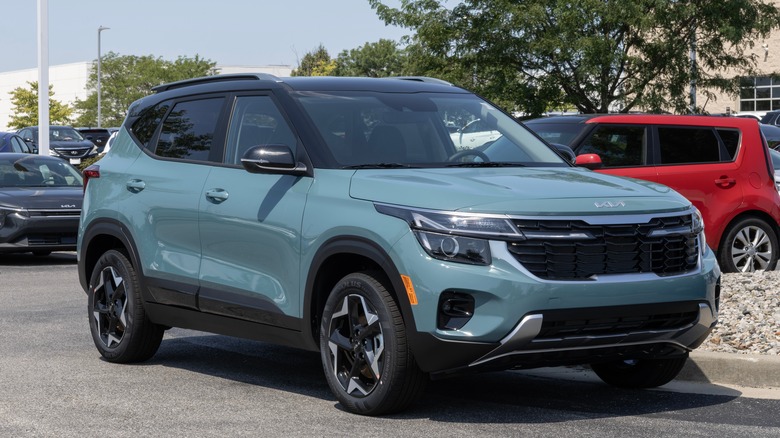
Even if after some updates the Kia Seltos is no longer Kia's most boring design, we're starting to reach the point of this list where safety is becoming a more substantive concern. It's the first model we've discussed where the IIHS analysis starts to be littered with Marginal and Poor ratings, with marginal performance identified for seat belt reminders and side impact, and poor performance for front crash prevention and one of the headlight options (those vary by trim).
In fairness to the Seltos, though, it was largely dinged for the effectiveness of driver assistance features, such as "timely warnings" when in danger of a front-impact collision with a motorcycle (the automatic brakes did still kick on), plus seat belt reminders that are insufficiently loud. So assuming you're not relying too heavily on the nanny features you're probably just going to complain about anyway, you might find that the Seltos has safety where it matters to you, as the crash tests themselves went generally fine.
Number 5: Buick Envision - 8 fatal accidents per billion miles
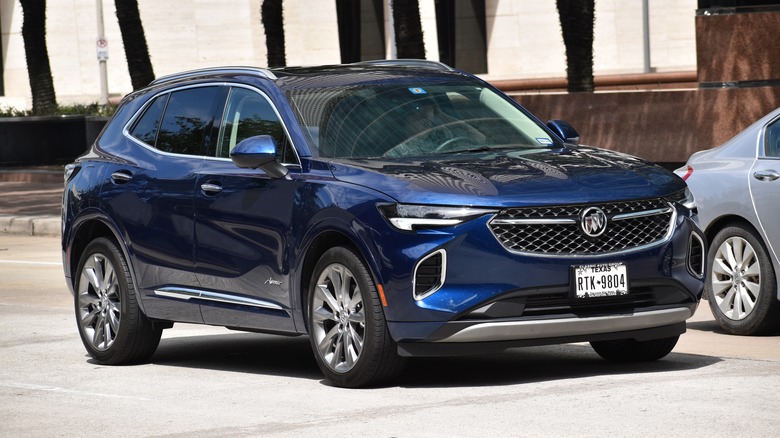
Considering that since its U.S. debut in 2016 the Buick Envision had no glaring negative marks in IIHS testing, our working hypothesis for this one was that the average Buick owner was about 85 years old, almost certainly driving 10 under the speed limit directly in front of us, and reasonably likely to pass away of natural causes regardless of whether they were crashing their car at the time. But then we did some actual research and learned that, for the Envision in particular, most buyers were not only new to Buick but actually represented the youngest demographic across all General Motors products, leading the charge among GM buyers 18 to 35. So much for snarky theories.
At the end of the day, the Envision has respectable crash ratings, tons of driver-assisting safety features, and no real reason to think it should be sitting as high on this list as it is. Maybe it's just those young punks between 18 and 35 driving hard and sullying the respectable reputation of that three-shield badge. Regardless, the Buick Envision really is one of Buick's few bright spots of late.
Number 4: Buick Encore GX - 9.8 fatal accidents per billion miles
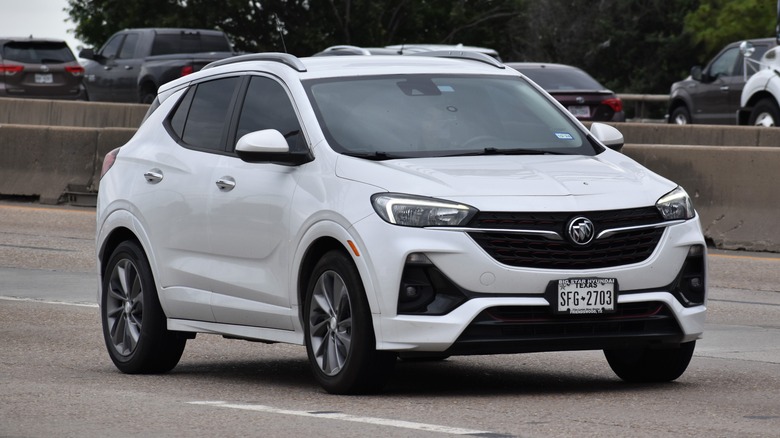
What's going on here? The Encore GX was introduced in 2020, replacing the non-GX Encore, and has shown substantial improvement in IIHS testing over the previous generation even as the testing methodology evolved. Yet while the Buick Encore GX might be the most underrated small crossover under $30,000, it also lands kind of shockingly high on this list.
We found no glaring safety concerns, NHTSA gave it five stars, and there's no obvious evidence that there's significant overlap with the reckless, showboating Envision drivers we just discussed. It's a puzzling entry showing more than quadruple the fatality rate of SUVs as a whole, and we're not really sure what else to say about it. This is the last Buick, though, we promise, and we can only hope the brand can change its current trajectory of ending up as the hero car in a straight-to-DVD remake of "The Fast and the Furious."
Number 3: Tesla Model Y - 10.6 fatal accidents per billion miles
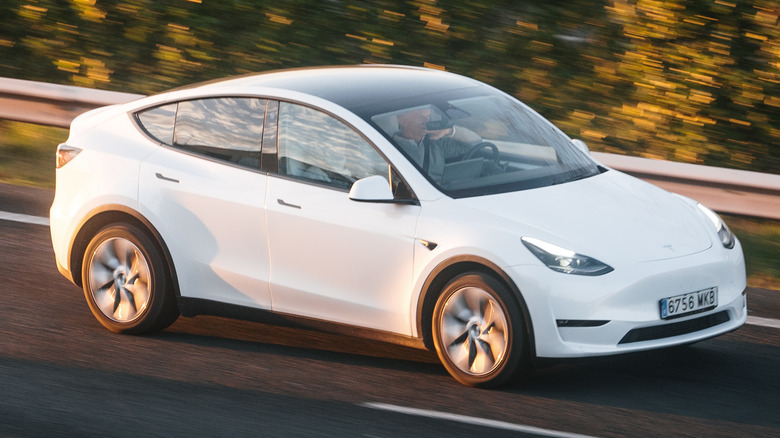
The Tesla Model Y has an almost legendary reputation when it comes to crash test ratings, earning top marks from the usual suspects. The Model Y has a Top Safety Pick+ from IIHS and five stars from NHTSA. By all accounts it's safe on paper and wildly popular, with the Model Y only recently dethroned as the world's best-selling car on Earth. So what gives?
Well, speculation abounds, especially around a polarizing brand like Tesla. Perhaps it has to do with driver behavior, including Tesla owners who use Autopilot where it's not designed to work, with deadly consequences. Another factor could be that the Model Y has door handles that can be rendered inoperable in a crash, trapping occupants inside, with up to 15 deaths attributed to that exact scenario in recent years. Or perhaps there's something to be found within the multiple federal investigations opened into the overstated performance of Tesla's self-driving functionality. In theory, it should be among the safest cars on the road, so we'll leave it to you to decide how you feel about it.
Number 2: Honda CR-V Hybrid - 13.2 fatal accidents per billion miles
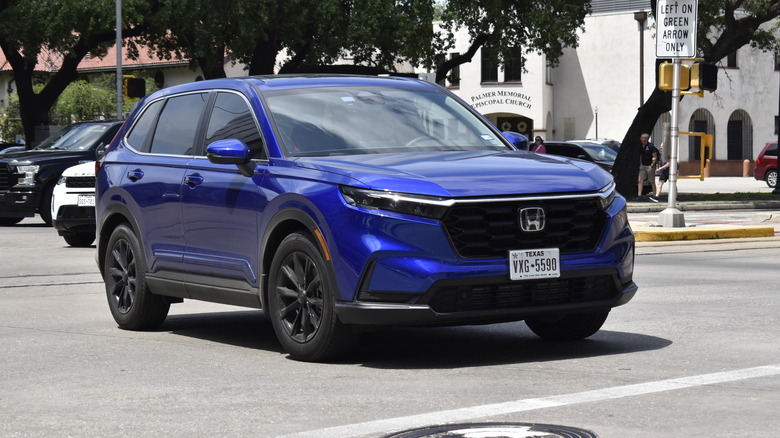
This one stings a little, especially considering that the Honda CR-V Hybrid is the obvious choice for most Americans. Once again we're faced with a vehicle that has five stars from NHTSA, along with 2025 IIHS results dinged only by that updated front crash test that seems to give so many manufacturers trouble (while remaining a Top Safety Pick despite that, though the 2026 model lost the designation).
The data gets a little murky on this one, since the iSeeCars study called out the hybrid in particular while that variant wasn't always called out in crash testing, but it's worth pointing out that (back to our immediately debunked Buick theory), the average age of fatally injured hybrid vehicle occupants was 59, versus just 36 for conventional vehicles, according to the broader dataset behind the study. Or perhaps it turns out that the added bit of extra fuel economy from a hybrid battery is ultimately paid for in blood. We're not sure, but it's probably going to take more than some scary numbers to chase us off a solid compact SUV from Honda.
Number 1: Hyundai Venue - 13.9 fatal accidents per billion miles
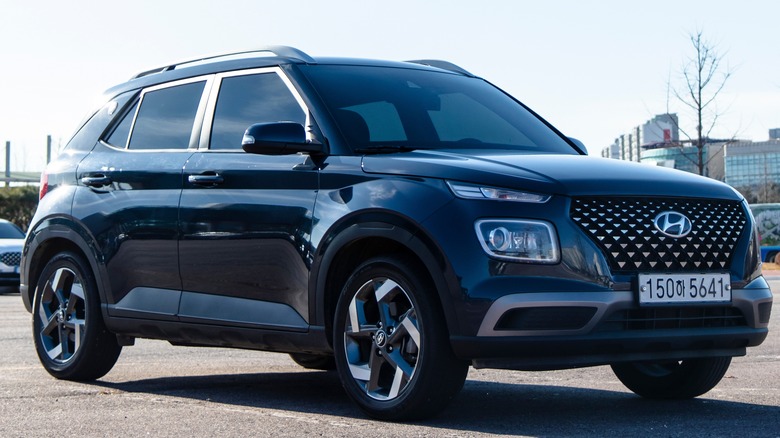
We really wanted this list to end on the crescendo of something at least analogous to a literal flaming dumpster rolling down the highway, but we get the Hyundai Venue instead. Despite no flashing red warning lights from IIHS or NHTSA, the Venue tops the SUV list — and, indeed, the overall combined list of all vehicle types — with an overall fatal accident rate of 13.9 per billion vehicle miles. That's 4.9 times the overall average and an alarming 6.3 times the average for SUVs.
All in all, it's one of the cheap cars Consumer Reports actually recommends buying, though it's also one of the most forgettable cars on sale — but the takeaway from today's reading is that it's apparently something of a death trap. Besides, the whole "subcompact SUV" premise is a little odd to begin with. Perhaps a happy medium between a hatchback and a sport utility isn't where anyone needs to be (at least not when it comes from Hyundai).