

What're The Differences Between American And European Hitches?
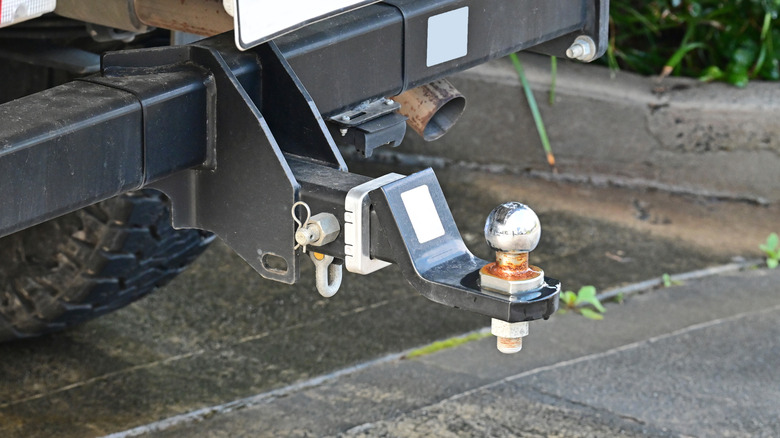
American and European hitches are not the same, and the most obvious way to tell them apart is to see how they connect to the vehicle. Receiver hitches are all the rage stateside. These hitches use a square receiver tube mounted to the vehicle, into which different accessories can be inserted. Such a modular setup allows you to use the hitch for a variety of purposes, whether they are towing or non towing. Alongside a run of the mill ball mount, you can also slide in bike and cargo racks.
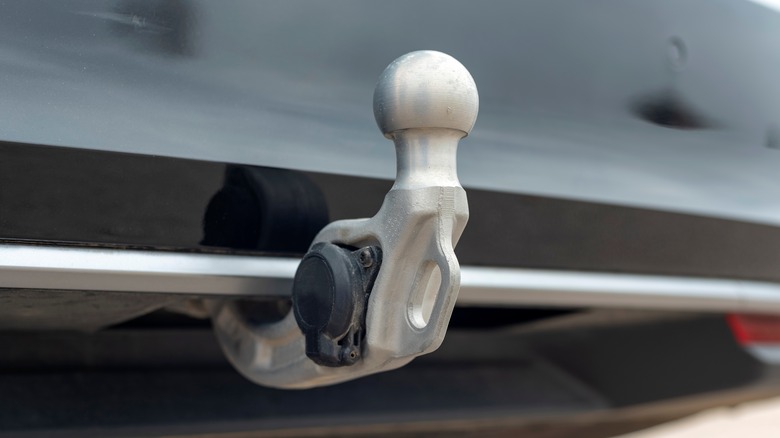
European hitches take a more integrated approach. Fixed or detachable towbars are commonly used, along with a standard 50-millimeter tow ball. The ball and the mounting structure are usually part of a single approved assembly designed specifically for that vehicle.
So it's obvious that there are two very different design philosophies being implemented. European systems are more concerned with a standard geometry and ensuring compatibility with standard trailer couplings, while American systems prioritize adapting to every trailer and accessory on the face of the earth, often on larger vehicles.
Capacity, vehicle size, and towing philosophy
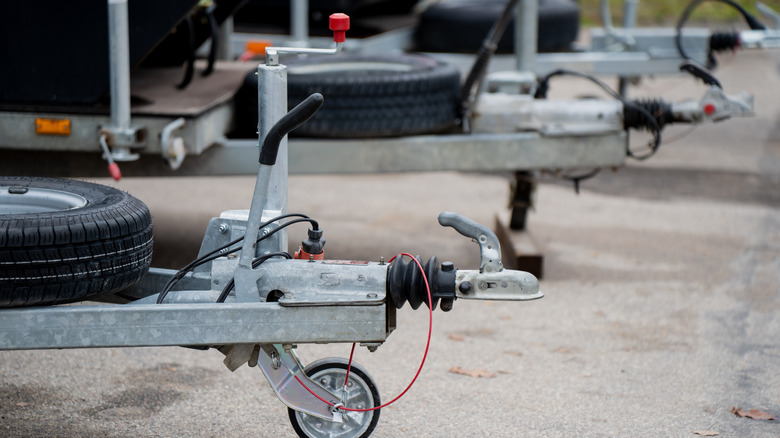
The maximum weight a vehicle is expected to tow also differs wildly between these regions. There are tighter restrictions on towing in Europe, and the regulations have been written not with pickup trucks but with passenger cars and small SUVs in mind, because these are the most common towing vehicles. Standard 50-millimeter tow balls are usually rated for trailers weighing up to 3,500 kilograms.
This is in stark contrast to the United States, where vehicles are larger and you are allowed to tow heftier loads. Here you will find a grand total of five hitch classes, categorized on the basis of receiver sizes and each tied to a weight limit. Everything from small utility trailers to extremely heavy trailers that require full size trucks are supported by these classes, which include heavy duty hitches, fifth-wheel hitches, and also a trailer hitch designed to prevent big rig rollovers.
To manage heavy tongue weights, the use of weight distribution hitches is common in the U.S., but in parts of Europe, they are restricted or even outright banned. This is because European authorities have concerns regarding the stability of the vehicle and axle unloading.
Regulations, standards, and compatibility
How hitches are regulated is also a key difference between the two continents. In the U.S., the hitch classes and capacities are there in black and white, but the configuration of these systems is flexible and DIY methods (such as flipping your hitch upside down for more height) are common, as long as the component ratings are adhered to. Electrical connections also vary, with European trailers using 7 or 13 pin connectors, and American ones using 4 pin connectors for lighting.
The Europeans, meanwhile, have a far stricter stance on these matters. Before it can be bought or sold, all towing equipment needs to meet specific safety standards. These govern everything from strength and durability to geometrical aspects such as the height of the tow ball when the vehicle or trailer is loaded. These rules are designed to promote more predictable handling by ensuring trailers are towed level with the vehicle or slightly nose down.
Because of these differences, American and European hitches are generally not interchangeable. European vehicles are not designed to accommodate large receiver systems, and European regulations do not support them.