

Are Spark Plug Wires Universal?
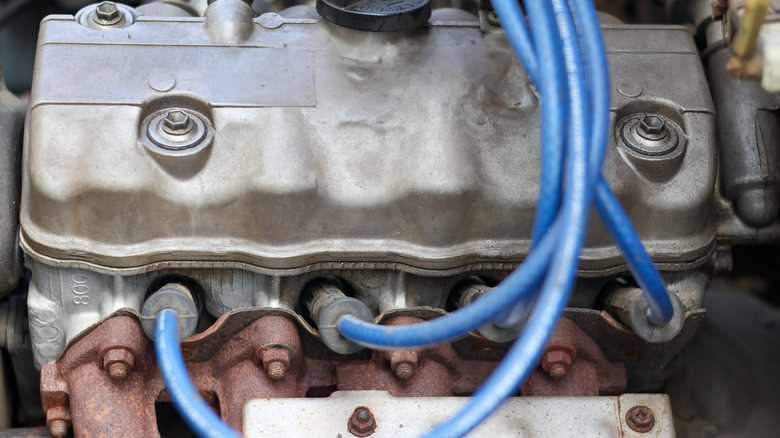
Much like the spark plugs that are specific to any given engine, the spark plug wires or coil packs that ignite the plugs are not universal. Spark plugs come in many types, sizes, and tip shapes, and using the wrong kind — or mixing old plugs with new ones — could imbalance the ignition system and cause misfires, lethargic acceleration, and bad fuel economy. It's the same deal with the spark plug wires.
Wires will vary in length, diameter, connector types, and boot angles to deliver a manufacturer-specific fit under the bonnet. Moreover, spark plug wires aren't just ordinary wires. They are mostly defined by the layers of insulation and the all-important core that transfers the electrical charge from the ignition system to the plugs. In the same manner that spark plugs are mainly categorized by the exotic metals in the center or ground electrodes, the core of a spark plug wire utilizes varying materials and construction techniques to strike the perfect balance between low resistance conductivity and low electromagnetic (EMI) or radio frequency (RFI) interference.
Spark plug wires need to deliver power while suppressing noise
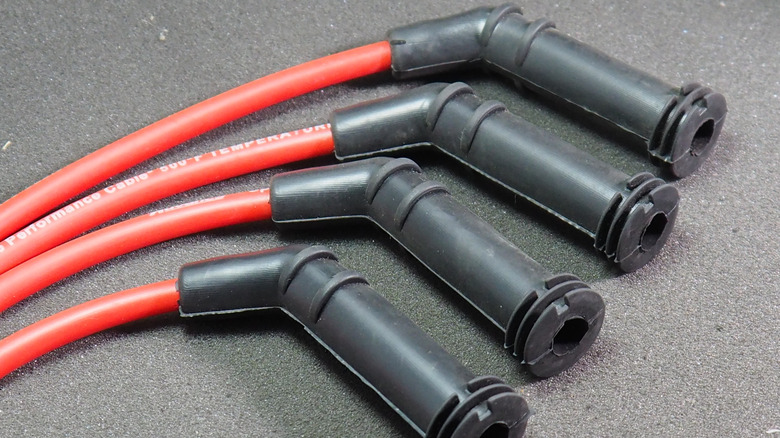
The spark plug wires aren't just there to deliver an electrical charge. They need to be durable and sturdy enough to survive inside a hot engine bay while transferring the necessary current to ignite the plugs. The problem is that wires develop an electromagnetic field as more electrons move through them, which creates EMI or RFI.
And as the terms suggest, interference is a bad thing when it comes to ignition and electronics. It can create static noises over the speakers, cause sensors to malfunction, or wreak havoc on other electronic devices or vehicle communication systems. Manufacturers optimize the design and materials of spark plug wires to minimize noise and resistance. A lower resistance wire means more current can flow within the core. Too much current can create EMI or RFI, but a higher resistance spark plug allows fewer electrons to flow, negatively affecting a vehicle's overall performance.
The core unlocks potential
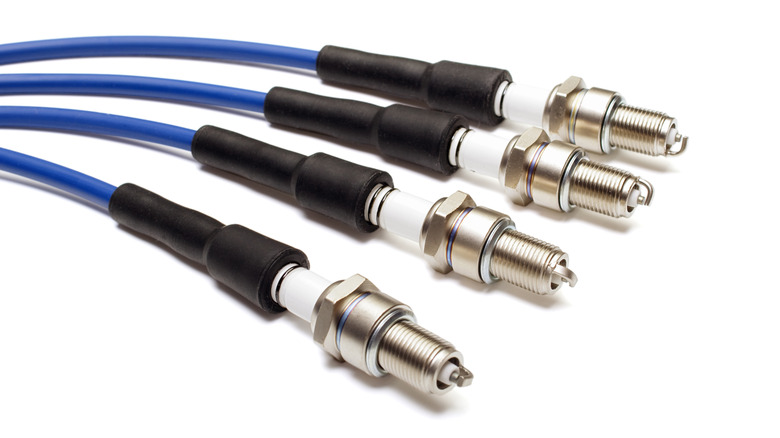
Spark plug wires can either have a carbon, solid, or spiral core. Most stock vehicles have carbon core wires that create more resistance but have excellent noise-cancelling abilities. However, carbon spark plug wires require frequent replacement as the core tends to degrade faster. Solid core wires have a copper or stainless steel core made to deliver less resistance and a more solid electrical charge. The downside is that wires with solid cores are noisier and produce more interference. Spiral core wires seek to be the best of both worlds by using copper, stainless steel, and tin windings around the core to minimize EMI issues while still having low resistance.
Thick spiral spark plug wires are great for modified engines or high-performance cars while solid wires are most suitable for older cars or vintage racers. Keep in mind that those thicker wires — in other words, those with a higher diameter — have bigger spiral cores, which means they deliver more energy and have a lower operating resistance.