

Why Do Some Cars Still Have Rear Drum Brakes?
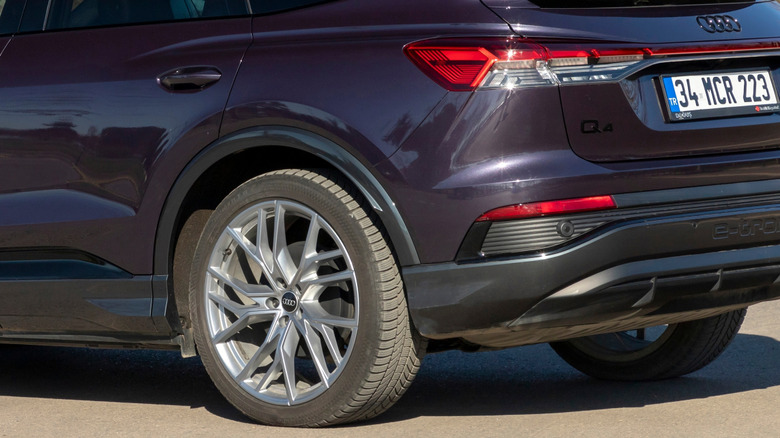
Most modern cars have stopped using drum brakes. While there are valid reasons to use drums at the rear, it mostly comes down to cost, which is why you often see them used in many economy cars, trucks, and SUVs. But you may be wondering, is it really better to use drums instead of discs? What sort of delta are we talking about?
Let's take the Chevy Sonic (2013-2016) as an example. As you may know, lower trims of the subcompact got rear drum brakes, while more expensive RS trims got rear discs. A brand-new pair of rear rotors and pads for the Sonic costs around $80, which is roughly $10 cheaper than a set of rear drums and shoes. Original Equipment Manufacturer (OEM) rear brake calipers cost $125 apiece, while rear wheel cylinders are $70 a pop. Setting aside a few extra dollars for miscellaneous hardware, you're looking at a delta of over $100 between the brake kits, with discs costing more.
From a consumer standpoint, justifying the extra $100 is fairly easy, but from an OEM perspective, every dollar counts, especially if you're a volume manufacturer. Even if we take away retail markups, for OEMs like Chevy that churn out millions of cars, the difference is sizable enough to skimp on rear discs for budget offerings.
Drum vs. disc brakes
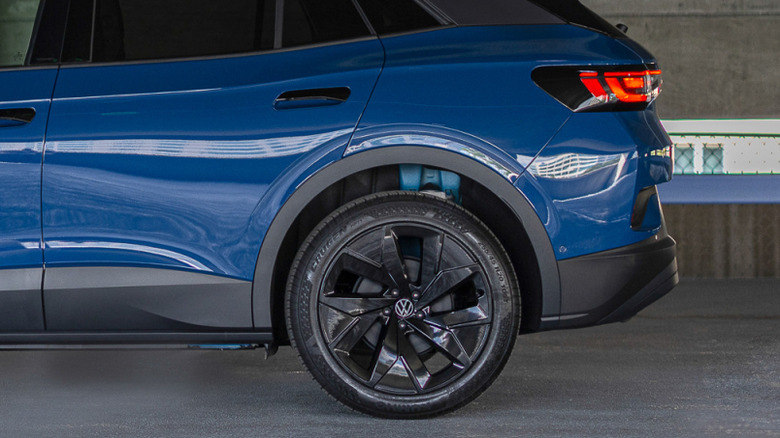
That's not to say drums are a significant compromise from a driver's perspective. In fact, drum brakes are generally more durable than disc brakes, since they're not as exposed to dirt and moisture. This does come with a drawback, though, as the enclosed design translates to less heat dissipation. More heat means increased chances of brake fade, which reduces overall braking performance and consistency.
Rear discs are more complex than drums, often using a separate screw-type mechanism (sometimes another caliper) for parking brake integration. You may have heard of drum-in-hat rear brakes, where a small brake drum is housed inside the rotor, specifically for the parking brake. These, however, seem complicated compared to the simplicity of a drum brake system. It's an easy, cost-effective, and reliable solution.
Generally speaking, front brakes do the majority of the stopping work. Rear brakes contribute significantly less, especially during normal city driving and daily commutes. Therefore, rear drum brakes should suffice. That's not quite the case for passenger vehicles designed for performance applications and hauling heavy loads. Of course, they tend to be more expensive, and manufacturers usually get better margins on them, so there's no real cost-cutting incentive, unlike budget cars that often run on slimmer margins. But one has to wonder, where exactly do OEMs draw the line when even the $50,000-plus Audi Q4 E-Tron still uses rear drum brakes?