

Brembo Vs. Wilwood Brakes: Here's How They Compare
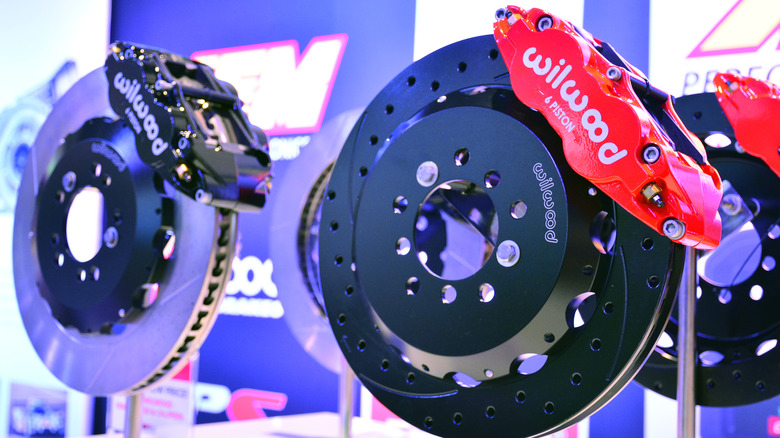
Imagine building your dream project car. Maybe it's a Mustang Fastback or a Chevrolet C10 pickup. You aren't holding anything back, going for a full frame-off restoration and throwing the best of everything at it: a stroker motor, racing suspension, Foose wheels, and everything else your wallet can handle. Your dream project car can corner like it's on rails, but it needs to stop, too. And if you want the best, you might end up with a hard choice between Brembo and Wilwood brakes — both of which are the best in the business.
Braking is a lot more than just tremendous stopping power; it's about fade resistance and pedal feel. That's why it's hard to decide whether to bet on Brembo or Wilwood. Before we get into it, there's no right or wrong here. It's about choosing which flavor of braking suits you best. In a nutshell, Brembo brakes are revered for their overengineered components and absolute performance, while Wilwood brakes impress with their low cost and versatility — but there's a lot more to these brakes. Let's talk pedigree, performance, everyday usability, cost, maintenance, and ultimately, what suits your ride better.
Italian finesse
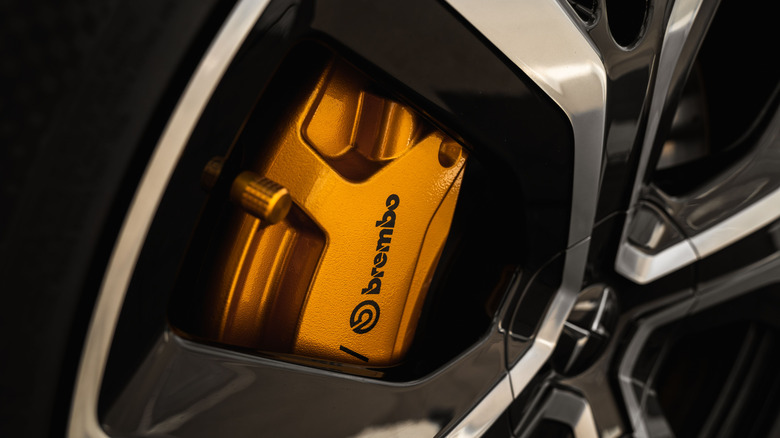
The name "Brembo" should get you thinking about high-performance beasts before any simple family vehicle. Brembo is an old testament, starting small in 1961 from a repair shop in Bergamo, Italy. In fact, Brembo owes its existence to a truck accident. By 1975, it was supplying brakes to Ferrari's F1 racing team — and every Formula 1 team runs Brembo brakes today. That's because they're more than just cool accoutrements, offering resistance to 1,000-degree heat cycles stemming from hard braking.
Brembo's reputation stems from its contribution to motorsport. Formula 1, MotoGP, and GT racing demand the pinnacle of braking performance. That's why these have precision cast monoblocks, advanced ceramic composite materials, and heat management that can handle the high temperatures brought on by the track. Brembo has carved a reputation for engineering massive brakes that are thermally stable and phenomenally consistent, and so, a majority of high-performance cars and motorcycles come equipped with them straight from the factory.
A Brembo brake system gives you a firm brake pedal feel, linear brake pressure, and superior fade resistance. They are expensive, though, and their price and technology could feel like overkill for street applications. They're also less modular compared to a Wilwood brake kit, which could lead to fitment issues — especially if you are working with tight spaces. Think of Brembo as a high-performance ecosystem where each part is designed to work flawlessly with everything else.
American grit
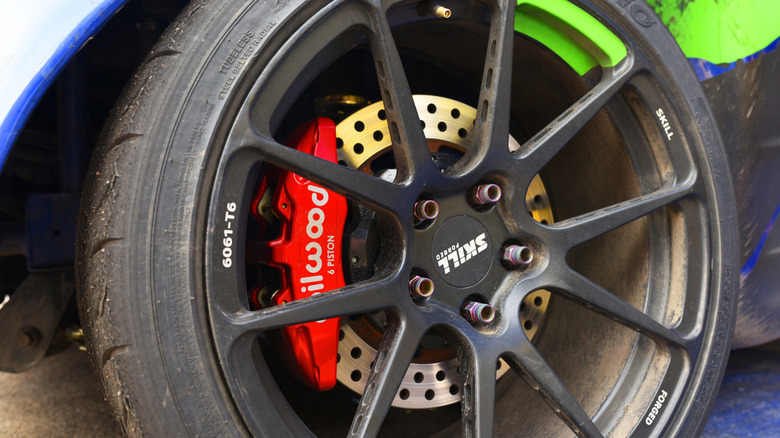
Wilwood can be termed the quintessential American success story. It started in 1977 with Bill Wood, who started the company with a vision. He identified a need within the racing world for lightweight brake components that were low-cost while still being high-quality. Unlike Brembo, which was making a name for itself in the racing world, Wilwood was etching its initials in the American aftermarket ecosystem.
Wilwood brakes excel in modularity. Think of Wilwood as a bespoke tailor customizing a suit according to your specific needs. You can potentially configure every Wilwood brake rotor, caliper, pad, and even bracket. And you could use a kit from the company for just about any project, whether it's a street car, an autocross build, a drag spec, a restomod, a track toy, or even an off-road rig. The modular approach of these brakes gives you multiple rotor sizes, brake pad compounds, and mounting brackets, all of which can be tailor-made to your car.
Wilwood kits offer fantastic braking performance both on the street and on tracks, but there's a catch. If you're building your own customized brake kit, expect to spend more time during installation than a pre-assembled Baer or a standardized Brembo brake kit. It's more about trial and error, which is great if you enjoy the engineering process, and it can be immensely satisfying if you get it right.
Monoblocs vs modular pistons
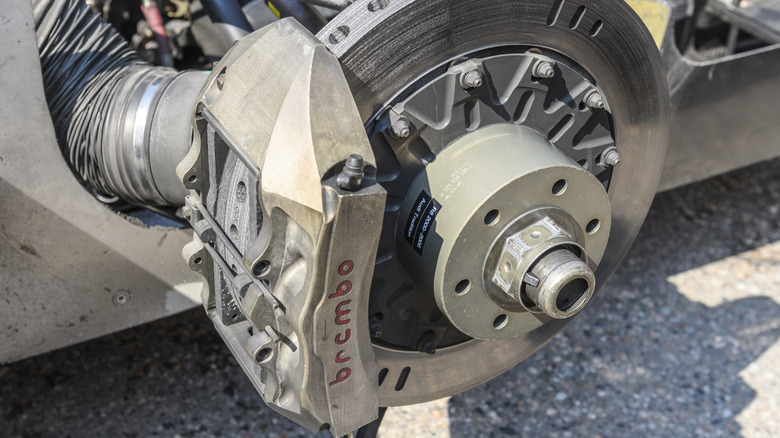
For pure engineering, Brembo edges ahead with its monoblock calipers. These are mostly machined from a single block of billet aluminium. The resultant stiffness translates to an especially firm pedal feel. It's fantastic if you're shaving milliseconds off your lap times. This clinical precision comes at a cost, though, as those calipers expensive to manufacture – and that's reflected in their final price.
Wilwood has a different, more versatile approach to braking, with its popular Forged Superlite caliper using a two-piece bolted design. While not as stiff as a monoblock, these calipers are quite strong, and they're substantially lighter than other cast iron units. They also feature a clever design in the form of internal brake fluid ports. Many racers prefer Wilwood brakes as they help reduce unsprung weight, which positively impacts a car's handling, acceleration, and braking.
In isolation, a Brembo braking setup dissipates heat effectively and avoids brake fade even under repeated high-speed braking scenarios. Still, a Wilwood brake kit with the correct rotor diameter, caliper, and brake pad compound will also offer excellent performance. It's also much more suitable for a daily driver project car. Where Brembo wins hands-down is in high-intensity environments like a racetrack or a spirited canyon run. While Wilwood can hold its own, it needs matching components to perform well, making it more dependent on the right setup.
The real world
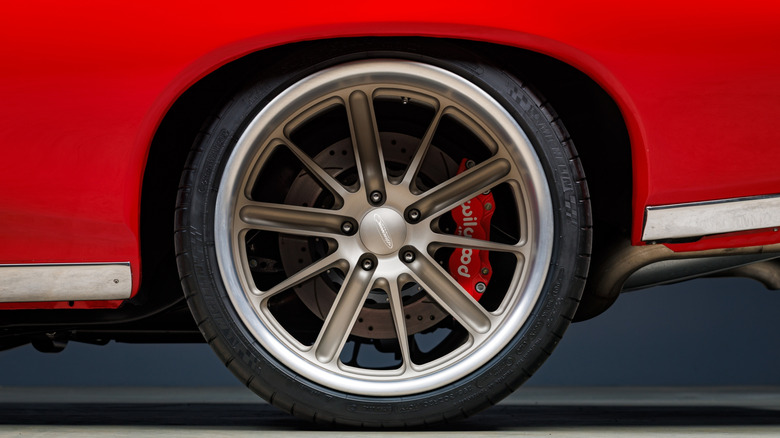
One of the major reasons behind Wilwood's loyal fan following is its pricing. A robust Wilwood brake kit can be had for half the price of a Brembo upgrade kit; the latter could easily cost between $2,000 and $6,300 for a basic front and rear brake setup. Of course, it comes with everything you need, including braided brake lines and vehicle-specific brackets. It also comes with a two-year warranty and peace of mind, seeing as how the overengineered components could outlast your project car. Meanwhile, you can pick up a high-spec Wilwood front brake kit for around $900-$1,800. The difference, though, is that Wilwoods need to be matched with other components to find the perfect fit for your needs.
In terms of maintenance, high-end Brembo parts can be eye-wateringly expensive to replace. If you warp a Brembo rotor, a replacement set could put you back anywhere between $1,600 and $2,600. Wilwood components are delightfully inexpensive to replace by comparison, costing a quarter of the price of its Italian competition. However, the lack of a dust shield will have you rebuilding your Wilwood calipers often, especially if you spend your winters on the salted roads of the Midwest belt.
Brembo or Wilwood?
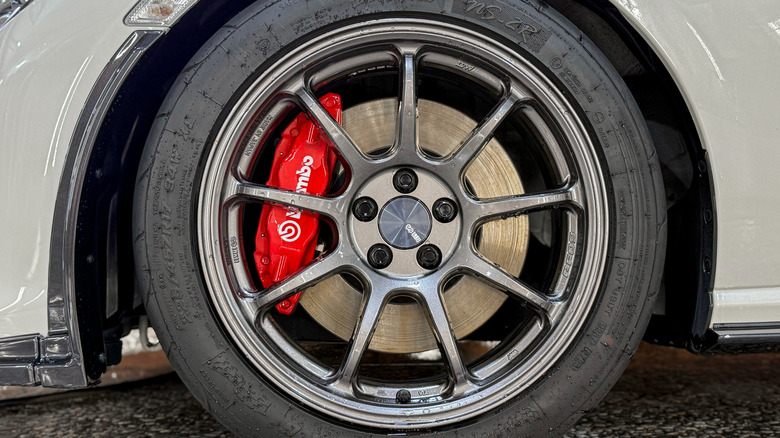
If you plan to make a daily driver out of your project car, Brembo's high pricing doesn't make much sense. Big brake kits can be worth it for a daily driver, but even beyond the cost, Brembo's firmness doesn't fit well. Wilwood's lighter brake components offer more responsiveness, making it the friendlier brand for commuting. Parts availability is another major factor. Wilwood has an extensive aftermarket catalogue, and its brake components are made in America. That makes it easier to upgrade, swap, or replace components.
Going for expensive Brembo brakes makes sense if you drive large, heavy, and fast cars, or you spend a lot of time racing on high-speed tracks. They're also a good choice if you are looking for plug-and-play components and long-term durability, even in brutal driving conditions. Wilwood brakes make sense if you are building a lightweight and highly-customizable project car. It's a good investment if you're on a modest budget but don't want to compromise on braking — and if you want a daily driver that can spend its weekends on the racetrack as well.
Brembo wins hands-down when it comes to absolute performance, but it comes with a high price tag, added weight, and expensive maintenance. Wilwood has cost advantage and flexibility, which is great for street performance and easy maintenance. In the end, both Brembo and Wilwood are great at stopping your car. The difference lies in the way they go about doing it, the way they feel, and the environment they excel in.