

8 Of The Largest Pickup Truck Recalls In US History
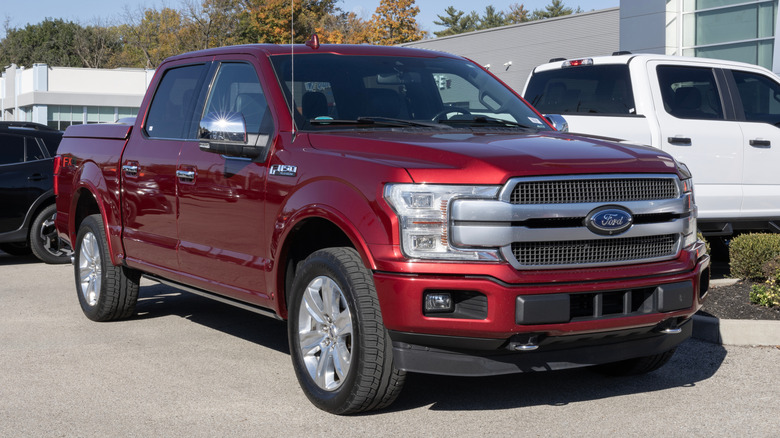
Pickups are built to handle a great deal of tasks, from towing and hauling, to extreme off-road driving. But despite their ruggedness, these vehicles remain susceptible to manufacturing defects that can trigger recalls.
Some recalls involve more dangerous defects than others, but according to the National Highway Traffic Safety Administration (NHTSA), recalls are issued "when a manufacturer or NHTSA determines that a vehicle, equipment, car seat, or tire creates an unreasonable safety risk or fails to meet minimum safety standards." And with the high numbers of pickup truck production and sales in the United States, recalls on one specific model can include thousands or even millions of individual vehicles at once.
Generally, recalls can cut across various vehicle types, with a single recall affecting multiple vehicles in an automaker's lineup. Volkswagen's Dieselgate recalls and Toyota's Window Switch recalls, for instance, were some of the largest recalls in history. They applied to tens of millions of vehicles, but they weren't all trucks. For this list, we focused exclusively on pickup truck recalls.
Toyota Tacoma rear suspension (690,000)
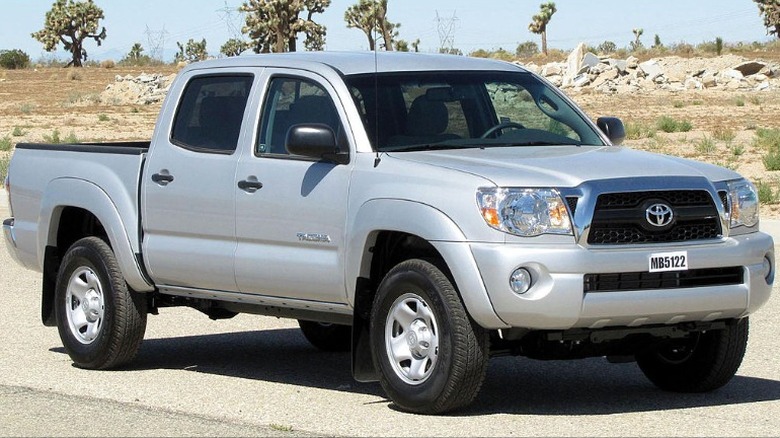
Kicking off this list is Toyota's recall of their famous mid-size pick-up, the Tacoma. The company recalled 690,000 of these trucks, built between 2005 and 2011, due to problems with the rear leaf springs — particularly that they were prone to failure as a result of stress or corrosion. The problem wasn't just that the leaf springs failed, but also that they were likely to fracture and damage the gas tanks and brake lines. Damage to the gas tank could cause a leak and increase the likelihood of a fire.
Toyota's initial response to this problem in October 2010 was to fix clips on the leaves to stop them from coming loose. Following this, the company investigated the issue, but didn't find evidence of severe damage to these components and closed its investigations. It wasn't until more incidents were reported that Toyota eventually decided to issue a formal recall. Although no injuries were reported due to this defect, it definitely didn't help Toyota's reputation at the time. They had recalled 150,000 Tacomas for a separate rust-related issue only two years prior.
GM tailgate issue (820,000)
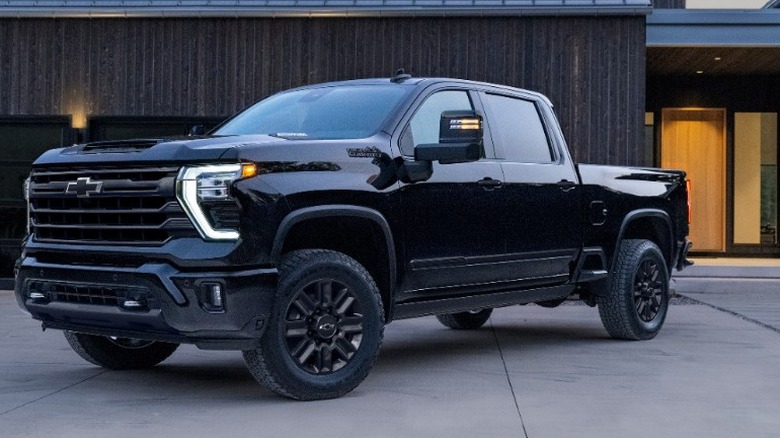
In 2024, General Motors had to recall 820,000 Chevrolet Silverado and GMC Sierra models because the tailgate on these trucks could inadvertently open when the vehicle was parked. According to the report by the National Highway Traffic Safety Administration (NHTSA), this problem resulted from water entering the electronic gate-release switch. If the switch was unsealed, it could cause a short circuit, allowing the tailgate to unlatch.
Complaints stated that the problem was experienced while driving, but GM clarified that the tailgate would only open while the truck was parked. One of the biggest risks posed for owners was cargo flying onto the road from the truck bed. At the time of the recall, there were only three reports of property damage and one minor injury, but over a hundred reports of the tailgate opening on its own had reached the company.
It's noteworthy that this recall was actually an expansion of an earlier one. Initially, the recall had involved only around 300,000 trucks, but it was later expanded to the 820k mark.
Fiat Chrysler software glitch (1 million)
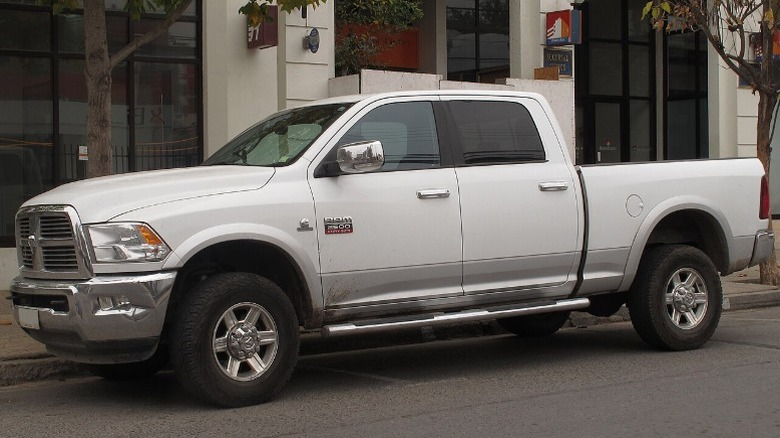
Ram's software issues are not a new thing, nor are they an issue that's been left in the past. When the trucks still operated under the Fiat Chrysler brand name (pre-Stellantis), the company had to initiate a massive recall for a software-related error. In this case, it was the seat belt pretensioners and side airbags that were affected by an erroneous code, leading to failures of both in accidents. Investigations revealed that the failure of these critical safety components increased the risk of serious injury during accidents where the vehicle rolls over.
At the time of the recall, at least two accidents seemingly related to the error had been reported, where two individuals suffered injuries, and one person died. Fiat Chrysler already was in hot water regarding recalls just a few years earlier, being fined by NHTSA for mishandling safety recalls and failing to report crash deaths. Thankfully, this recall happened in a much quicker manner. More than 1 million trucks were affected and therefore recalled (about 1 million of those were in the United States), including the 2013 to 2016 models of the Ram 1500 and 2500, as well as the 2014 to 2016 Ram 3500.
Ford door latch recall (1.1 million)
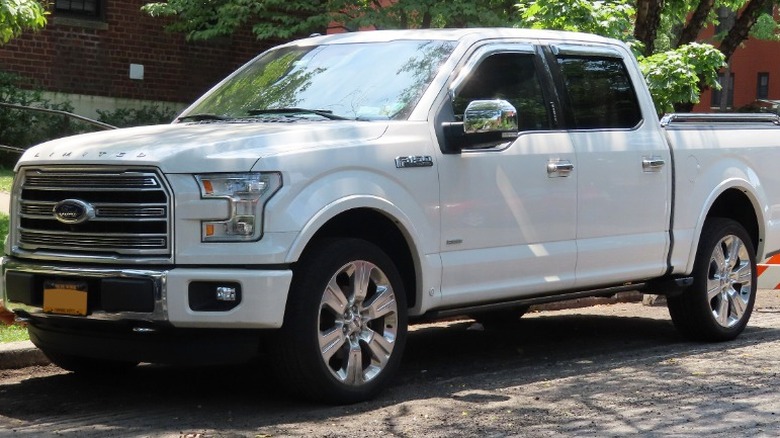
This recall involved 1.1 million trucks in the U.S., specifically the 2015 to 2017 Ford F-150, and the 2017 Ford Super Duty. The doors in these vehicles were vulnerable to two problems: a bent actuation cable and a frozen door latch. These defects meant that the doors could not close properly and may inadvertently open.
This issue was trickier than it looked, because even when the door appeared closed, the latch may not have been fully engaged. The door would, therefore, only be partially secured and still likely to open unexpectedly when driving, becoming a safety hazard. The remedy, which was carried out by dealers, was to install water shields over the latches to keep moisture out.
This door latch issue wasn't a one-off problem with Ford. In 2015, 2016, and even 2020, there were separate recalls on various models regarding this problem. In 2020, the company admitted that previous recalls may not have effectively fixed the faulty latch.
Ford fuel tank strap (1.1 million)
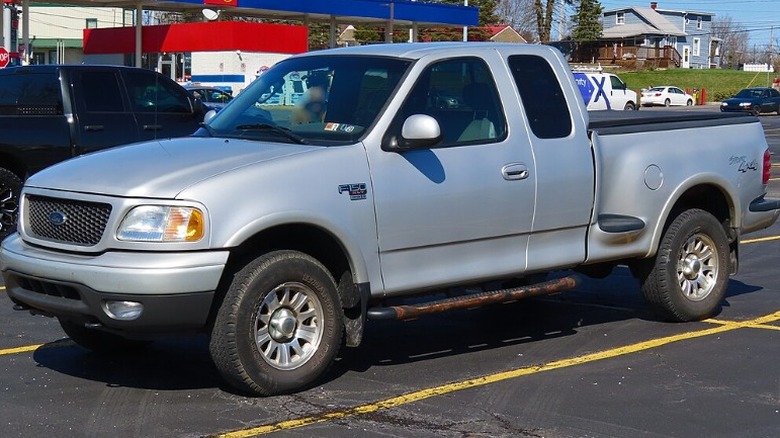
The fuel tank strap is what secures the tank to the body of the truck. It is built to offer support and, so, can handle a decent amount of weight, road impact, and vibration. However, it may also be susceptible to damage and corrosion. In the case of one of America's biggest truck manufacturers, Ford, this component could corrode after extended use and cause the fuel tank to drop.
Apart from the obvious gross inconvenience this issue posed, it was also a huge safety hazard. The defect was said to have caused eight fires. In one of the fires, a person was injured and suffered first- and second-degree burns. The recall, which happened in the summer of 2011, affected older models in the Ford lineup; specifically, F-150's built from 1997 to 2004, F-250 pick-ups built from 1997 to 1999, and the F-150's luxury sibling, the Lincoln Blackwood, built from 2002 to 2003.
A whopping 1.1 million trucks were involved in the recall. With the nature of the defect and how long it would have taken to surface, however, the scale isn't entirely surprising. Reports stated that the corrosion was concentrated in states with cold weather, due to de-icing chemicals used on the road.
Ram 1500 ABS malfunction (1.2 million)
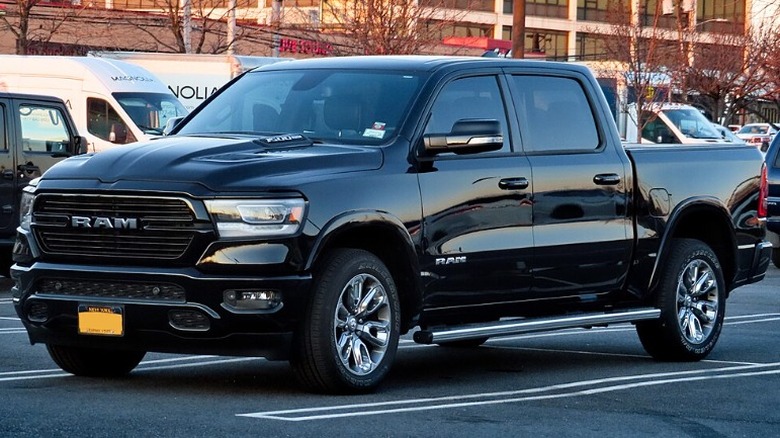
A total of 1.2 million Ram 1500 pickups were subject to a 2024 recall initiated by the vehicle's manufacturer, Stellantis. The culprit here was the Antilock Braking System (ABS), which was prone to a software malfunction that could disable the electronic stability control (ESC) system. The traction and stability control systems being disabled posed a safety risk, violating Federal Motor Vehicle Safety standards.
The problem first came to the company's attention in February 2024. Then, it was investigated by Stellantis' internal Technical Safety and Regulatory Compliance team. The cause of the malfunction was identified by June that year. By August, Stellantis had issued what became its 44th and largest recall of the year. Even though there were no apparent severe accidents or injuries, the company readily recognized the increased risk that such a defect posed.
Some software issues can be fixed via over-the-air (OTA) updates, but with this one, truck owners had to visit a dealership for an ABS control module software update. The affected models were the 2019 and 2021 to 2024 model years.
Ram break transmission shift recall (1.5 million)
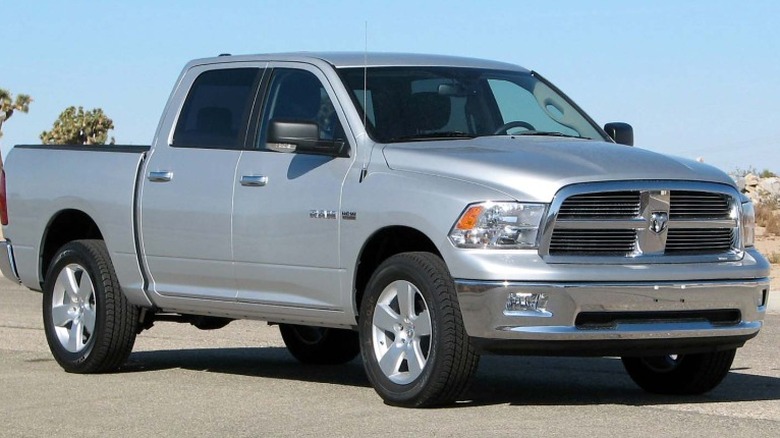
Another Ram recall takes the next spot. Fiat Chrysler announced this recall in December 2017 after discovering that several Ram trucks could accidentally shift out of park. The problem really lay with the brake-transmission shift interlock system (BTSI). This system adds a layer of safety by ensuring that the brake pedal is depressed and the key is in the ignition before the gear lever can be moved out of park.
In affected Ram trucks, the gear lever could move without engaging the brake or having the key in the ignition. This could cause the vehicle to start rolling on its own, endangering the safety of passengers and pedestrians. It is worth noting that vehicles with floor-mounted shifters (manuals) did not have this problem. The recall involved several model years of the Ram 1500, 2500, 3500, 4500, and 5500 trucks. A total of 1.5 million Ram pickups were recalled in the States.
Ford F-150 seatbelt fire (1.6 million)
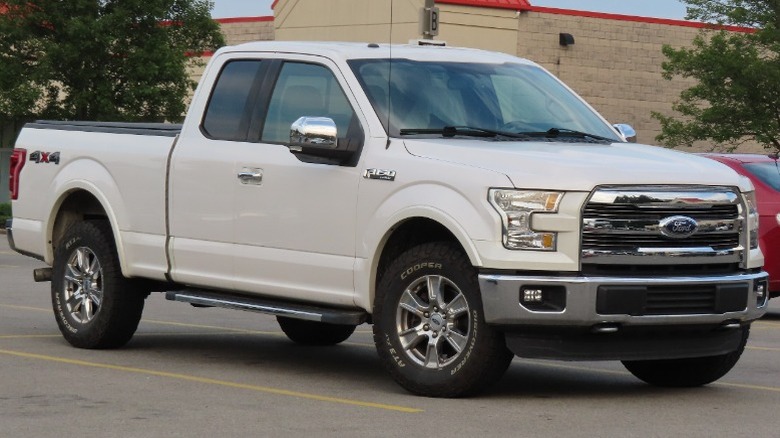
Earning top place with 1.6 million units in one recall is Ford. The F-150 is one of the best-selling vehicles in over 13 states, so the recalls are almost destined to be big. This recall was unusual as it was triggered by a risk of fire linked to the seat belts, which are probably the last component you would expect to cause a fire. But Ford explained that the seat belt pretensioners contain a pyrotechnic charge that helps to prevent slack during a crash. This equipment emits gas, and when there were excessive sparks, it could ignite.
Up to 17 fire-related incidents had been reported in the US at the time of the recall, but with no resultant injuries, according to Ford. NHTSA, however, reported incidents of vehicles getting destroyed in fires. While the problem was restricted to the 2015 to 2018 F-150 truck, it turned out to be one of the biggest recalls of 2018, and also a pretty costly one. Ford reported that it cost $140 million to carry out repairs, which included installing heat-resistant tape on the carpet.