

Should You Worry About Piston Slap? Here's What Experts Say
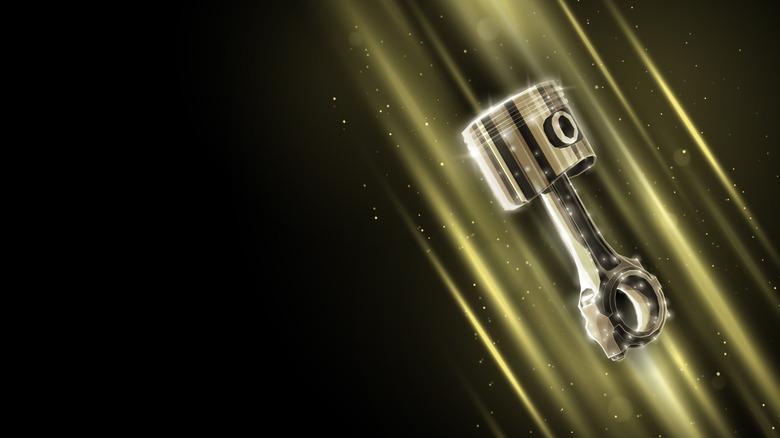
One of the last noises you want to hear from under the hood of your car is a knocking sound. If you're familiar with engine knocks, you might immediately imagine having to pay thousands of dollars to fix it. But that noise might not be an engine knock. It could be a piston slap, which is when a piston slaps a little against the wall of the cylinder. The piston needs a little room so that it can move up and down and expand at higher temperatures. Eventually, though, the wall of the cylinder gets worn enough that the piston has more room than it needs. This is a common occurrence in high-mileage engines, and the slapping noise usually stops once your engine warms up. Still, it's not a pleasant noise (especially compared to what you'd want to hear from the best-sounding cars).
Is this something to worry about, though? The experts seem to agree that this is not something you need to be majorly concerned about. While it can be caused by a manufacturing defect, it can also be brought about by typical wear on the cylinders, and it won't affect the normal operation of your engine unless it gets worse. The permanent fix for piston slap can cost thousands of dollars, which may not be worth it if you have an especially old car.
What the experts say about piston slap
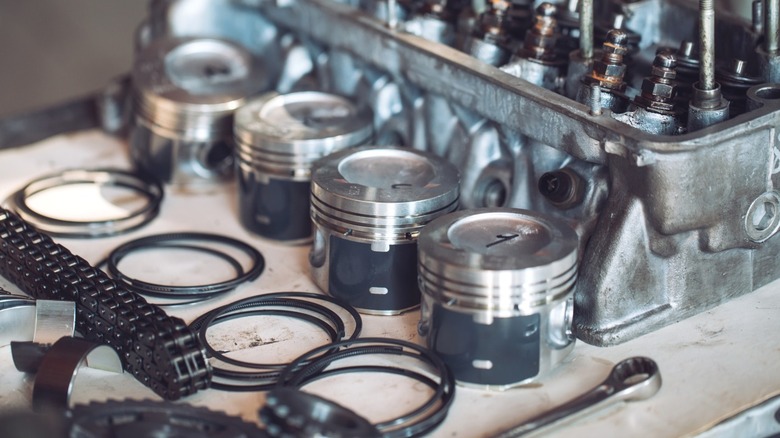
Experts generally agree that piston slap is no big deal in most cases. The Society of Automotive Engineers did a study on engine vibration due to piston slap, and found that there was "no major impact of piston on liner surfaces due to presence of hydrodynamic lubrication between two mating surfaces." In short, piston slap was found to cause no lasting damage. Sajeev Mehta, an expert who answers reader questions over at Hagerty, said, "piston slap is usually a minor issue, but a very annoying one in terms of sound. Very rarely is it worth digging into the block to address the problem without doing a full rebuild." It makes sense; why tear apart the engine to solve something that isn't really a problem?
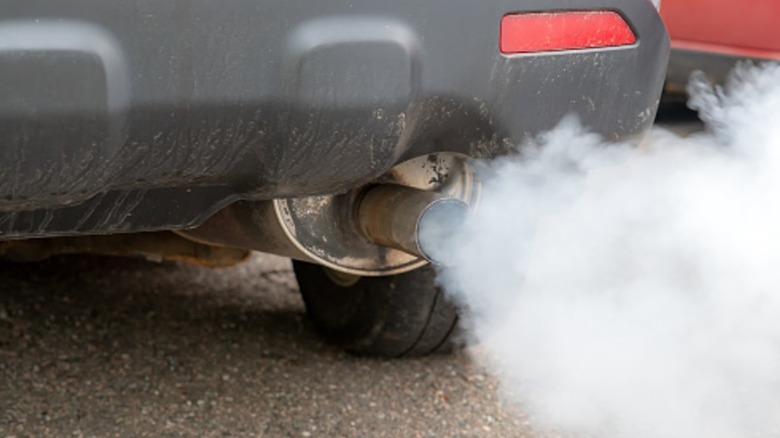
Sometimes, fixing the slap permanently requires a full engine rebuild, which isn't cheap. Other major mechanical fixes include inspecting and replacing piston rings, replacing short piston skirts with pistons that have longer ones, and reboring or honing cylinders. All of those solutions require taking apart the engine to some degree. Hafizh Rizqi at Motor Verso agrees that piston slap "really isn't a big problem," but recommends watching your exhaust for blue smoke. This indicates that oil has leaked into the engine, and that needs to be addressed sooner rather than later.
What can you do about piston slap?
Even if minor piston slap isn't a major mechanical issue, it's still annoying. You might get a quieter engine if you change the oil you use. Switching to a higher viscosity oil may help (changing from 5W-30 to 10W-30, for example), but you'll want to make sure that your engine can handle pushing the heavier oil around. Dr. Boris Zhmud, Head of R&D at BIZOL, says, "Higher viscosity oils require a higher pressure head to be pumped through oil channels. On the other hand, they build a thicker lubricant film providing a greater sound damping effect." You can also wait for the engine to warm up before revving it or driving your vehicle.
But these measures are Band-Aids, not cures. The only permanent fix involves an expensive engine rebuild, which can be necessary to fix serious piston slap. To know if you'll need to worry about that, we recommend checking your exhaust for smoke, which is a sign of internal oil leaks. You'll also want to get your car checked out if the noise keeps up even after the engine is warm. The same is true if you notice a change in engine performance or burning oil, which could be caused by bad piston rings. In most cases, you won't have to do much of anything about piston slap, but you'll want to keep an eye on things in case it gets more serious.