

Mineral Oil Vs DOT Brake Fluid: What's The Difference And Which One Should You Use
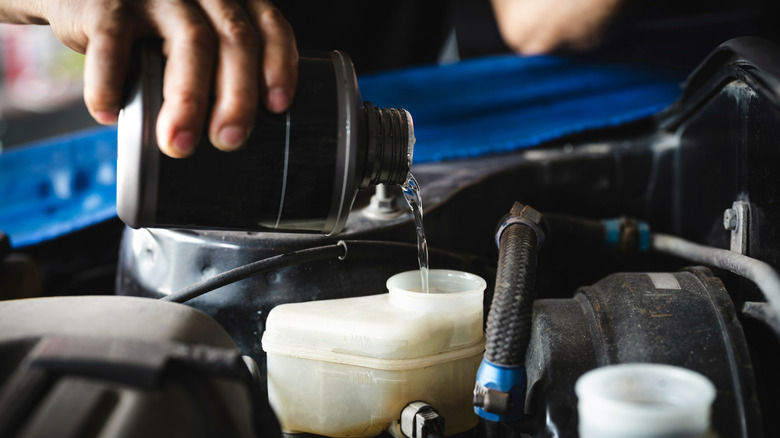
Remember when we looked at whether you can use vegetable oil as a motor oil substitute? Well, today's situation is nothing like that. Brake fluids based on mineral oil — although not pure mineral oil itself — are a real thing and are factory recommended for certain bicycles and e-bikes using hydraulic disc brakes. Some vintage cars, from the likes of Bentley and Rolls-Royce, also relied on mineral-oil brake fluids, as do current tractor and farm vehicles from makers such as Case-IH. Modern cars and trucks? Not so much. Indeed, just to be clear, systems that require DOT brake fluid are not compatible with mineral oil brake fluid, and vice versa since their chemical properties are so different.
It's further worth pointing out there are two basic types of DOT brake fluid, one based on glycol and one based on silicon, and you can't combine these two kinds either; DOT 3 and DOT 4 brake fluid, though, can be blended because they're each glycol-based. As for mineral oils, there's advice on both sides of the fence. Some experts say mixing mineral oils is okay, others, including some fluid manufacturers, give it the thumbs-down. Of course, the carmakers often have something to say about brake fluid as well, and if you don't use the kind they recommend, you can void your warranty. So you can check out the details below for key information on brake fluid, but be sure to check your owner's manual before putting any in your vehicle.
Connecting the dots for DOT brake fluid
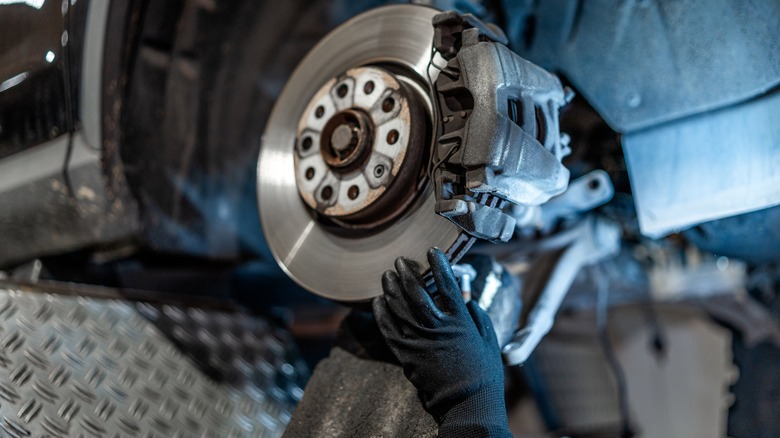
The DOT here stands for the U.S. Department of Transportation, which sets specific rules for brake fluid performance under the Federal Motor Vehicle Safety Standards program. So, DOT 3, DOT 4, and DOT 5.1 brake fluids, all glycol-based, provide increasingly high levels of performance, particularly in terms of how they hold up to extreme temperatures. DOT brake fluid does tend to be less expensive and easier to find than mineral oil, but it's not without drawbacks. For example, it's easy to destroy the finish if you spill brake fluid on your car's paint.
Glycol is hygroscopic, meaning it absorbs water, and when it's used in brake fluid, the water then gets mixed throughout the fluid. Since water has a lower boiling point than brake fluid alone, it therefore ends up lowering the overall boiling point of the brake fluid when the two are mixed together. This can have a seriously negative effect on stopping power since, as the brake fluid boils off during extreme use, there's less left to transmit power from your leg to the brakes themselves.
DOT 5 brake fluid is a different matter. Based on silicon, this brake fluid is hydrophobic, meaning it doesn't mix with water, but the result is that any water in the system ends up pooling in the same place. In that case, things are likely to start boiling off quicker, which reduces brake performance quicker. The benefit of DOT 5 is that it lasts longer and is less corrosive, making it a good fit for rides that will be resting a while.
What makes mineral oil good for some brakes?
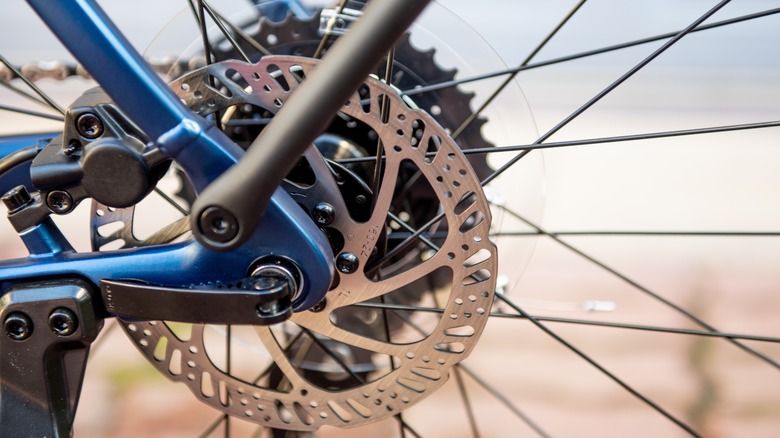
Like DOT 5 brake fluid, oil-based fluids also repel water, leaving it to collect in the lower parts of the system. There, it can start boiling at water's regular boiling point of 212 degrees Fahrenheit. To put that into context, mineral-oil brake fluid boils at about 400-500 degrees Fahrenheit, and even the lowest DOT fluid, DOT 3, has a wet boiling point of 284 degrees; this measure is taken after a glycol-based brake fluid has absorbed 3.7% of its volume in water. (DOT 5 and mineral-oil brake fluid don't have wet boiling points because they don't absorb any water at all.)
Practically speaking, then, it's how they react with water, and therefore how they perform under high temperatures, that may be the most important difference between the two. Just be aware that mineral-oil brake fluid doesn't have to meet any kind of third-party standards like DOT brake fluid. True, the mineral-oil brands, such as Shimano or Magura, still have to face the marketplace, and aren't likely to stay in business if they don't meet customer needs. But some folks would prefer to know that their brake fluid has proven itself under scientific testing from someone without a stake in the matter.