

These 12 Production Cars Have The Best Braking Times
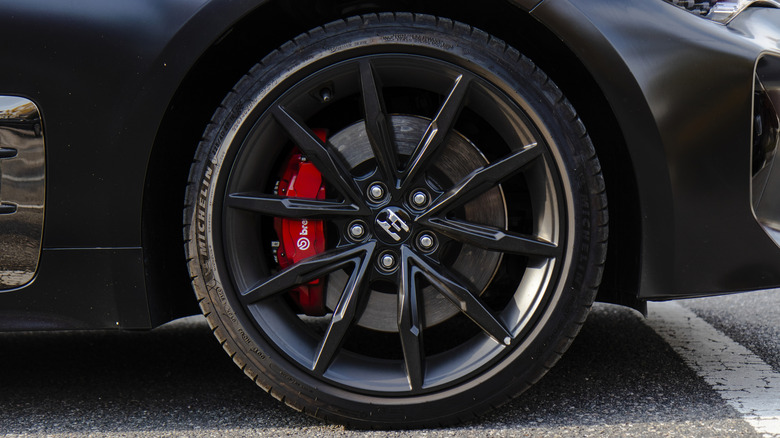
If you want a car that feels genuinely fast, focus on what happens at the end of the straight. A 60–0 mph stopping distance is a clean, repeatable way to talk about real-world performance factors, because it turns great brakes into a number you can compare across all cars. It also reminds you that braking is a full system. Tires create grip, brake hardware turns speed into heat that must be managed, and the chassis and aerodynamics help keep the car settled while all that weight tries to keep moving forward.
This list ranks 12 production cars by their shortest published 60–0 mph distances, and uses curb weight for context. Weight matters because the brakes have to shed more energy as mass climbs, and heavy cars can still stop in brutally short distances if their tires, cooling, and overall calibration are dialed in. When two cars land on the same 60–0 result, another metric could be a high speed, like 100–0 mph, which helps show how the system behaves when the energy load is greater. However, the point here isn't to crown the best brakes ever, because conditions and test procedures vary. Plus, these are production cars, and no one could legally be driving 100mph here in the United States. The goal is to spotlight and rank street-legal setups that repeatedly deliver absurd braking performance, focusing on legal U.S. speeds, and explain what each car is doing to achieve that.
#12: 2019 McLaren Senna
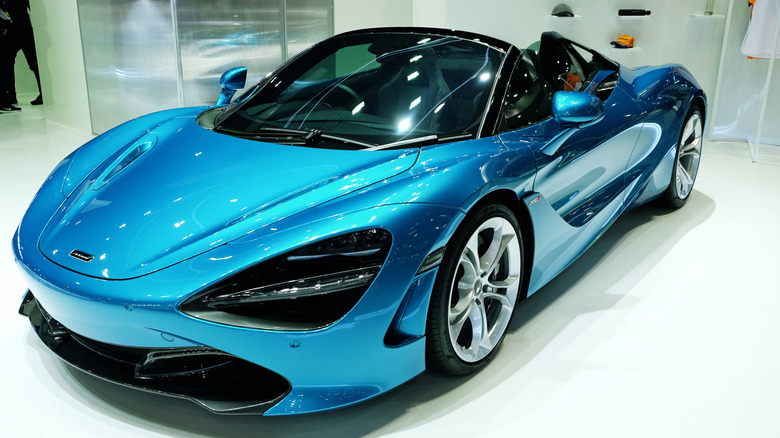
60–0 mph: 92 feet | Curb weight: 3,011 pounds
Kicking off our lineup, the McLaren Senna's whole personality is built around control at the limit, so it makes sense that its braking number is as headline-worthy as its lap-time aura. A 92-foot stop from 60 mph is already elite territory, but what makes the Senna interesting is how it gets there. It is built with a track-focused design that treats stability under braking as part of the car's identity rather than an afterthought.
Weight helps tell that story. At a relatively light 3,011 pounds, the $1 million Senna isn't trying to win by brute-force brake size alone. It's trying to avoid carrying mass in the first place. That lets the tires and brakes do more work with less punishment, and it makes the car feel calmer when you're hard on the pedal. In the same way, the car's aerodynamics aren't just for cornering. They're also for keeping the car pinned and predictable when you're bleeding speed hard enough to make passengers swear you hit something.
The result is a hypercar that doesn't just accelerate like a weapon. It stops like one, too. That's the difference between a fast car and a car designed to be fast all the way through a braking zone.
#11: 2023 Porsche 911 GT3 RS
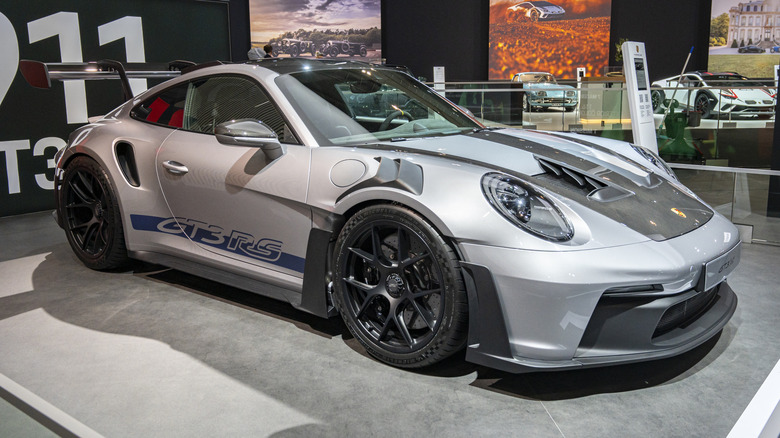
60–0 mph: 92 feet | Curb weight: 3,220 pounds
The GT3 RS is the kind of 911 that treats braking like a discipline. Its 92-foot 60–0 mph number lands it in the same rare air as the world's nastiest street-legal track toys, but the more revealing part is how repeatable and composed that performance is meant to be. Porsche didn't build it for one heroic stop. The GT3 RS is built to make hard braking feel normal.
At 3,220 pounds, it's not featherweight, but it's disciplined. Sharing the stopping distance with the Senna, this 911 wins this metric by being just as quick to stop while weighing 209 pounds more than the Senna. The GT3 RS leans on a formula that's easy to respect with serious tires and aerodynamic intent, and a chassis tuned to stay planted when the driver demands maximum deceleration. The sensation you get from cars like this is less 'hold on' and more 'go ahead, do it again,' because the stability is so well-engineered. The car's whole vibe is confidence, while the front end stays loaded, the pedal gives you trust, and the platform doesn't turn nervous just because the braking zone arrives earlier than your brain expected.
That's why the RS belongs here. It isn't chasing a cheap party trick; It's built around the kind of braking you'd want right before a corner you're not sure you can make.
#10: 2017 Chevrolet Corvette Grand Sport
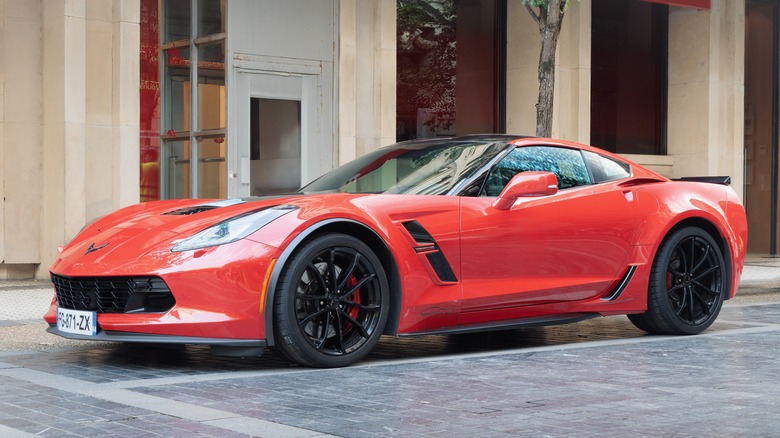
60–0 mph: 90 feet | Curb weight: 3,464 pounds
The Grand Sport is proof that you don't need a hypercar badge to produce hypercar-grade stopping numbers. Some would say not to buy any other Corvette. In testing, it hit a 90-foot 60–0 mph stop while carrying 3,464 pounds, making it our lightest 90 ft car on this list, and it does so with the composure you expect from a car built to spend real time at speed.
The magic of the Grand Sport is how it blends serious pieces into a package that still feels like a Corvette you can live with. It's the wide-body, big-grip, track-style version of the C7 that prioritizes balance with enough tire to create real traction under heavy braking, and enough brake hardware to take repeated hits without turning the pedal into a sweaty negotiation. It's also the rare performance trim that feels coherent, as if the brakes, tires, and chassis were all chosen by the same person with the same goal, rather than stitched together from an options list.
That's why it reads like a value play in this context. A 90-foot stop is legitimately elite, and the Grand Sport makes it feel like something a normal buyer could access without needing a pit crew or seven-figure bank account.
#9: 2014 Chevrolet Corvette Stingray Z51 Convertible
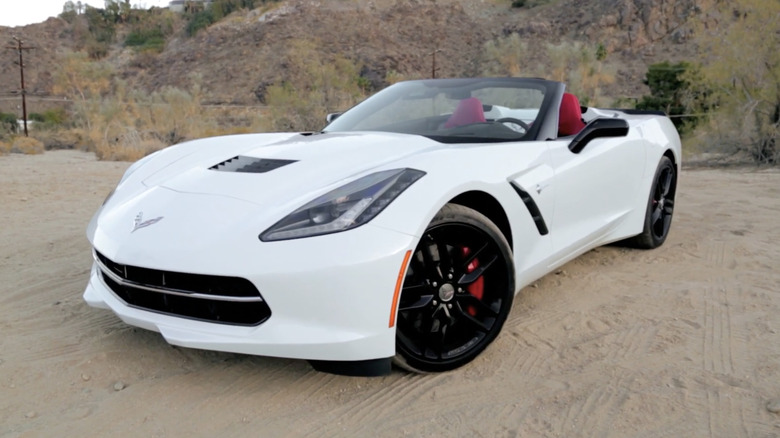
60–0 mph: 90 feet | Curb weight: 3,480 pounds
A convertible showing up on a best-braking list is the fun twist, because open-top cars usually pay a penalty in weight and rigidity. Yet the Stingray Z51 Convertible still posted a 90-foot 60–0 mph stop at a 3,480-pound curb weight, which is a great reminder that modern performance packages aren't just about acceleration, they're about the sum of all the parts.
The Z51 idea is simple. Chevrolet took the base sports car with a convertible top and gave it the hardware to act like a track-day adult. That means the car isn't relying on drama to feel fast. It's relying on competence. And braking competence shows up as the kind of confidence you can actually use. It has the ability to scrub speed quickly without the car feeling loose, vague, or overheated when you're driving like you mean it.
This is also where curb weight becomes part of the narrative. It is 16 pounds heavier than the 2017 Corvette Grand Sport we mentioned previously, and still stops within 90 feet. The convertible isn't trying to beat physics. It's just equipped well enough that physics doesn't bully it. You still get the air-in-your-hair version of a Corvette, but the Z51 details make sure the car can stop like it has something to prove.
#8: 2015 Chevrolet Corvette Z06 (automatic)
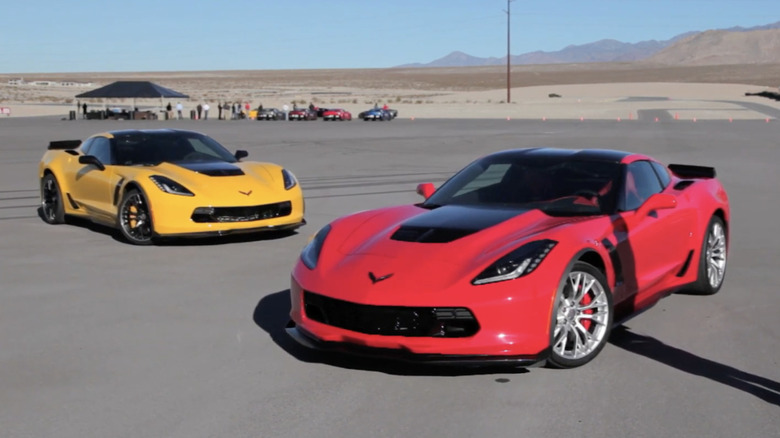
60–0 mph: 90 feet | Curb weight: 3,550 pounds
The Z06 is the 'arrives at the braking zone too fast' Corvette, which is exactly why its braking performance matters. This car is the all-American middle finger to Euro supercars. It delivered a 90-foot 60–0 mph stop at 3,550 pounds, and that's the impressive part. A car with this much speed potential still behaves like it was designed to slow down quickly and be able to repeat the process well, not just once for the spec sheet.
This is where cooling, tire choice, and brake package engineering become more than buzzwords. A car that makes big power doesn't just need strong brakes. It needs brakes that stay consistent when the heat starts stacking. The Z06's story is about being more than a fast engine in a familiar body. It's about being a system that can survive its own pace, hauling down hard, turning in, and doing it again without the driver suddenly finding the limit in the worst way.
This Z06 comes in at 70 pounds heavier than the 2014 Z51, and 86 pounds heavier than the 2017 Grand Sport. If the Grand Sport is the balanced sweet spot, the Z06 is the stress test. It shows how far you can push a production platform when you treat braking as a core pillar of performance, not an accessory to horsepower.
#7: 2021 Ferrari SF90 Stradale Assetto Fiorano
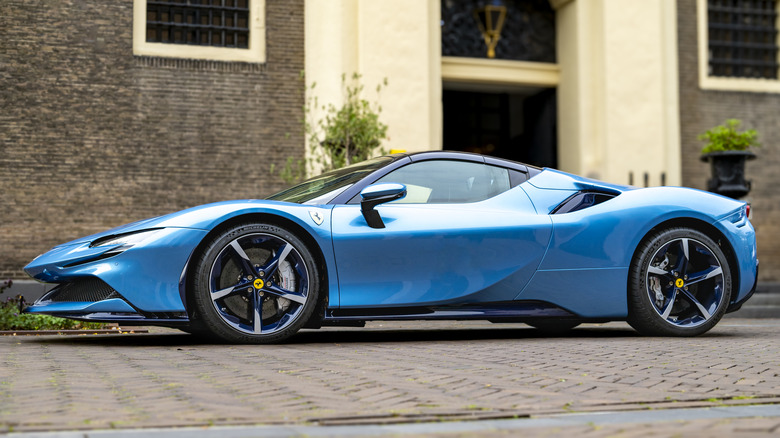
60–0 mph: 90 feet | Curb weight: 3,839 pounds
The SF90's braking story is the modern supercar story in one sentence. The hardware is only half the answer now. Despite weighing 3,839 pounds, the SF90 still nailed a 90-foot 60–0 mph stop, which is a ridiculous thing for a nearly 1,000-horsepower plug-in hybrid to do with that much mass on board.
This is where braking involves software as much as steel and carbon. The SF90 blends systems the way it blends propulsion, using a brake setup that's designed to stay stable while juggling traction, weight transfer, and high speeds. You're not just depending on giant brakes. You're depending on how the car applies them and how confidently it manages the transition between acceleration and deceleration with its brake-by-wire setup.
That curb weight number is key because it highlights the highest achievement here in the 90-foot category on this list. It weighs 289 pounds more than the 2015 Z06, and a whopping 375 pounds more than the 2017 Grand Sport. The SF90 isn't winning by being light. It's at the top of this category by overcoming its extra weight with coordinated tires, carbon-ceramic brakes, and a modern control strategy, all working together so the car can shed speed without feeling like it's fighting itself. It's supercar braking in an era when performance is as much computation as combustion.
#6: 2016 Dodge Viper ACR
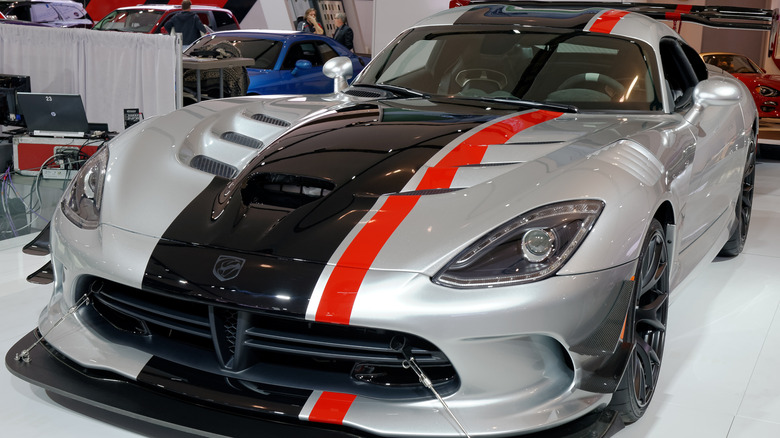
60–0 mph: 89 feet | Curb weight: 3,400 pounds
The Viper ACR's braking record is the loudest proof that old-school still works when it's paired with the right kind of grip. In its street setup, it delivered an 89-foot 60–0 mph stop, helped by massive aerodynamic intentionality, sticky tires, and hardware designed to take abuse. At roughly 3,400 pounds, it isn't as heavy as some others on this list, but it isn't a featherweight, either. It's a purpose-built hammer.
The 2016 Dodge Viper ACR comes with racing reviews, and its vibe is refreshingly blunt, making mechanical grip, adding serious downforce, and giving the driver brakes that don't flinch. That's why it's so iconic in this context. Modern supercars can feel like they're doing a lot of invisible work to help you. The ACR feels like it's doing visible work with a big wing, big splitter, big brakes, and big tires. When you hit the pedal, it responds as if it were waiting for permission.
Because Dodge provided both a track setup and a street setup in testing, the ACR also shows how tuning a car for a specific environment can change the outcome. But the headline remains the same. Few production cars have ever stopped from 60 mph shorter than a properly set-up Viper ACR.
#5: 2023 Ferrari 296 GTB Assetto Fiorano
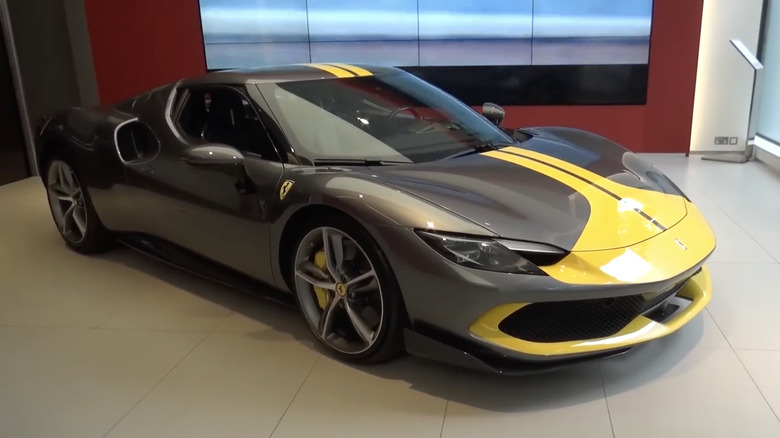
60–0 mph: 88 feet | Curb weight: 3,528 pounds
The 296's 88-foot 60–0 mph stop is the kind of number that turns a quick car into a serious one, breaking the 90-foot plateau. At 3,528 pounds, it's not trying to be a minimalist featherweight, either. Instead, it's showing what happens when a modern mid-engine chassis is tuned to make braking feel like a tool you can trust.
Part of the 296's appeal is that it's easier to understand than the SF90 while still playing on the same elite playground. The track-focused package exists to keep things consistent, being less about a single magic run and more about delivering the same confidence every time you lean on it. As we have been looking at, that's what great brakes actually buy you, repeatability. When you can brake later every time without the car getting weird, you drive differently.
The 296's braking feel matters because it's a driver's car, not just an engineering flex. It's supposed to communicate. If you're pushing hard, the difference between amazing brakes and amazing brakes that feel natural is the difference between being fast and being brave. The 296 earns its place here by showing that modern performance isn't just acceleration. It's control, and braking is one of the loudest proofs.
#4: 2019 Chevrolet Corvette ZR1 (ZTK)
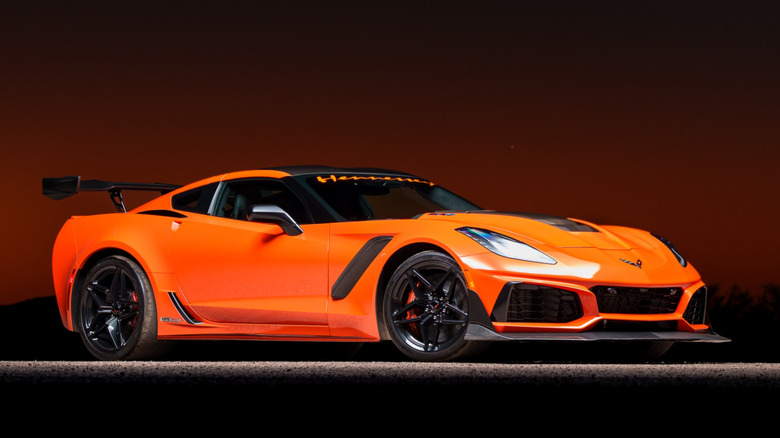
60–0 mph: 88 feet | Curb weight: 3,650 pounds
The ZR1 is the Corvette that arrives at corners like it's late for something, and its braking performance has to match that energy. The ZTK-equipped car stopped in 88 feet from 60 mph with a 3,650-pound curb weight, which is the kind of number you expect from track specials, and not a front-engine Corvette with registration plates.
The most interesting part is that the ZR1's braking story changes depending on how it's configured. Aerodynamics isn't just a top speed conversation here. It's part of the braking conversation. Load the tires harder, and the car can do more heavy work, staying stable as the brakes take a massive heat hit. It's a good reminder that stopping distance isn't only about calipers and rotors. It's about how much grip the car can generate while everything is trying to transfer forward.
That's why the ZR1 is a great entry here, because packages matter. It shows how production cars can shift personalities with factory options, and how the best braking cars aren't always the ones with the biggest spec-sheet bragging rights. They're the ones where the whole setup is aligned around control.
#3: 2018 Porsche 911 GT2 RS Weissach
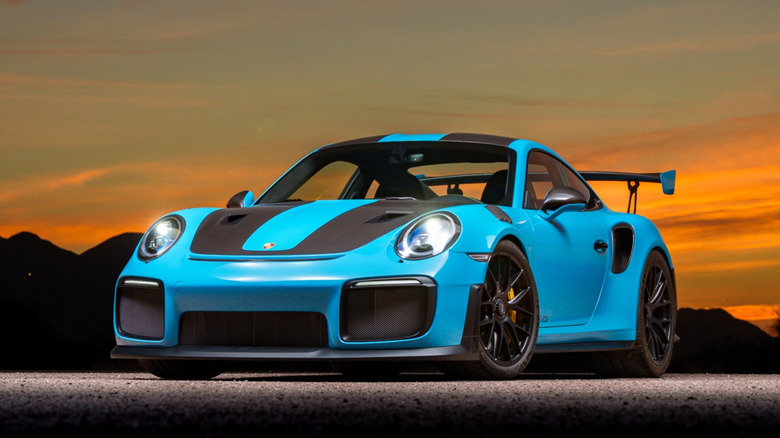
60–0 mph: 87 feet | Curb weight: 3,355 pounds
The GT2 RS is a reminder that Porsche's GT department treats braking as part of the car's soul. This is one of the most powerful 911s ever made. It stopped in 87 feet from 60 mph with a 3,355-pound curb weight, and the fun part is that it does it on a platform people still stereotype as a sketchy rear engine. In reality, everything about this car is calibrated to be stable when the driver is doing violent things at the wheel.
The Weissach angle matters because it's a mindset with weight discipline, track intent, and obsessing over how the car behaves when you're asking it to do the hard stuff repeatedly. Braking for this Porsche isn't just about the distance. It's about how composed the car is while you're shedding speed and setting up for the corner. The GT2 RS doesn't feel like it's scrambling. It feels like it's executing.
That's why the stopping numbers hit differently than a random supercar flex. It fits the car's purpose. When you're building something for lap times, braking becomes a tool you expect to rely on, not a performance stat you hope to hype up. The GT2 RS earns its spot here by making absurd braking feel like part of the job description.
#2: 2025 Porsche 911 GT3 Touring
60–0 mph: 86 feet | Curb weight: 3,318 pounds
Next, we have the stunning #2 spot on our list. The Porsche 911 GT3 Touring is the stealth entry that proves a wing isn't required for world-class braking, just world-class execution. It stopped in 86 feet from 60 mph with a 3,318-pound curb weight. That puts it right here toward the top of the leaderboard while looking like the kind of 911 you could use daily without being asked about your lap times at the grocery store.
This is the Porsche GT formula in its cleanest form. It has chassis discipline and a serious tire-and-brake setup you can lean on without drama. The Touring's trick is making extreme performance feel approachable. Under hard braking, it's not twitchy or theatrical. It's calm, and that calm enables you to use the capability.
High-speed stopping helps underline that this isn't a one-metric wonder, either. When speeds rise, heat load rises, and the cars that stay strong are the cars with systems designed for it. The Touring's numbers show why Porsche's GT cars keep ending up in these conversations. They're engineered around repeatability. It's the kind of car that makes you trust the brakes enough to brake later, and then makes you realize you could've braked even later than that.
#1: 2024 Ford Mustang Dark Horse (10-speed automatic)
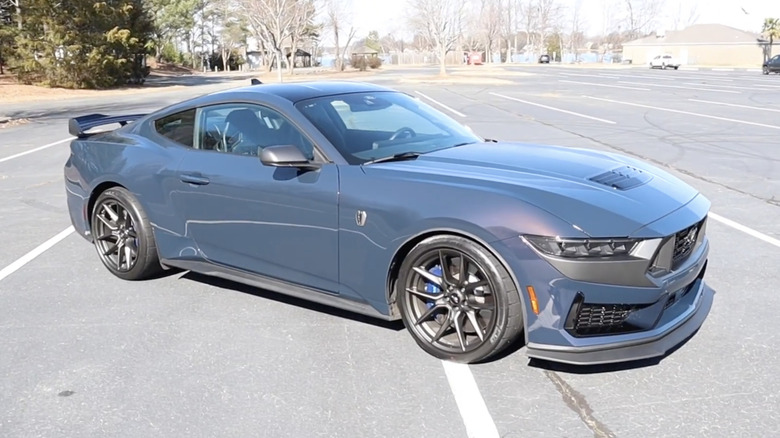
60–0 mph: 86 feet | Curb weight: 3,925 pounds
Lastly, the Dark Horse, coming in at #1 on our list, here to rule the pony cars, is the punchline built from the facts. In testing, the 10-speed automatic version stopped from 60 mph in 86 feet while weighing 3,925 pounds, which means it's shedding serious mass in the same tiny space as the best track weapons on earth. It doesn't just stop short, it stops short while carrying more weight than almost everything it's embarrassing. It has both the most weight and the shortest stopping distance on this list. That's why it wins.
The hardware story is very straightforward. Big front rotors, Brembo calipers, and an electronic brake booster that delivers a consistent response when the car is being driven like it was built to be driven. Tires matter just as much, and the Dark Horse shows what happens when a modern pony car is equipped with the kind of rubber you'd expect on a purpose-built track toy. It's not 'good for a Mustang.' It's just good.
Compared to the other cars on this list, the Dark Horse's weight management is astounding. It comes in at 607 pounds heavier than the 911 GT3 Touring, and 914 pounds heavier than the 2019 McLaren Senna, which is the lightest car on this list. The Dark Horse's ability to manage that weight and still tie with the 911 GT3 Touring is why it is our #1.