

What Is Spark Plug Blow Out?

We may receive a commission on purchases made from links.
An indispensable part of the gasoline combustion process is spark ignition (provided by spark plugs), which sets off the fuel and air mixture responsible for generating energy. Traditionally, the electrodes (which carry the electric arc) were made using copper. However, newer upgrades are available with various advantages. The difference between iridium and platinum spark plugs is a good example. Regardless of what a spark plug is made from, it's crucial for healthy performance. Misfires, lackluster performance, and even poor fuel economy can result from these small parts if they go bad. However, despite their straightforward purpose, there are still spark plug myths in circulation people should stop believing.
To ensure you're using the correct set of spark plugs, consult your vehicle owner's manual. However, some complexity enters the equation when modifying an engine for enhanced performance. One of the most popular methods for boosting output under the hood is adding forced induction, via a turbo or supercharger. These add-ons compress air and force more of it into the engine for tangible performance increases. However, many enthusiasts have noted a strange phenomenon that can occur following the installation of forced induction that directly affects the spark plugs, blow out.
Blow out describes a situation in which that essential voltage arc doesn't form, thus failing to create ignition inside the cylinder. However, the force of additional compressed air can't literally blow out an electric arc, so the term can be a bit misleading. What's actually going on is that the added compressed air from forced induction changes the conditions within the engine, making the environment less conductive. Compressed air equals denser air, which your spark plugs will need to fight against to create and maintain an arc across the electrodes.
How do you fix spark plug blow out, and what else can cause it?
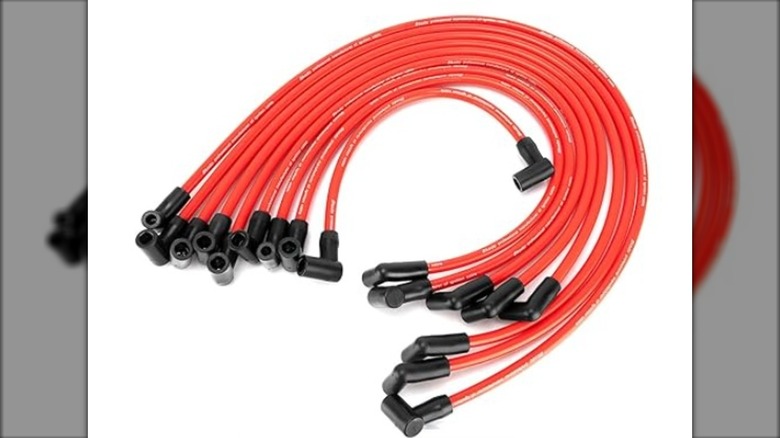
Depending on the reason for blow out, there are a few different approaches to address it. Adding a forced induction system to a car offers several advantages, but it also subjects internal engine components to greater strain. The extra compressed air creates significantly more pressure, testing a variety of components beyond original factory specifications. This can lead to catastrophic failures, or perhaps less serious issues such as spark plug blow out. This is why it's advised to avoid installing something like a turbocharger without upgrading the surrounding support parts. To correct spark plug blow out, you can try installing high-performance replacement components, such as better-quality spark plug wires (if applicable). Better wires are constructed to deliver electric current with less resistance, which can help more current reach the plugs.
Of course, if your engine utilizes a coil-on-plug system, where each spark plug includes its own ignition coil, you won't have wires. This system started becoming common back in the '90's, as more cars switched from distributors to coil packs. Coil-on-plug systems can still suffer from blow out, though it doesn't necessarily have to do with forced induction modifications, but something far simpler, loose spark plugs. While it may seem inconsequential, paying close attention to the proper torque settings and utilizing a torque wrench when installing the spark plugs is critical. This information should be listed in the car's repair or service manual for reference.