

Mary Barra And GM Say The Future Is Still Electric
Happy Tuesday! It's January 13, 2026, and this is The Morning Shift — your daily roundup of the top automotive headlines from around the world, in one place. This is where you'll find the most important stories that are shaping the way Americans drive and get around.
In this morning's edition, we're looking at GM's plan for PHEVs and EVs, as well as how Honda dealers feel about the Afeela, Volkswagen's less-than-steller end of 2025, and Volvo's recall of the EX30.
1st Gear: GM refocuses on PHEVs after Stellantis pullback, but says EVs are still the goal
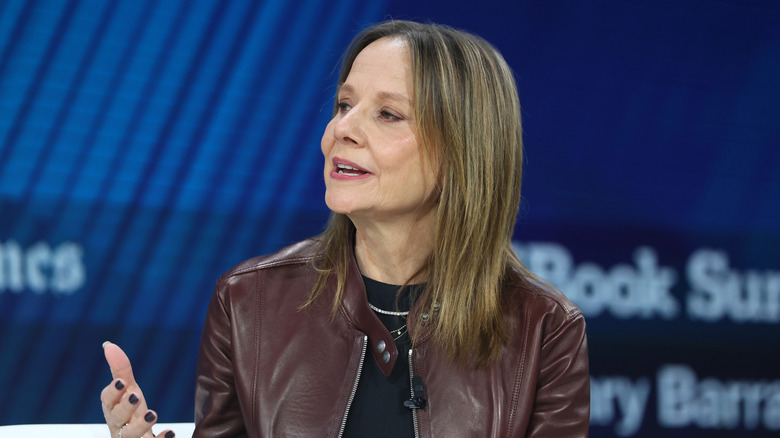
The United States is bearish on EVs, and such regressive sentiment has even come for plug-in hybrids — Stellantis is on track to cancel any battery bigger than the 12-volt under the hood. GM, though, seems to be looking past our current administration's war on climate regulation. The company's CEO, Mary Barra, says EVs are still the future. From Automotive News:
General Motors still plans to sell plug-in hybrids in the U.S., though electric vehicles remain the automaker's longer-term strategy, CEO Mary Barra said.
GM has not confirmed which segments or vehicles might get plug-in technology or given an update on timing since Barra previously said they would arrive in 2027. The automaker is studying hybrids as it considers how the regulatory landscape could change after the next presidential election in 2028.
"We are evaluating plug-in hybrids. We have plans to do some," Barra said Jan. 12 in remarks to the Automotive Press Association here. "In the past, plug-ins were the only hybrids that actually counted toward the regulatory perspective. So we have plans to do those, and we'll have hybrids where we think we need to. But again, we're mainly investing and continuing to work on EVs because we think that's the end game."
It's pretty clear that Barra is reading the winds of approval ratings, and expecting someone further to the left to step into the White House in 2029. Whether that pans out remains to be seen, but it's the guess that GM is building its long-term plans around.
2nd Gear: Honda dealers hate the Afeela, but largely just because it cuts in on their business
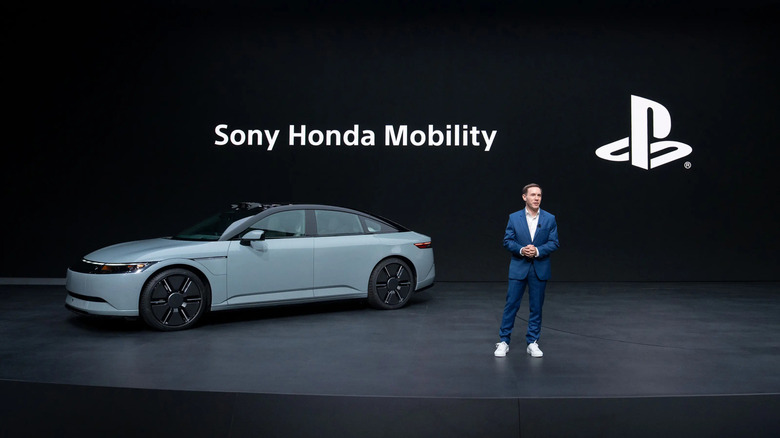
The Sony-Honda Mobility Afeela is nearly here, finally revealed in full production guise. The problem is that the car is built to specs that aren't nearly as competitive now as they were when it was announced, and it costs luxury-car money to boot. Dealers also think the car is a problem, but their issue is a little different: The Afeela cuts out their business. From Automotive News:
Honda positions its electric vehicle partnership with Sony as a bold bid to out-innovate Tesla with cutting-edge entertainment amenities and artificial intelligence-powered mobility.
However, the automaker's franchised dealers are intensifying their opposition to the Sony Honda Mobility venture, labeling the premium Afeela electric vehicle program a costly diversion in a tightening U.S. market and softening EV landscape.
Some retailers view the collaboration, established in 2022 to blend Sony's entertainment technology with Honda's manufacturing expertise, as an existential threat to their business model and balance sheet.
At the core of dealers' discontent is Sony Honda Mobility's decision to bypass franchised stores in favor of a direct-sales model. Retailers also fear it is siphoning focus and resources away from Honda's core automotive business.
Bill Feinstein, chairman of the Honda Dealer Advisory Board, described the venture as "poorly conceived from the start" and now "an albatross," urging Honda to cut its losses to avoid draining resources.
As usual, the dealer lobbies are very concerned that their status as largely useless middlemen adding cost and complexity to a purchase might be threatened. They can't have that, so they'll lash out at anything that circumvents the dealer model. They may well be right about the Afeela being an albatross, but they're wrong about why.
3rd Gear: Volkswagen had a rough fourth quarter
2025 was a tumultuous year in auto sales, with the United States going full protectionist and China engaging in a race-to-the-bottom price war. Volkswagen took hits on both sides, knocking its fourth-quarter numbers down despite strong European sales. From Reuters:
German carmaker Volkswagen saw a 4.9% decline in vehicle deliveries in the fourth quarter of 2025, driven by lower demand in North America and China, the company said on Monday.
The company delivered 2.38 million vehicles in the quarter, compared with 2.50 million units the same period a year ago.
While deliveries in Western Europe as well as Central and Eastern Europe rose 5.6% and 5.9%, respectively, sales both in China and North America fell 17.4%.
"The intense competitive situation in China, as well as tariffs and the discontinuation of electric vehicle subsidies in the U.S., have impacted our business," Marco Schubert, member of the group's extended executive committee for sales, said in a statement.
2026 may be the year things start to level out after last year's tariff threats, at least for countries that aren't the United States. China is taking efforts to stabilize the EV market, Europe is looking at working with other nations to keep the car supply flowing. Of course, the AI bubble could pop and send us all back to the stone age, or we could invade Greenland, but beyond that 2026 might go better for multinational corporations than 2025 did — at least, outside of the States. Here, expect things to stay bad.
4th Gear: Volvo warns EX30 owners about fire risk
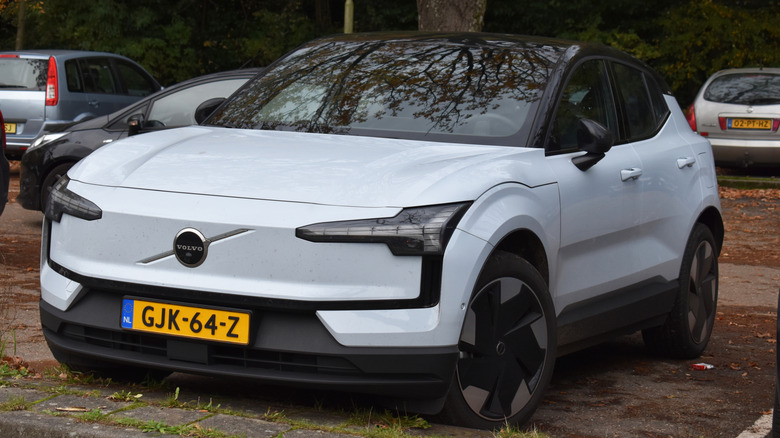
The Volvo EX30 is a fun little car, even if its launch was mired in software issues and buybacks. Now, though, things are getting worse: The car is also apparently a fire risk thanks to issues at a battery supplier, and Volvo is warning owners to park outside and keep charge levels low. From Driving.ca:
Volvo is recalling some 85 examples of its new electric EX30 SUV in Canada over a potential fault in the battery that could lead to a short-circuit—and possibly cause a fire. The automaker is asking all owners of 2025-model-year EX30 vehicles to park the sport-utility outside and away from other cars until the defect has been repaired.
A remedy for the problem is still under development, and so while owners will be notified by mail late February regarding whether or not their EX30 is affected, it may be some time after that until the EV can be fixed. In the interim, Volvo says capping the maximum charge setting of the vehicle at 70% should help reduce the risk of short-circuiting; and Transport Canada notes the defect "would cause a warning message to be displayed in the instrument panel," a clear sign your EX30 is affected.
Not a fantastic look for one of Volvo's most entertaining current offerings, but it's also not really something Volvo could have fixed on its own. The automaker relied on batteries from a supplier, and now Volvo's parent company Geely is suing that supplier over quality issues. Just one of those issues of globally distributed supply chains, it seems.
Reverse: The lake I grew up swimming in
Helle Crafts' murder was an inspiration behind the movie "Fargo," and also the first murder for which my hometown was famous. Not the last.
On The Radio: Perfume Genius - 'Queen'
Music video of all time, honestly.