

Boondocking Is Not Legal Everywhere, But Here's Where You Can Go To Check
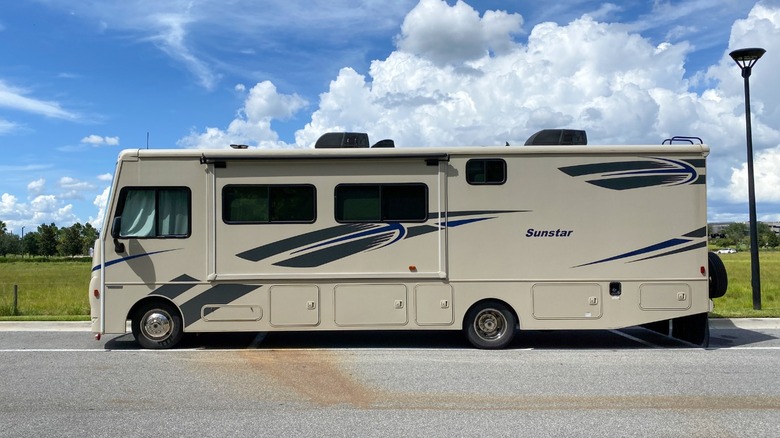
Did you know there are people who actually pay for campsites? Ha! The suckers! If you like to boondock, you know about camping or parking overnight for free. These spots typically don't have electrical or water hookups. Of course, you can't boondock just anywhere you feel like — some states make sleeping in your car almost impossible. Most property owners and localities don't like for travelers to just pull over and stay all night. But there are plenty of places to boondock all over the United States, if you know where to look.
And knowing where to look is the key. You may already know about BLM land, which is managed by the federal government. If all you know about boondocking you learned from YouTube, you may have been led to believe that all of the federally managed land that allows boondocking is in the southwestern states. But most national forests, which exist all over the country, will let you camp for free, as well. Multiple state forests also allow free dispersed camping. Just check the websites of these agencies to find out. Of course, to locate individual dispersed camping spots or places like Costco where you can park overnight, you'll need the help of apps and websites.
Apps with free versions include Campendium and iOverlander 2, while freecampsites.net is entirely free. And, of course, there are paid apps like The Dyrt. There are also navigation apps, like Gaia GPS, made specifically for using offline when navigating off-road trails. They can be very useful when you're boondocking deep in the, you know, boondocks. You may have to hunt for places to refill your water and empty your black tank (though some of these apps help with that, too), but you may never have to pay for another spot.
Official US government websites
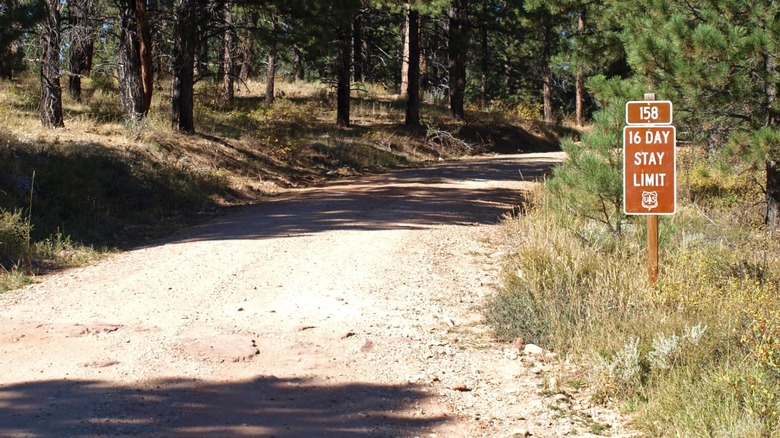
If you follow YouTubers who are living the "vanlife" or doing the nomad thing in an RV or converted bus, you've heard of BLM land. "BLM" stands for "Bureau of Land Management," which manages one-tenth of America's land base. That translates to 245 million acres, much of which is open to free dispersed camping, perfect for boondocking. The good thing is that the BLM has its own website (blm.gov). The best way to use this site for boondocking is to go to the "states" section from the main menu, pick the state that you would like to visit, then drill down until you find the district office located in the area you want to go to. Phone numbers are listed for each office, so try calling them to see which areas are open for dispersed camping and if there are any restrictions. You might also check out this cool interactive map.
National forests generally allow boondocking on their grounds, too. But various parks can have restrictions, like no camping during hunting season. That's why it's good to get in contact with the office for the national forest you would like to visit. The Forest Service is part of the Department of Agriculture, so its website exists as a subdomain on the USDA's site. However, there is a subsite for every national forest and park. From the front page of fs.usda.gov, select the state and name for the forest you want to visit in the "Find a Forest" widget. From there, you'll get information about the individual forests, as well as the contact info for their offices. We are going to point out that, while these sites have good general information about dispersed camping, they aren't great for finding specific sites.
State forest service websites and maps
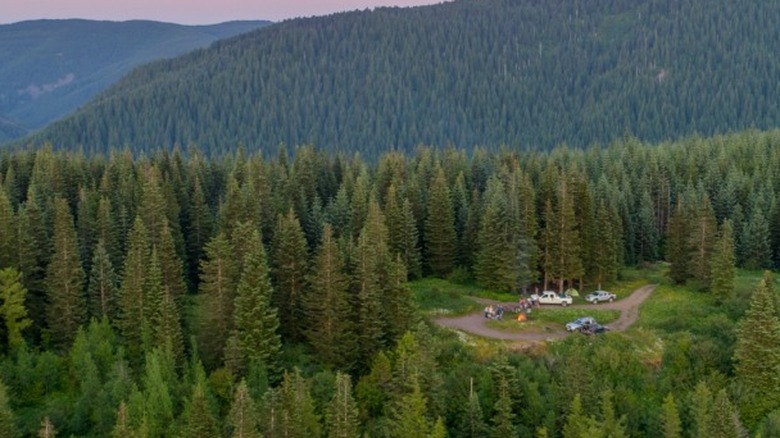
Federal land, especially BLM land in the Western United States, seems to get most of the love from nomadic YouTubers. But multiple states also offer free camping for boondockers. For example, the website for the Minnesota Department of Natural Resources says that "state forests are open to dispersed camping unless otherwise posted," and that it is "No fee. First-come, first-served." In other words, perfect for boondockers. The nice thing about the site is that the page for each state forest will list dispersed camping as a recreation activity if it is available.
Michigan is another northern state that offers free dispersed camping in its state forests for "tent or car camping," as long as it's at least a mile away from state parks and campgrounds. Does "car camping" include RVs? There is a lot of disagreement around the internet about what this phrase means, but we wanted to know how the Michigan state government defines it. The only definition we could find from the Michigan Department of Natural Resources, which manages state forests, is on the downloadable camp registration card – that card is required for dispersed campers in Michigan state forests. The second definition listed for "camp" is "the parking and occupancy of an enclosed, self-contained camping unit." That sounds inclusive of RVs to us. The National Park Service defines "car camping" as simply being able to drive to your campsite, not necessarily camping in your car (though that would be included).
We should shout-out the interactive map on Michigan's DNR website, where you can find state forest boundaries and determine which areas are at least a mile away from developed campgrounds. So, check the websites of your state agencies to see if dispersed camping is available.
Free apps and websites
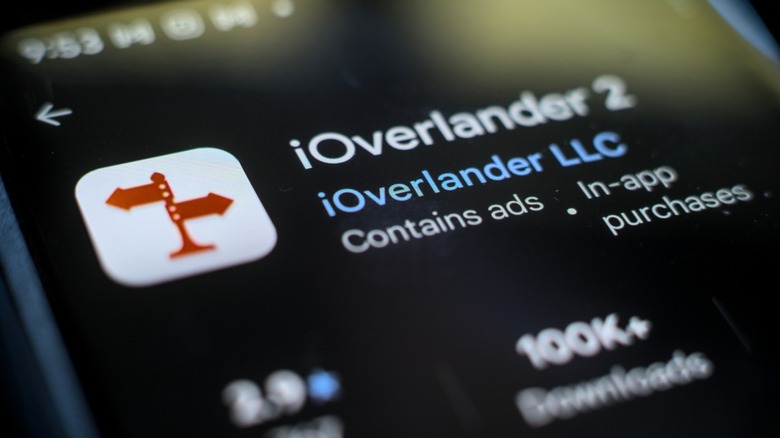
Government sites are good for general information, but they typically aren't very good for helping you find individual spots to boondock. The best source of information about boondocking spots would be another boondocker. Fortunately, there are free apps that leverage the experiences of your fellow campers, providing directions, maps, and reviews of various spots. The free version of iOverlander 2 is pretty good for this. When you open the app, filter for "wild camping" under "accommodation." It will not only show you dispersed camping sites, but also pinpoint on the map parking lots, shopping centers, and other spots where people have been able to park overnight for free without being hassled. Tap on the pin, and it will bring up the name of the place, directions to get there, reviews of the place by other campers, and more.
Campendium is the app we probably hear talked up the most by YouTubers. We've been able to find several free campsites listed on the app, as well as places to park overnight. You'll see reviews from other campers and what cell service is available. It will even show you the locations of dump stations, marked by a cute little poop emoji. You'll have to sign up for a free account with Roadtrippers to use the app.
Park4Night is another good app for finding places to park overnight. In our experience, it's not great for finding dispersed camping spots, but if you're looking for the nearest Cracker Barrel or other safe overnight haven to boondock, even the free version is pretty useful. Freecampsites.net is a great website for finding both free campsites and overnight parking. It is completely free and has most of the same features we pointed out for iOverlander.
Premium apps and websites
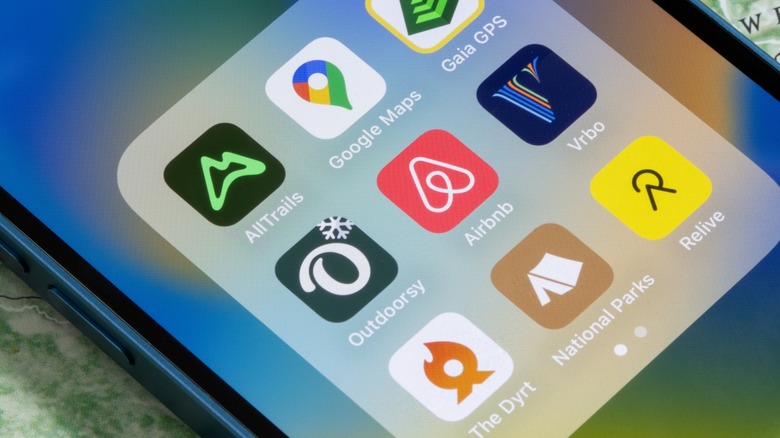
There are plenty of boondocking apps out there that are ready to take your money. iOverlander 2 has a paid version that unlocks features like search (which seems to us pretty basic to be a premium feature) and layers to add to the map, like topographical, satellite, BLM boundaries, and U.S. National Forest boundaries. We think we'll pass on the premium version, as we can get what we need from the free version and Freecampsites.net, which will let you use layers for free.
The Dyrt is a useful app for finding campsites and other places to park your RV or van. All of its filters are available on the free version, except for two: free dispersed camping and free overnight parking. In other words, if you want to use it for free boondocking, you'll need to pay $59.99 a year for the Pro account, which seems ironic to us. On the other hand, the app says that it has a database of over 10,000 staff-verified free spots, so the cost might be worth it if you're a full-time nomad.
If you're willing to pay a subscription fee to stay at interesting places and your vehicle is an RV, RV trailer, schoolie, or camper van, you might take a look at Harvest Hosts, which recently acquired a similar service, called Boondockers Welcome. For about $70-$125 a year, depending on which plan you choose, you can stay overnight at places like farms, wineries, breweries, distilleries, and other neat places. While the host won't charge you for an overnight stay, you are generally expected to patronize their business and throw a few bucks their way.
Navigation tools
If you're just looking for a Walmart or Cracker Barrel where you can park for free overnight, you can just use the street map features in the apps we've mentioned or input the address into Google Maps or Apple Maps. It can be a whole other ballgame, though, if you're after dispersed camping deep in a national forest or on BLM land. A lot of the roads out to these spots are not maintained and don't show up on Google Maps or Apple Maps. Sometimes it's hard to tell from the regular map apps whether you're even within the boundaries of federal land. And then there's the matter of cell service. Some of these spots are too far into the boonies for data to reach, which means your map app can't show you where you are.
There are apps for just such situations. The onX Offroad app can help you not get lost on the trail and has a dispersed camping map layer that will enable you to find dispersed camping spots in National Forests and show you the roads to get there. The app's website claims it is the "only off-road app in the industry with USFS-verified dispersed camping data integrated right into the map." To do all of that, you'll need to pay at least $39.99 per year. Gaia GPS is a good app for navigating off-road trails while offline. It also allows you to save maps and use them offline. The free version is pretty useful. But to get all the map layers and some other features you'll need to pay $59.90 per year.
We couldn't cover all of the apps, websites, and resources here. Are you a boondocker? Which apps and websites do you use? Let us know in the comments.