

Why Did Car Windshields Switch From Tempered To Laminated Glass?
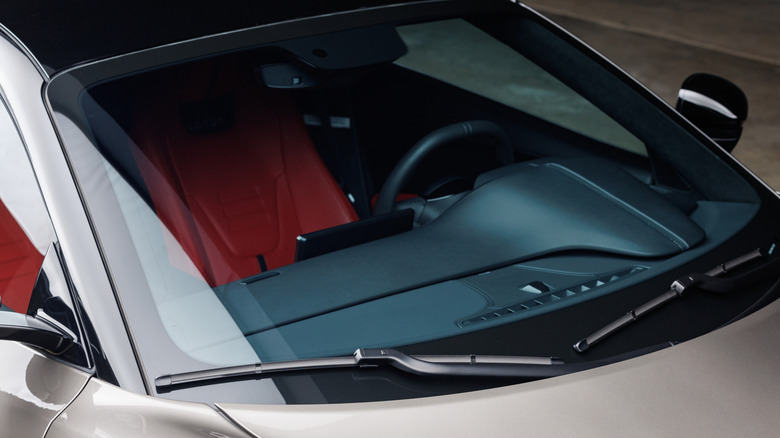
The primary reason behind using laminated glass for car windshields has to do with safety. Of course, there are other added benefits, but ever since government safety standards came into effect, automotive glass, specifically windshields, has to be laminated. The Highway Safety Act, signed by President Lyndon Johnson, led to the formation of the National Highway Traffic Safety Administration (NHTSA) in 1970. The agency established several standards dubbed FMVSS (Federal Motor Vehicle Safety Standards) for various vehicle aspects, including automotive glass.
With the signing of the Highway Safety Act, it effectively became mandatory for automakers to use shatter-resistant windshields, which tempered glass is not. This meant laminated windshields were the way forward. For your information, FMVSS 205, 212, 216, and 219 are some of the standards pertaining to front windshields and vehicle windows.
Tempered glass is typically made by heating and then rapidly cooling the glass, whereas laminated glass uses a polyvinyl butyral (PVB) resin in its construction, sandwiched between two layers of glass. Although a tempered glass window is much stronger, it shatters into thousands of pebble-like lumps when broken, which laminated glass does not, as the glass pieces stick to the resin instead of scattering.
Laminated glass has one major downside
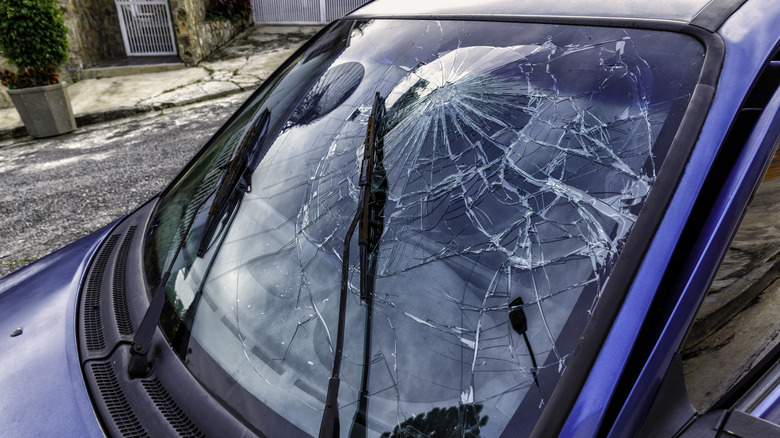
During a head-on collision, the laminated glass acts as a barrier, preventing the occupants from being ejected through the front. The NHTSA has even made "Ejection Mitigation" a requirement for vehicle rollovers, which is why automakers have started using laminated glass for the side and rear windows in most modern vehicles. In fact, laminated side and rear windows are so common that one in three cars sold since 2018 has them installed from the factory, according to the American Automobile Association (AAA).
The additional benefits of laminated glass include improved noise dampening, UV protection, and security against vehicle break-ins. But it does come with its fair share of problems. For one, laminated glass is generally more expensive than its tempered counterpart, which is why complex modern windshields cost a fortune to repair or replace. But perhaps the more important thing to consider is that laminated glass makes it harder for occupants and even first responders to break the car window in the event of a crash.
This is especially a concern for cars that use laminated glass on the side and rear windows. Hammers and spring-loaded punch tools, although useful against tempered glass, won't break laminated glass and therefore require specialized glass cutters that are often very expensive. While getting ejected from your car is not ideal, getting stuck inside is definitely not something you want.