

This Mineral In Your Catalytic Converter Costs $10,000 Per Ounce, And It's Essential
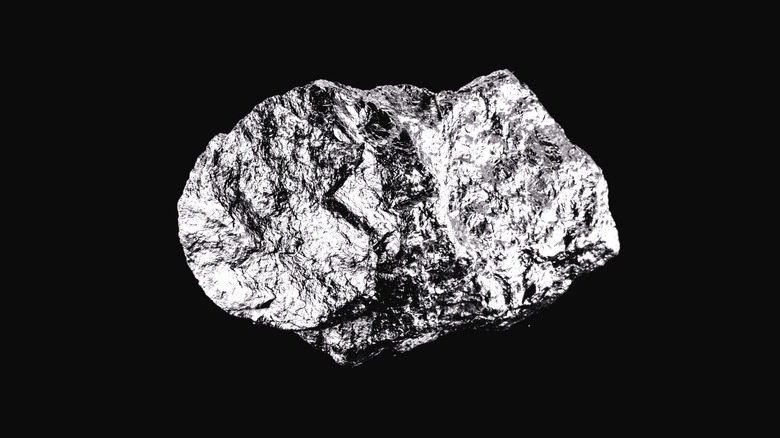
Catalytic converters serve the purpose of reducing the harmful byproducts of the internal combustion engine. Some studies show that this exhaust component is responsible for diminishing levels of carbon monoxide by up to 96% and helps ensure Americans aren't living and breathing in what amounts to a giant smoke stack. However, in order to eliminate these airborne toxins, certain minerals like rhodium are essential components. Rhodium targets nitrogen oxides (NOx), which, in large quantities, mask a city's skyline in permanent smog. Before cars started using catalytic converters, major U.S. cities like Phoenix registered suspended particulate pollution levels as high as 217 µg/m³ (micrograms per cubic meter) in 1970, per PGM of Texas.
While there are other precious metals found inside this exhaust system component, such as platinum and palladium, rhodium offers some key advantages. A catalytic converter requires significant amounts of heat to operate effectively, so rhodium's extreme thermal resistance (up to over 3,500 degrees Fahrenheit) is essential. Put simply, rhodium helps alter certain nitrogen compound molecules – trapping some atoms, while releasing oxygen. The amount of rhodium used is minimal, perhaps 0.05 ounces or less per part, which is a good thing, considering its price. Still confused? This catalytic converter deep dive explains the subject in greater detail for those interested.
Why is rhodium so expensive, and what does it take to mine and recycle?
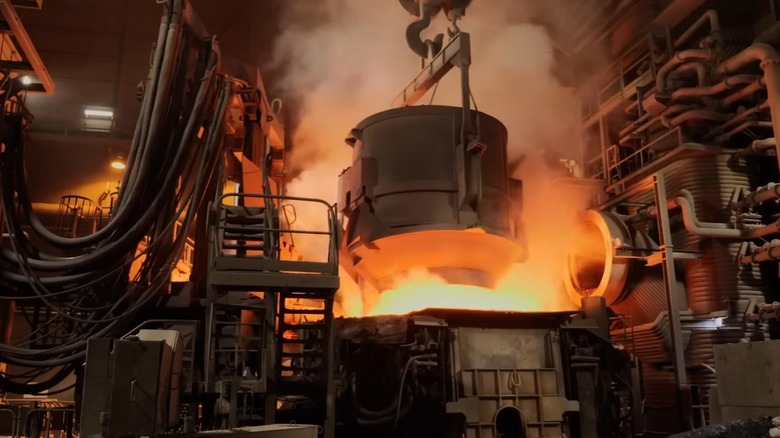
Rhodium is a great example of the economic principle of scarcity. Essentially, the combination of its rarity, along with its vital role in the automotive industry, make it incredibly valuable. How rare is it? Estimated to be 100 times scarcer than gold, rhodium is theorized to exist in only 0.0002 parts per million concentrations in the Earth's crust, according to Phoenix Refining.
However, it's not just rare, but mining it is also difficult and time consuming, occurring as a byproduct of other operations harvesting nickel and platinum, for example. Initially, rhodium is just one component of extracted ore, and it must undergo a series of processes to be extracted. This consists of cleaning, processing, crushing, and metallurgy, which results in around an ounce of rhodium for every 20 tons of ore, per Recohub. If that doesn't sound too involved, consider that it typically takes around half a year to transform a chunk of ore into pure rhodium, according to ISE.
Fortunately, rhodium can be recycled. Though the process of transforming rhodium oxide (what's found in scrap) into rhodium is also pretty complex. Impurities must be removed through the use of smelting, and much of the process involves refining it into a useable state. Still, recycled catalytic converters can fetch sizeable amounts of cash, due to the presence of precious metals. With rhodium hovering at a value approaching $10,000 per troy ounce (31 grams), the arduous recycling process remains well worth the trouble. Unfortunately, as a result of these valuable minerals, catalytic converter theft is still an expensive problem, but congress is working on a way to solve it.