

Congress Proposes 'SAFE Exit Act' To Change Terrible Tesla-Style Door Handles
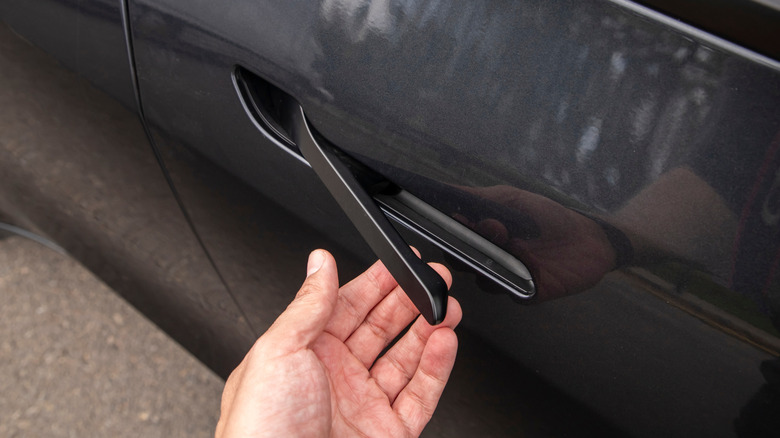
We've been complaining for a while about Tesla's electronic door handles that can fail in a crash and trap the occupants, sometimes with deadly consequences. China has already moved to ban them, and the United States is now following suit. U.S. Representative Robin Kelly has introduced the Securing Accessible Functional Emergency (SAFE) Exit Act to Congress. This would require all motor vehicles, particularly EVs, to have intuitive manual door releases, inside and outside, so that this problem can never happen again. Rep. Kelly pulled no punches in naming who she feels is responsible for this trend in her office's press release:
"Profits and, least of all, style, should not come before people's lives. Elon Musk and his Tesla designs are not safe, nor efficient, and it has cost people their lives," said Rep. Kelly. "When crashes or power loss leave drivers and passengers trapped inside their own cars, that is not innovation—it's a safety failure. Just like requiring basic safety standards like seatbelts, my SAFE Exit Act will protect consumers. As the auto industry continues to innovate, we must ensure people's safety."
Bloomberg recently reported that at least 15 deaths can be directly tied to Tesla's electronic doors not opening when the vehicle's power was lost. Over 35,000 people have signed a Consumer Reports petition urging automakers to ensure that occupants can quickly and safely exit their vehicles in an emergency. Consumer Reports has already endorsed the SAFE Exit Act with its approval.
Manual override
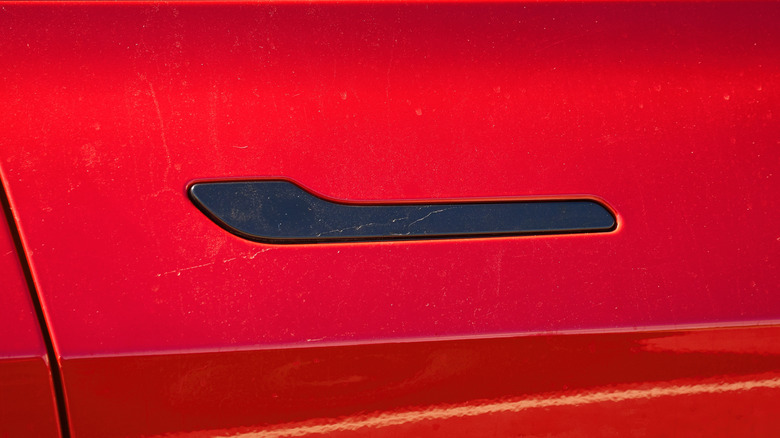
Although Tesla is best known for these door handles, it's not the only manufacturer that puts electronic door releases to use. According to Consumer Reports, some vehicles from Audi, BMW, Cadillac, Chevrolet, Fiat, Ford, Genesis, Lexus, Lincoln, Maserati, Rivian, and Volvo also use some form of electronic door latch. However, Tesla started this trend, and has made manual access such a low priority that owners have had to come up with their own solutions to get out if the power fails.
If the SAFE Exit Act passes, this won't be an issue anymore. Within two years of the bill passing, manufacturers would be required to provide:
(1) a power independent, easy-to-find manual release for each door providing occupant egress, which shall be intuitive to use and readily accessible for the occupant; and
(2) means for emergency responder access to the occupant compartment when vehicle electrical power is lost.
It won't bring back the lives that have been lost, but it will stop this from happening in the future. It should never have happened in the first place, but legislation has moved more slowly than the technology, with no regulations at all for electric doors until now. Hopefully, the laws will finally catch up to reality.