

Do Dimpled Pistons Really Improve Diesel Engine Performance?
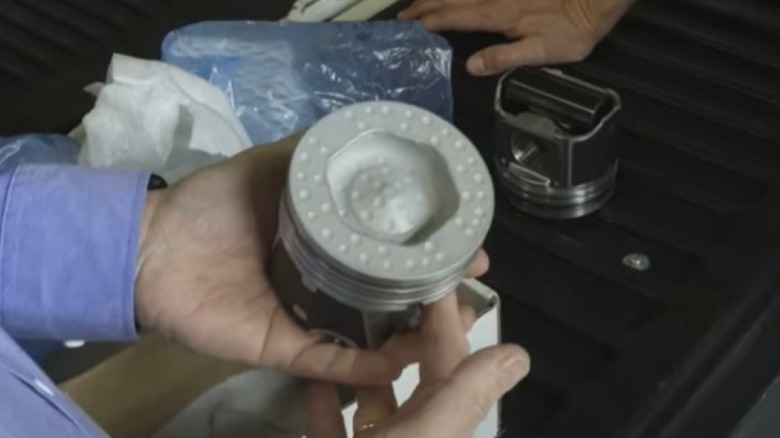
Golf balls have dimples, so they fly farther than balls that don't. Apply the same principle to diesel engines, and you have a gross oversimplification of why dimpled pistons were invented. It's a crude metaphor that might draw skepticism from critics, but the truth is far more complex. Golf balls use dimples to reduce drag, which is why Adam Savage turned a Ford Taurus into one on his show "Mythbusters", but in a diesel motor, the idea is rooted in the behavior of fluids inside an engine.
Incomplete combustion is the root cause of many problems in a combustion engine, including the buildup of carbon deposits, but the dimples are meant to take care of that problem. Dimples help keep the boundary layer of air attached to the piston longer than a smooth surface would. Laminar boundary layers on a smooth surface are prone to detachment, but introducing variations, such as dimples, on the surface makes the layer turbulent, increasing its sticking ability. The attachment is important because it helps the air and fuel charge stay in suspension inside a combustion chamber, resulting in a flame front that travels farther and ensures that most of the mixture is burnt before expansion ends. Increased efficiency and decreased emissions should theoretically follow.
What the testing shows when pistons are the only variable
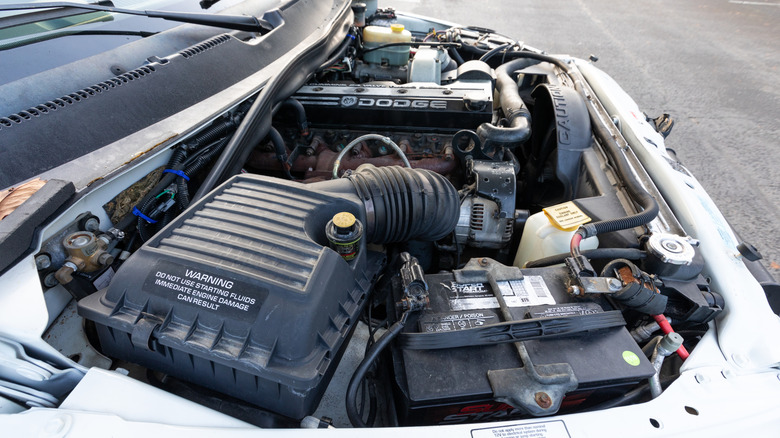
But theoretical claims are exactly that: theoretical. Testing is where an argument lives or dies. Thankfully, there have been field tests where the engines were rebuilt with the only mechanical modification being dimpled pistons. One such test was conducted by Olsen Ecological Lab, in which they compared two Cummins 5.9-liter diesel engines (if you plan on buying one, avoid these years). One was a stock control unit, and the other was fitted with dimpled pistons. The modified one clean swept the results, with torque and horsepower increased by 15.2% and 15.5%, respectively. There were also drops in brake-specific fuel consumption (the amount of fuel consumed per unit of power produced), exhaust opacity (the amount of particulate matter emitted), and emissions, including NOx, hydrocarbons, and CO2.
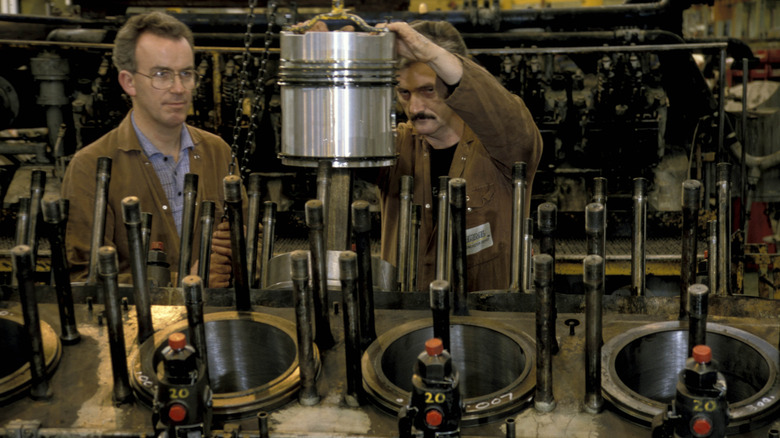
Another example involves Speed of Air dimpled pistons being fitted to a Caterpillar 3516 engine in a 793D mining truck that was operated by Newmont North America. The time it was in daily operation was increased from 16.30 to 18.34 hours, and it was used for more than 915 days before being removed from service early due to head bolt issues. At that point, engineers noted the the cylinder packs and liners still had plenty of life remaining in them, along with having noticeably less carbon buildup and crankcase deposits. It is not known exactly how long the new pistons would have lasted, though.
Why the idea is still controversial, even with promising results
So the obvious question is why are dimpled pistons still a niche modification instead of being the standard design? If the tests are to be believed, they are winning the debate across the board, with measurable improvements in fuel economy, power, and emissions, like these mods that actually make your car faster. Well, like everything in life, not everything is as black and white as it seems. OEMs would not have let this slide under their noses if the gains were as massive as claimed. They spend a lot of resources trying to get the piston geometry just right after all, and they would have jumped at the chance to implement dimples if they thought the effort would be worth it.
But manufacturers have to cross a lot of hurdles that aftermarket suppliers don't face. When you are building millions of engines, even a few extra minutes of machining time add up, and the cost might not justify what benefits the dimples provide. Then there comes the technical scrutiny. There have been arguments that the sharp edges and cavities that come with dimples could actually increase the buildup of carbon and, at high loads, cause undesirable combustion behavior. There's also the fundamental matter that an increase in surface area causes an increase in heat loss as well, which hurts efficiency.