

5 Bad Driver Habits Guaranteed To Annoy Everyone Else On The Road
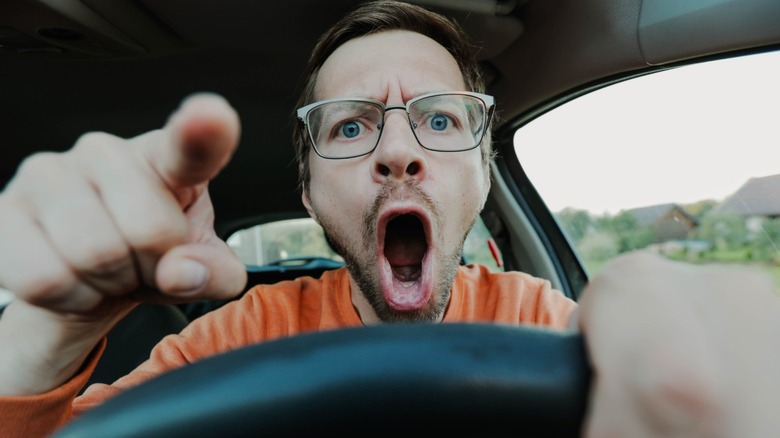
If there's one thing you're guaranteed to feel when you get on the road and start interacting with other drivers, it's annoyance. You know this, because you've shared with us your most hated traffic grievances. But we all annoy each other. Let's not pretend that we don't. There's an old saying, "Everyone who drives slower than I do is an idiot; everyone who drives faster is insane." The fact is that other drivers make different decisions than we would, and that alone annoys us.
There are some bad driving habits, though, that can transcend annoyance and cross over into infuriating. For example, have you ever been visually accosted by someone else's high-beams? We wonder if some drivers are aware that their brights aren't supposed to be left constantly on. And how exasperating is it to be blocked on the interstate from passing by some slow-moving happy camper who doesn't know what the left lane is supposed to be used for? That leads people to tailgate, which can be just as exasperating and hazardous. And tailgating, in turn, leads to brake checking, which is also very dangerous.
Then there are practices that, to say the least, are somewhat controversial — like zipper merging, for instance. A lot of drivers assume that you should start merging as soon as you see the "merge ahead" sign, and become enraged at people who don't try to merge until the lane is about to end. But the law is often on the side of those late mergers. And then there are the "nice" drivers who want to stop and let everyone on the road, in spite of how much traffic may be backed up behind them. There is a lot to be annoyed about out there!
Not knowing when to turn off those high-beams
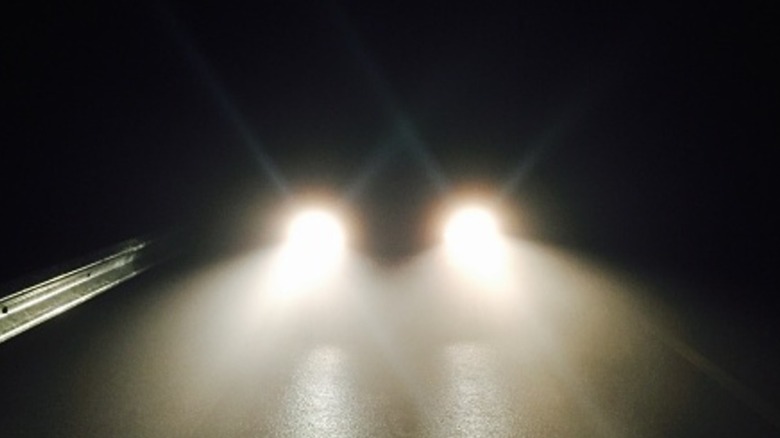
We've known people who have never operated their high beams because they've spent their whole lives in the city, and have never had an opportunity to use them. We even met one lady who thought something was wrong with her car because there was a blue "warning light" on her dash (it was her high-beam indicator). On the other hand, high beams are a necessity on dark country highways at night if you don't want to hit a deer or if you like to see around corners.
While drivers who need to turn their high beams on will usually figure out how to turn them on, some don't seem to know when to turn high beams off. We can't tell you how many times we've nearly been blinded by oncoming drivers who either forgot to flip off their brights or didn't know that they were supposed to. At least with oncoming drivers, you can flash your brights to let them know that their brights are on. But what's really annoying is when someone barrels up behind you with their bright LEDs shining right into your rear-view mirror. There is no way to signal them. For those of you who may not know, high beams are reserved for when you're outside of town, and there are no oncoming cars, pedestrians, or bicyclists, or you're not behind someone else. And don't use them in the fog, rain, or snow, as they will actually reduce your own visibility.
By the way, you know that little lever on the bottom of your rear view mirror? Flip that up if the car behind you has its brights on. That's what it's for, if you have it. Some newer mirrors automatically dim themselves.
Being a happy camper in the passing lane

There is a reason they sometimes call the left lane on a multi-lane highway the "passing lane." The clue is in the "passing" part. Most times, the only reason a car should be in that lane is to pass another vehicle. Once the other vehicle is passed, it's time to get back over into the right lane. Most of us understand this, but all it takes is one driver camping out in the left lane, somehow going the exact same speed as the driver next to them in the right lane, to cause traffic to back up –sometimes for miles.
But isn't the speed limit the same in both lanes? If everyone is supposed to go the speed limit, what's it matter if someone who is going the speed limit is staying in the left lane? Wouldn't they only be blocking speeders? Connecticut disagrees with that line of reasoning. As Autoblog reported, the state passed in 2025 a law that forbids driving in the left lane without passing, with violations carrying a fine of $142. But lane camping can get you a ticket in multiple states. Massachusetts, New York, and Washington have similar laws, and Arizona has also passed one.
But what about those people who want to pass because they are speeding? Why is it wrong to get in their way? Washington State Trooper Kyle Yarbrough said it best in an interview on KIRO-FM, "It's law enforcement's job to police people's speeding, not someone in the left lane." The fact is, left lane camping is dangerous, causing more accidents than drivers going 10 mph over the speed limit.
Tailgating and brake checking tailgaters
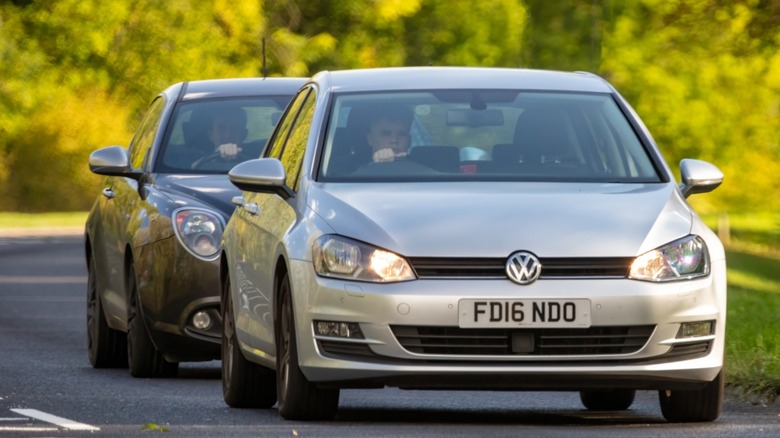
Is there anything more nerve-wrecking than to see some large vehicle barrel up right behind you on the interstate and then stay there? We're pretty sure that some of the tailgaters we've had were close enough to the name of the song playing on our infotainment screen. But this is serious, since rear-end collisions make up around 29% of all collisions nationwide, according to the National Highway Traffic Safety Administration (NHTSA). That's why it's recommended to keep a distance of about one-car length for every 10 miles of speed between you and the car in front of you.
Sometimes, however, the driver being tailgated makes the situation even more dangerous by brake-checking the driver behind them. The reason we brake check might have to do with how we perceive the tailgater's intentions. But remember, the reckless tailgater is likely not trying to do anything to you personally. "Never attribute to malice what can easily be attributed to stupidity," as Hanlon's Razor says. In other words, the tailgater isn't trying to annoy you, they're just a bad driver. This is partly why brake checking is a bad idea. If the person behind is tailgating out of distraction, what's going to happen if they don't see you check your brakes?
Even when there is no brake checking by other drivers, tailgaters often apply their own brakes a lot, since they don't have time to react to changes in speed of cars in front of them. But this causes drivers behind them to apply their brakes, which causes a chain reaction, often resulting in traffic slow-downs. Ironically, this constant braking also increases the chances of rear-end collisions.
Not merging where you are supposed to
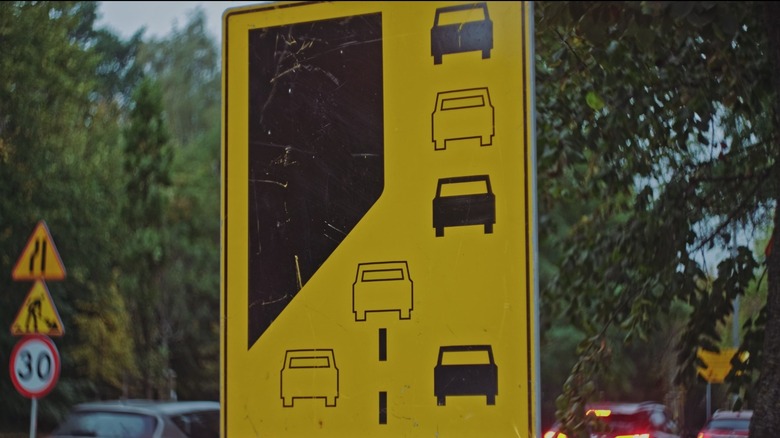
Judging from comments we see around the Internet, this is the part of the article where we make at least half of you very angry. The truth is, if you are one of those folks who get mad at those "rude line cutters" who don't merge until their lane is about to end, in spite of the sign that warned them to merge a mile ago, well, you're part of the problem. Those "line cutters" are actually doing it the right way, and it's called "zipper merging."
But don't take our word for it. A study by the Minnesota Department of Transportation says that zipper merging can reduce traffic backup by 40%. State agencies around the country encourage their residents to zipper merge. Illinois state law (Public Act 103-0249) requires drivers at the end point of the merge to allow zipper mergers in and not doing so can earn you a $164 fine. Germany has made zipper merging the law since 2001. They even have a word for it, "Reißverschlusssystem" (kind of rolls off the tongue). Colorado clarifies this with their signage. Instead of "merge ahead," the first sign says, "Use all lanes to merge point." The AAA says that most traffic specialists agree that zipper merging is the best way to merge two congested lanes.
Suppose the "merge ahead" sign is a mile before the end merge point, and everyone starts merging then. Both lanes are now slowing down and creating a pinch point a mile before the end merge point. A full mile of the ending lane is not being used. That backs traffic up a mile farther than it would have to be. We know, some of you still aren't convinced. That's okay, let us have it in the comments. Let it all out.
Holding up traffic just to be nice

Have you ever been behind a saintly driver? You know the type, the Mobile Mother Theresa who can't help but stop in the middle of the street because she wants to let a driver coming out of the 7-Eleven onto the road. But they're just trying to be nice. Nice, that is, to that one solitary driver waiting to enter traffic. Forget the 20 cars behind that are being delayed, five of which will probably miss the light ahead now. And it's all because a nice driver decided for everyone that this one person should enter the road right away instead of yielding to oncoming traffic, like the law requires. Never mind that forcing the cars behind you to stop will likely cause backups and maybe even ripple into what's known as a phantom traffic jam.
It can also be dangerous, as the driver entering the road could blindly trust the "nice" driver while drivers in other oncoming lanes may not stop because they have no idea what's happening. Even worse, stopping and waving waiting pedestrians onto the road can be deadly, as drivers in other oncoming lanes may not even see them. Of course, you should always yield to any pedestrians who are in the process of crossing the street. And remember, true acts of kindness don't benefit one person to the detriment of everyone else, no matter how much the act may make us feel like a nice person.
Being a good driver can be complicated, sometimes. We might think we've been doing the safe, considerate thing for years, only to find out we've been doing it wrong the whole time. What's important is that we all educate ourselves and keep trying to do better.