

Should You Replace Strut Mounts When You Replace Struts?
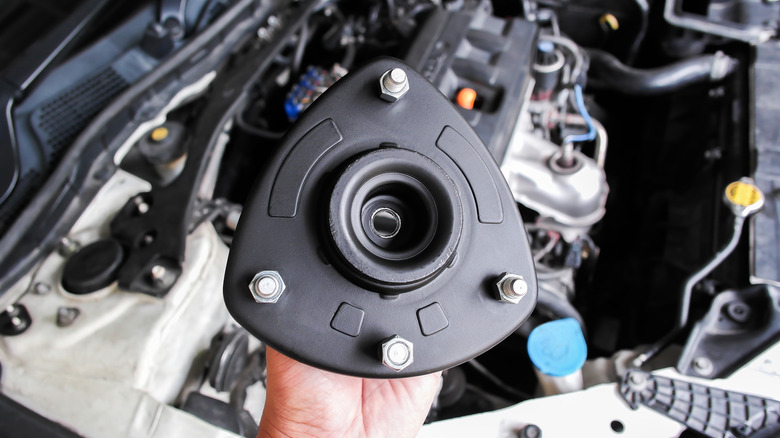
It's generally a good idea to replace the strut mounts when replacing the struts. Much in the same manner that the struts and shocks should be replaced together (when applicable), you should consider new shock mounts when replacing the old struts in your vehicle. Shocks and struts are two different things, and your vehicle could have one or the other in the front or rear suspension.
What's sure is that struts have a structural housing for the dampers and springs, and everything is held in place at the top by the strut mounts. Those mounts attach to the strut towers of the chassis, while the bottom portion bolts to the steering knuckle. More than providing structural rigidity to the suspension system, the strut mounts help insulate the steering and the cabin from unnecessary noises and vibrations.
If you take a close look at a typical strut mount, it has rubber insulation in the middle, and that rubber is what cushions the blows and insulates the cabin as you drive over bumps. In most cases, strut mounts have bearings that enable the strut assembly to pivot and turn with the steering wheel. Those bearings are also crucial for how the steering feels, how smoothly it turns, and how quickly it responds to your steering inputs.
As is the case with most car parts, the rubber insulation and bearings inside the strut mount will wear out with the struts. And when they do, you can expect a host of annoying symptoms to appear, which is why replacing both parts together is necessary even if the mounts look okay on first inspection.
What are the signs of bad strut mounts?
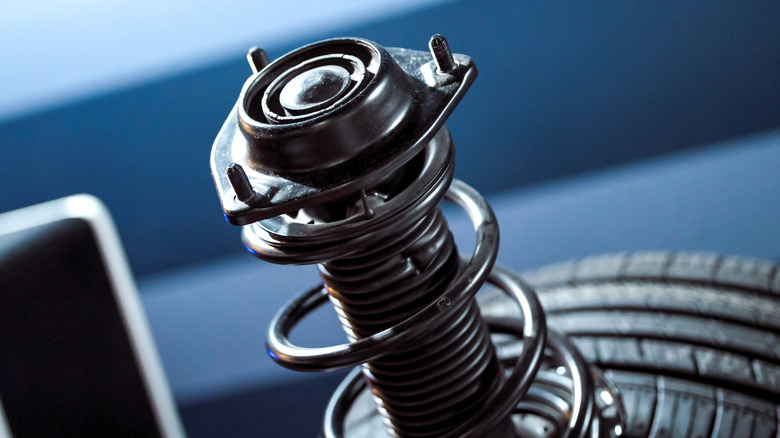
Since a strut mount has rubber and bearings sandwiched between shapely pieces of metal, a bad mount might produce harsh, clunking sounds when driving over bumps or potholes. Instead of a muted thud, mounts in need of replacement will emit loud, metal-to-metal noises coupled with vibrations in the steering.
Moreover, you can expect the steering to be a bit noisier when turning the wheel, or it could feel overly stiff or loose in some places. Most critical is how bad strut mounts contribute to premature tire wear, as the worn-out parts may cause the strut assembly to move or lean and mess up the alignment. As you may well know, skipping a wheel alignment or persistently driving with misaligned front tires is a bad idea and may cost you more than a new set of rubber.
If the shocks or struts of your vehicle have done 50,000 miles or more, it's imperative to have them checked for leaks, corrosion, or other signs of suspension failure. It's also wise to inspect the strut mounts and replace them together with the struts if necessary. Bear in mind that the life expectancy of the car's various suspension components will vary greatly.
Vehicles that drive frequently over rough roads or do lots of towing might wear out the suspension faster than most. Early intervention is better than waiting for clunking noises, uneven tire wear, or fluid leaks to appear.
How much does it cost to replace the strut mounts?
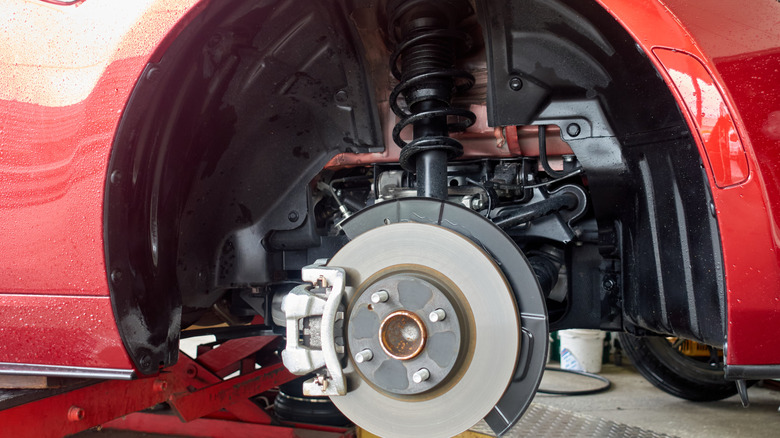
Strut mounts are relatively inexpensive and would cost anywhere from $30 to $80 each. However, getting to them is another story, as the labor costs for replacing them are about $200 to $450 per side, depending on the vehicle. You can take the DIY route to save cash, but removing a strut assembly from the car and disassembling the unit to remove the old struts takes knowledge, skills, and the right tools.
The process is essentially jacking the car up, loosening and removing some nuts to free the strut assembly from the car, and using spring compressors to remove the mounts safely. Meanwhile, replacements could cost $300 to $700, so it's definitely worth replacing the mounts together with the struts to restore the like-new performance of your car's suspension and steering. Finally, remember that the struts and strut mounts should be replaced in pairs, because replacing just one of them might cause issues later on.