

What Vortec Means On Chevy Engines
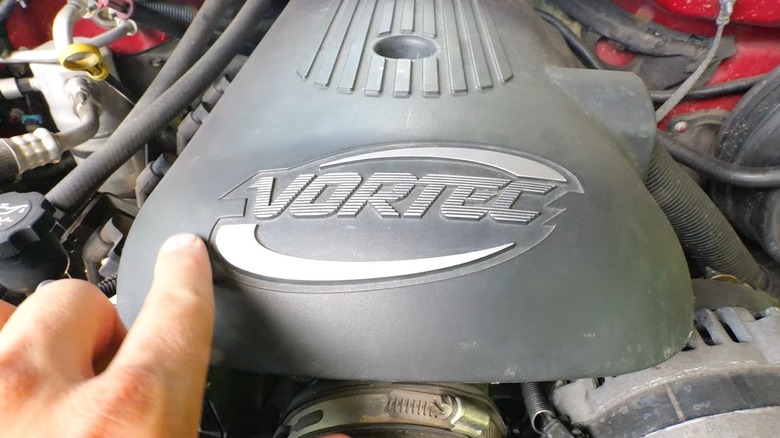
Automakers have launched many series of engines meant to offer greater performance or efficiency than their predecessors. Chevy's Vortec line, which includes General Motors' vortex technology, boosted output while enhancing combustion. Vortex technology uses a circular motion within the cylinder as the fuel and oxygen mix. These engines launched in the 1990s, with the Vortec moniker applied to the automaker's SUV and truck line. Other variants using the same technology, such as LS engines, were in models like the Chevy Camaro.
That Vortec engines were meant for trucks and SUVs might have you thinking they were all V8s, but that wasn't the case. In fact, the Vortec 4.3-liter V6 (circa late '90s) offered 180 horsepower and was available in the Chevy S-10, the automaker's smaller pickup. Another widely recognized variant from the Vortec family is the 5.3-liter small block V8. Over the course of its run, you could find it in a variety of large SUV models, including the Tahoe, Yukon, and Suburban, pushing out 320 hp and 335 pound-feet of torque.
Chevy's 8.1-liter Vortec was the last of the big block era, meant as an alternative to competitors at the start of the 21st century, offering trucks with V10 engines. Chevy's heavy-duty trucks equipped with this massive engine generated 340 hp and 455 lb-ft, and the Avalanche 2500, which offered it, was a brilliant example of Chevy's forgotten pickup trucks.
Why was Vortec replaced?
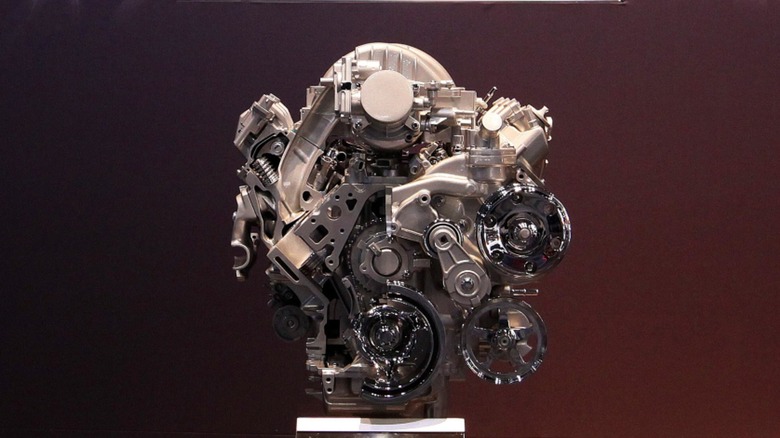
While vortex technology improved output and fuel economy, these engines weren't without their problems — and these GM 5.3 Vortec years have the most issues. This wasn't the only challenge, either, as the government had been steadily tightening regulations around both emissions and average required fuel economy during Vortec's tenure. Automakers who failed to meet standards were subject to fines, which prompted development of even more efficient engine designs.
So in 2014, GM launched the EcoTec3 series of engines, effectively replacing Vortec. EcoTec3 offers direct injection and variable valve timing, making it far more advanced than Vortec. The Vortec family of engines uses central sequential fuel injection, with the fuel distributed outside of the cylinder into tubes that run into the combustion chamber. But in EcoTec3's direct fuel injection, carefully measured amounts of gasoline are supplied directly into the cylinder. This allows enhanced combustion while reducing waste.
Variable valve timing is also a boon for efficiency, as it lets the valves move not based on a static setting, but on what the engine is doing and what it needs. According to Natural Resources Canada, variable valve timing can offer as much as a 6% drop in fuel use.